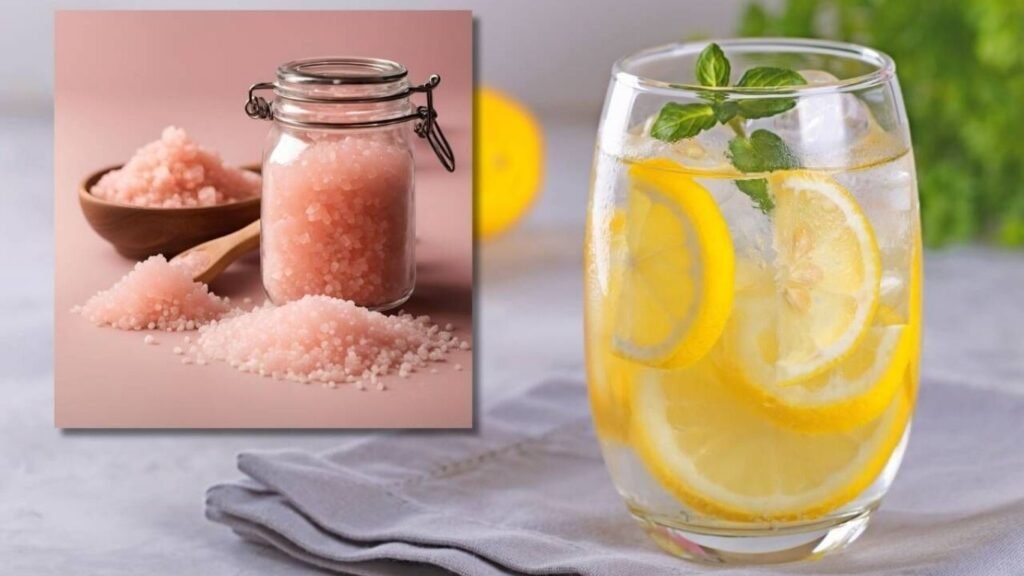
A pink salt recipe combines Himalayan pink salt, water, and lemon juice into a mineral drink, often consumed first thing in the morning.
The standard pink salt recipe uses one-eighth to one-quarter teaspoon of Himalayan pink salt dissolved in 12 to 16 ounces of water.
The drink gained popularity through social media as a wellness ritual, though its marketed health claims exceed the available evidence.
This recipe is naturally gluten free, since Himalayan pink salt, water, and lemon contain no wheat, barley, or rye. It fits the same fact-checked format used across every gluten free recipe on this site, with ingredient amounts confirmed and claims checked against available evidence rather than social media trends.
What Is Himalayan Pink Salt
Himalayan pink salt is a rock salt mined from deposits near the Punjab region of Pakistan, colored pink by trace amounts of iron oxide.
Himalayan pink salt consists of roughly 98 percent sodium chloride, with the remaining 2 percent made up of trace minerals.
This composition places it close to standard table salt in nutritional terms, despite marketing that positions it as a distinct mineral supplement.
Mineral Content Compared to Table Salt
| Mineral | Himalayan Pink Salt | Table Salt |
| Sodium chloride | Approximately 98% | Approximately 97 to 99% |
| Iron oxide | Trace amount, causes the pink color | Not present |
| Potassium | Trace amount | Not typically present |
| Magnesium | Trace amount | Not typically present |
| Iodine | Not added | Often added as iodized salt |
Standard iodized table salt contains added iodine, an essential mineral for thyroid function. Himalayan pink salt does not contain added iodine, which means a diet relying only on pink salt for seasoning can miss this nutrient unless iodine comes from another dietary source such as seafood or dairy.
Pink Salt Recipe Ingredients
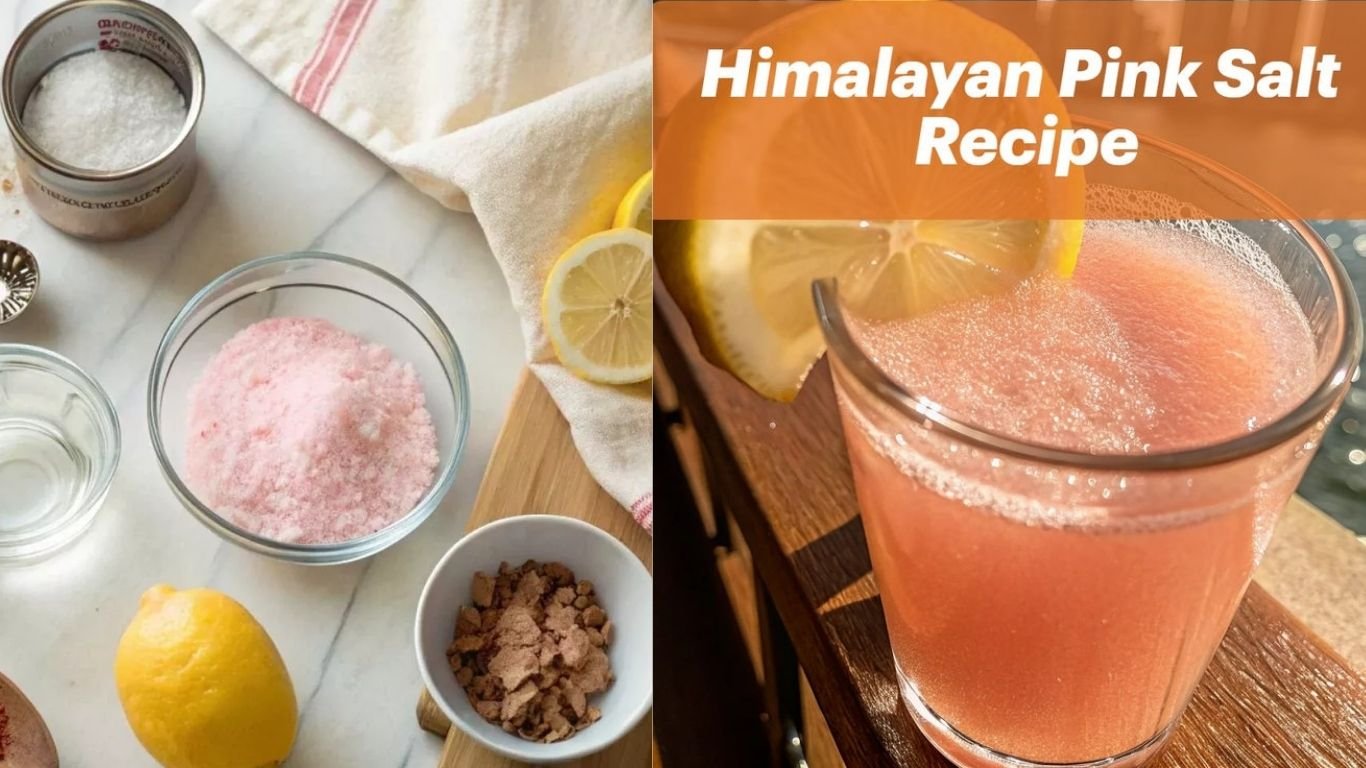
The following ingredients make one serving of the standard pink salt drink.
- 12 to 16 ounces filtered water
- 1/8 to 1/4 teaspoon fine Himalayan pink salt
- 1 teaspoon fresh lemon juice, optional
- Ice, optional for a cold version
Why Each Ingredient Is Included
Filtered water forms the base and dilutes the salt to a safe concentration for regular consumption. Himalayan pink salt supplies sodium and trace minerals, the core functional ingredient in the recipe.
Lemon juice adds flavor and a small amount of vitamin C, though it plays no role in the sodium content or the electrolyte function of the drink.
How to Make the Pink Salt Recipe
The steps below produce one serving of the pink salt drink.
- Pour 12 to 16 ounces of water into a glass.
- Add 1/8 to 1/4 teaspoon of Himalayan pink salt.
- Stir until the salt fully dissolves.
- Add lemon juice if desired.
- Sip the drink over 10 to 20 minutes rather than drinking it quickly.
Sipping slowly reduces the chance of gastrointestinal discomfort that can occur from consuming a concentrated salt solution too fast.
Best Time of Day to Drink It
Most versions of the recipe recommend drinking the mixture first thing in the morning, before food or coffee, as part of a hydration routine. A second common version calls for drinking it in the evening, positioned as a wind-down ritual rather than a morning energizer.
Neither timing changes the sodium or mineral content of the drink, since the recipe itself stays the same regardless of when it is consumed.
Pink Salt Recipe Variations
| Variation | Added Ingredient | Purpose |
| Classic | Lemon juice | Adds flavor and vitamin C |
| Sole water | Salt dissolved to full saturation | Produces a stronger, more concentrated brine |
| Electrolyte version | Coconut water | Adds potassium alongside sodium |
| Evening version | Warm water instead of cold | Serves as a bedtime ritual for some drinkers |
Also read: Hot Toddy Recipe: A Gluten Free Guide to the Classic Warm Cocktail
How Sole Water Differs From the Standard Recipe
Sole water uses a fully saturated salt solution, made by adding pink salt to water until no more salt dissolves. This version delivers substantially more sodium per serving than the standard recipe, since only a small amount of the concentrated brine gets added to a second glass of water before drinking. Sole water requires more caution with dosage, since the exact sodium content varies more than in the standard measured recipe.
What the Evidence Says About Pink Salt Benefits
Social media claims associate the pink salt recipe with fat loss, metabolism boosting, and detoxification. Medical News Today and Verywell Health both report no scientific evidence supporting these specific claims.
Himalayan pink salt functions nutritionally the same as table salt at the doses used in this recipe, since the trace mineral content remains too low to produce a measurable health effect.
Claim vs. Evidence Comparison
| Marketed Claim | What the Evidence Shows |
| Melts belly fat | No scientific evidence supports this claim |
| Detoxifies the body | The kidneys and liver perform detoxification, not added salt |
| Boosts metabolism | No measurable metabolic effect at typical serving doses |
| Supports hydration | Sodium does support fluid balance, a documented physiological function |
| Reduces nighttime cramps | Limited evidence, related to general electrolyte and mineral balance |
What the Recipe Does Provide
The drink does provide electrolyte replacement, which supports hydration during fasting or after exercise. The Cleveland Clinic notes that sodium plays a documented role in fluid balance and muscle function, separate from the unproven detox and weight loss claims attached to the trend.
For someone following intermittent fasting, a small amount of sodium can also help offset the mild dizziness that sometimes accompanies an extended fasting window.
Who Should Limit This Recipe
People managing high blood pressure, kidney disease, or a sodium-restricted diet should limit or avoid the pink salt recipe, since it adds sodium beyond typical dietary intake.
A single serving using 1/4 teaspoon of salt contains approximately 580 milligrams of sodium, which represents about 25 percent of the American Heart Association’s recommended daily sodium limit for at-risk individuals.
Signs of Excess Sodium Intake
Three signs indicate that sodium intake from this recipe, combined with the rest of the diet, has become excessive: persistent thirst beyond normal hydration needs, swelling in the hands or feet, and a noticeable rise in blood pressure readings. Anyone experiencing these signs should reduce or stop the recipe and consult a physician.
Conclusion
The pink salt recipe combines Himalayan pink salt, water, and optional lemon juice into a simple electrolyte drink. The method takes under a minute, and the ingredients contain no gluten. Sodium in the recipe supports hydration and fluid balance, a documented physiological function, but no evidence supports the fat-loss, detox, or metabolism claims attached to the trend. Readers can use the recipe for hydration, provided sodium intake stays within safe limits for their individual health status.
Frequently Asked Questions
Does the pink salt recipe actually help with weight loss?
No, there is no scientific evidence that the pink salt recipe causes fat loss, and the drink’s calorie content does not directly influence body weight.
Is Himalayan pink salt nutritionally different from table salt?
Himalayan pink salt is nutritionally similar to table salt, since it is roughly 98 percent sodium chloride, with only trace amounts of additional minerals.
How much sodium is in one serving of the pink salt recipe?
One serving made with 1/4 teaspoon of Himalayan pink salt contains approximately 580 milligrams of sodium.
Is the pink salt recipe safe to drink every day?
Daily consumption is generally safe for people without sodium-restricted diets, though anyone managing blood pressure or kidney conditions should consult a physician first.
What is sole water, and how does it differ from the standard recipe?
Sole water is a fully saturated salt brine, made by dissolving salt in water until no more will dissolve, and it delivers more sodium per serving than the standard diluted version.
Is the pink salt recipe gluten free?
Yes, the pink salt recipe is naturally gluten free, since Himalayan pink salt, water, and lemon juice contain no wheat, barley, or rye.
Does adding lemon juice change the sodium content?
No, lemon juice adds flavor and a small amount of vitamin C, but it does not change the sodium content contributed by the salt.
The pink salt recipe dissolves 1/8 to 1/4 teaspoon of Himalayan pink salt in 12 to 16 ounces of water, sometimes with lemon juice. It supports hydration and electrolyte balance, though no evidence supports marketed claims of fat loss or detox.
This article provides food and nutrition information, not medical advice. Readers managing blood pressure, kidney conditions, or a sodium-restricted diet should consult a physician before adding this recipe to their routine.