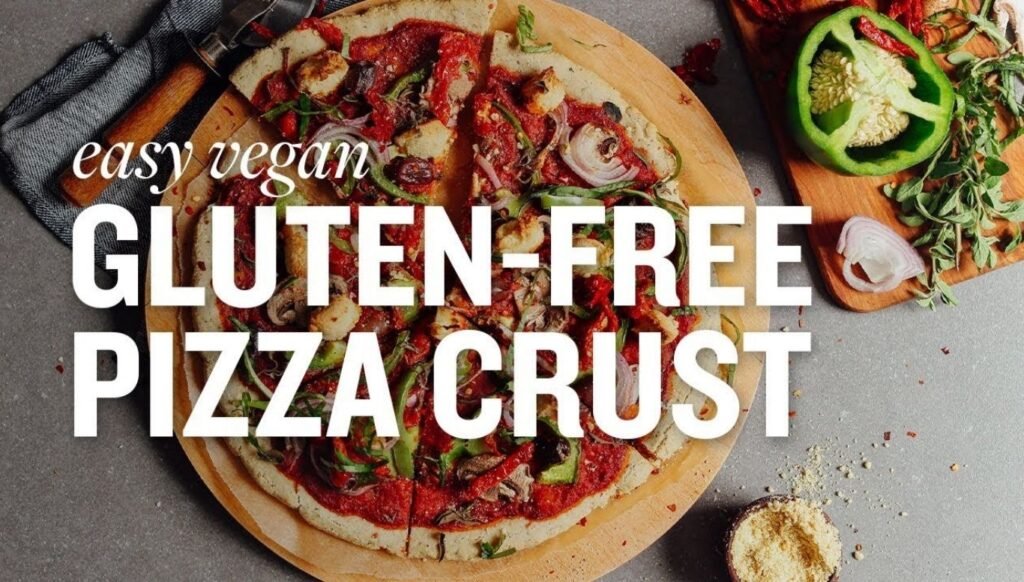
A gluten free pizza crust recipe uses rice flour, tapioca starch, and xanthan gum instead of wheat flour to create a base that holds together without gluten. The dough needs a longer rest time and a pre-bake step to avoid a soggy center.
This recipe answers the two most common problems people face: a crust that crumbles and a crust that turns soggy under toppings.
Ingredients for Gluten Free Pizza Crust
| Ingredient | Amount | Function |
| Gluten free flour blend | 300 g | Base structure |
| Xanthan gum | 5 g (skip if blend already contains it) | Binding agent |
| Instant yeast | 7 g | Leavening |
| Warm water | 240 ml | Activates yeast |
| Olive oil | 30 ml | Moisture and flavor |
| Sugar | 5 g | Feeds the yeast |
| Salt | 5 g | Flavor balance |
| Egg | 1 large | Binding and structure |
Use a gluten free flour blend that contains rice flour and tapioca starch. This combination gives the closest texture to wheat-based crust.
Step-by-Step Gluten Free Pizza Crust Recipe
- Mix the warm water, sugar, and yeast in a bowl. Let it sit for 10 minutes until foamy.
- Combine the gluten free flour blend, xanthan gum, and salt in a separate bowl.
- Add the yeast mixture, olive oil, and egg to the dry ingredients.
- Mix until the dough forms a thick, sticky batter. Gluten free dough does not need kneading.
- Cover the bowl and let the dough rest for 30 minutes at room temperature.
- Preheat the oven to 220°C with a pizza stone or baking tray inside.
- Place the dough on parchment paper and press it into a 12-inch circle, about 1 cm thick.
- Pre-bake the crust alone for 8 minutes before adding toppings.
- Add sauce, cheese, and toppings, then bake for another 10 to 12 minutes.
- Rest the pizza for 3 minutes before slicing.
The pre-bake step in stage 8 prevents the center from turning soggy once the toppings and moisture from the sauce go on.
How to Get a Crispy Gluten Free Pizza Crust

- Pre-bake the crust before adding any toppings.
- Use a pizza stone to transfer direct heat to the base.
- Keep the dough thickness under 1 cm for faster cooking.
- Brush the edges with olive oil before the final bake.
- Bake on the lowest oven rack for stronger bottom heat.
Common Mistakes That Ruin Gluten Free Pizza Crust
- Skipping the pre-bake step, which leaves the center raw
- Rolling the dough too thick, which slows heat penetration
- Using cold water instead of warm water, which stops yeast activation
- Adding too much sauce, which soaks through the crust
- Skipping xanthan gum in a blend that does not already include it
Gluten Free Pizza Crust Variations
Different bases suit different dietary needs and taste preferences.
- Cauliflower crust: made from riced cauliflower, egg, and cheese, lower in carbohydrates
- Almond flour crust: higher in protein and fat, suited for low-carb diets
- Chickpea flour crust: higher in fiber and plant protein
- No-yeast crust: uses baking powder instead of yeast for a faster, flatbread-style base
- Cassava flour crust: closer in texture to traditional wheat crust
Each variation changes the bake time and thickness needed for a crispy result.
Nutritional Value per Slice
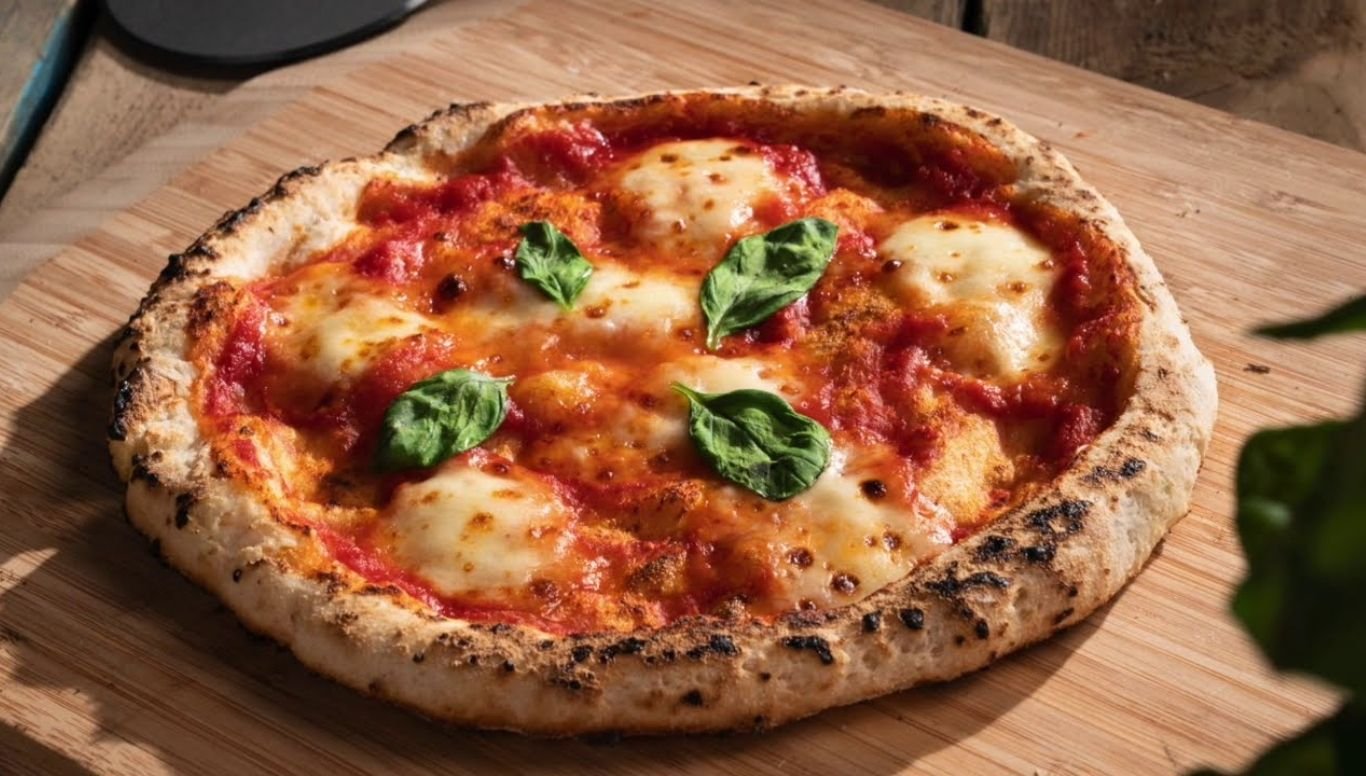
A standard slice from a 12-inch gluten free pizza crust, without toppings, contains the following average values.
| Nutrient | Amount per Slice |
| Calories | 140-160 kcal |
| Carbohydrates | 25-28 g |
| Protein | 3-4 g |
| Fiber | 1-2 g |
| Fat | 4-5 g |
Cauliflower and almond flour crusts lower the carbohydrate count but raise the fat content per slice.
Gluten Free Pizza Crust vs Regular Pizza Crust
| Factor | Gluten Free Crust | Regular Crust |
| Main flour | Rice, tapioca, or cauliflower | Wheat |
| Texture | Denser, needs pre-baking | Chewy and elastic |
| Kneading required | No | Yes |
| Prep time | 40-45 minutes | 60-90 minutes with proofing |
| Shelf life of dough | 1 day refrigerated | 2-3 days refrigerated |
| Suitable for celiac disease | Yes | No |
How to Store and Freeze Gluten Free Pizza Crust
- Cool the baked crust completely before storing.
- Wrap it tightly in plastic wrap or foil.
- Store in the refrigerator for up to 3 days.
- Freeze pre-baked crusts for up to 2 months.
- Bake frozen crusts directly at 220°C for 12 minutes without thawing.
Tools Needed to Make Gluten Free Pizza Crust
The right tools make the dough easier to handle, since gluten free dough is stickier than wheat dough.
- Pizza stone or steel: transfers even, direct heat to the base for a crispy bottom
- Parchment paper: prevents the sticky dough from tearing during shaping
- Rolling pin or hands: gluten free dough presses out better by hand than with a rolling pin
- Kitchen scale: measures flour by weight for consistent results, since gluten free flours vary in density by volume
- Pizza peel: transfers the shaped dough onto a hot stone without losing its shape
A kitchen scale matters more for gluten free baking than for wheat-based recipes. Volume measurements like cups vary between flour brands, while weight measurements stay consistent.
Best Toppings for Gluten Free Pizza Crust
Lighter, drier toppings work best on a gluten free base, since the crust holds less moisture than wheat dough.
- Mozzarella cheese with a light layer of tomato sauce
- Roasted vegetables, pre-cooked to remove excess water
- Cured meats like pepperoni or prosciutto, which release less liquid than raw meat
- Fresh basil or arugula added after baking to avoid wilting
Avoid watery toppings like fresh tomato slices or excess sauce, since they soften the crust before it finishes baking.
FAQs
Can I make a gluten free pizza crust without xanthan gum?
Yes, psyllium husk or ground flaxseed with water can replace xanthan gum as a binding agent.
Why does my gluten free pizza crust break apart?
The crust breaks apart when the dough lacks a binding agent or when it bakes without enough moisture.
What is the best gluten free flour for pizza crust?
A blend of rice flour and tapioca starch gives the closest texture to traditional pizza dough.
Can I make the dough ahead of time?
Yes, the dough stays fresh in the refrigerator for up to 24 hours before baking.
Can I make gluten free pizza crust without eggs?
Yes, a flax egg made from 1 tablespoon of ground flaxseed and 3 tablespoons of water replaces one egg.
Do I need yeast for gluten free pizza crust?
No, baking powder can replace yeast for a quicker, flatbread-style crust without a rise time.
How thick should gluten free pizza dough be?
The dough should be about 1 cm thick for even baking and a crispy result.
Conclusion
A good gluten free pizza crust recipe depends on two things: the right flour blend and a pre-bake step. Rice flour and tapioca starch create the closest texture to wheat-based dough, while the pre-bake step stops the center from turning soggy under toppings.
Home bakers can adjust the recipe with cauliflower, almond, or chickpea flour based on dietary needs. Proper storage, whether refrigerated or frozen, keeps the dough or baked crust ready for a quick meal.