Easy Polish recipes at home take between 15 minutes and 3 hours, depending on the dish. The six core dishes are pierogi ruskie, placki ziemniaczane (potato pancakes), gołąbki (stuffed cabbage rolls), kotlety mielone (meat patties), mizeria (cucumber salad), and barszcz (beet soup). All six can be made fully gluten-free: three need no substitution at all, and the other three need one simple swap (gluten-free flour blend, gluten-free breadcrumbs, or cornstarch instead of a flour roux).
This guide was refreshed in October 2026 with a hidden-gluten audit for every dish, a troubleshooting table, and an expanded storage guide. Polish home cooking is built on potatoes, cabbage, pork, and sour cream, prepared through boiling, pan-frying, or long braising. Pick your time bracket from the table below, check the gluten status of your dish, and follow the step-by-step method. After reading this page, you can plan and cook a full Polish meal without searching for more information.

Easy Polish recipes at home: gluten-free pierogi ruskie with potato and cheese filling, the most searched Polish dish.
Which Traditional Polish Dishes Contain Wheat?
Three categories of Polish food use wheat by default, and each one needs a specific adjustment rather than a blanket substitution:
- Dumpling and dough dishes: Pierogi, kluski, and łazanki all use wheat flour dough. A 1:1 gluten-free flour blend with xanthan gum replaces standard flour in most pierogi recipes.
- Breaded and battered dishes: Kotlety mielone (meat patties) and kotlet schabowy (breaded pork cutlet) use breadcrumbs. Gluten-free panko or crushed gluten-free crackers work as a direct swap.
- Roux-thickened soups: Żurek and some versions of bigos use a flour-based roux or fermented rye starter. A cornstarch slurry replaces the roux in most recipes without changing the final texture.
The recipes below either avoid wheat entirely or specify the exact substitution needed.
Hidden Gluten Audit: Six Polish Dishes
Before you cook, run your dish through this audit. It shows exactly where gluten can hide in each recipe and the one fix that keeps the dish safe:
| Dish | Naturally Gluten-Free? | Hidden Gluten Risk | Fix |
|---|---|---|---|
| Pierogi ruskie | No | Wheat flour dough | 1:1 gluten-free flour blend with xanthan gum |
| Placki ziemniaczane | Almost | Small amount of wheat flour as binder | Gluten-free flour blend in the same quantity |
| Gołąbki | Yes | Breadcrumbs sometimes added to filling | Leave breadcrumbs out or use gluten-free ones |
| Kotlety mielone | No | Wheat breadcrumbs as binder | Gluten-free breadcrumbs, same ratio |
| Mizeria | Yes | None in the traditional recipe | No change needed |
| Barszcz (clear) | Yes | Non-certified broth; flour in creamy regional versions | Use certified gluten-free broth; stick to the clear version |
How Long Do Easy Polish Recipes at Home Take to Cook?
Cook time for Polish recipes falls into four brackets: under 20 minutes, 20 to 45 minutes, 45 to 90 minutes, and over 90 minutes. Quick dishes use pre-cooked or raw ingredients that need only pan-frying. Long dishes require simmering meat or fermenting cabbage before serving.
| Time Bracket | Cooking Method | Example Dish |
|---|---|---|
| Under 20 minutes | Pan-frying, boiling pre-made components | Naleśniki (crepes) |
| 20 to 45 minutes | One-pot boiling or frying from raw ingredients | Placki Ziemniaczane (potato pancakes) |
| 45 to 90 minutes | Assembly plus baking or simmering | Gołąbki (cabbage rolls) |
| Over 90 minutes | Slow braising or multi-stage broth building | Bigos (hunter’s stew) |
Gluten-Free Pierogi Ruskie (Potato and Cheese Dumplings)
Pierogi ruskie are filled with mashed potato and farmer’s cheese, and they are Poland’s most searched dish. The dough is the only part of this recipe that requires a substitution. This gluten-free pierogi method uses a 1:1 flour blend with xanthan gum, and the dough rests for 20 minutes so it rolls thin without cracking.
Ingredients (makes about 24 pierogi):
- 2 cups (280g) gluten-free 1:1 flour blend
- 1 tsp xanthan gum (omit if your blend already contains it)
- 1/2 tsp salt
- 1 large egg
- 3/4 cup (180ml) warm water
- 1 tbsp olive oil
- 2 cups (400g) mashed potato, cooled
- 1 cup (225g) farmer’s cheese or dry curd cottage cheese
- 1 small onion, finely chopped and sautéed
- 1/2 tsp salt
- 1/4 tsp black pepper
Steps:
- Whisk the flour, xanthan gum, and salt together in a large bowl.
- Add the egg, water, and olive oil. Mix until a dough forms.
- Knead the dough for 3 minutes. It should feel soft but not sticky; add flour 1 tablespoon at a time if needed.
- Cover the dough and rest it for 20 minutes.
- Mix the mashed potato, cheese, sautéed onion, salt, and pepper in a separate bowl for the filling.
- Roll the dough to 1/8 inch (3mm) thickness on a surface dusted with gluten-free flour.
- Cut circles with a 3-inch (7.5cm) cutter.
- Place 1 tablespoon of filling in the center of each circle. Fold and pinch the edges firmly to seal.
- Bring a large pot of salted water to a boil. Drop the pierogi in batches of 8.
- Boil for 4 minutes, or until the pierogi float to the surface and remain there for 30 seconds.
Troubleshooting: If the edges split during boiling, the seal was not pressed tightly enough. Press the edges with a fork after pinching, not just with your fingers. Pan-fry the boiled pierogi in butter for 2 minutes per side for a crisp exterior, which is the more common way they are served.
Placki Ziemniaczane (Polish Potato Pancakes)
Potato pancakes are naturally close to gluten-free; the only wheat comes from the small amount of flour used as a binder, which is easy to replace. The real secret is not the flour at all, it is squeezing the potato dry. If you like fried European sides, these easy Belgian recipes use similar potato techniques.
Ingredients (serves 4, makes about 10 pancakes):
- 4 medium russet potatoes, peeled
- 1 small onion
- 2 large eggs
- 3 tbsp gluten-free flour blend
- 1 tsp salt
- 1/4 tsp black pepper
- Vegetable oil, for frying
Steps:
- Grate the potatoes and onion together using a box grater or food processor.
- Transfer the mixture to a clean kitchen towel and squeeze out as much liquid as possible.
- Mix in the eggs, flour, salt, and pepper.
- Heat 1/4 inch (0.6cm) of oil in a skillet over medium-high heat.
- Drop 1/4 cup portions of the mixture into the oil and flatten slightly with a spatula.
- Fry for 3 minutes per side until golden brown and crisp at the edges.
- Drain on paper towels and serve immediately with sour cream or applesauce.
Squeezing out the potato liquid matters more than any other step; skipping it produces a pancake that steams instead of crisping. Work quickly after grating, since potatoes brown within minutes of exposure to air.
Gołąbki (Stuffed Cabbage Rolls)
Gołąbki are cabbage leaves rolled around a rice and meat filling, simmered in tomato sauce. The traditional recipe contains no wheat unless breadcrumbs are added to the filling, so this version leaves them out. The result is naturally gluten-free with no substitution at all.
Ingredients (serves 6, makes 12 rolls):
- 1 large head green cabbage
- 1 cup (185g) uncooked long-grain rice
- 1 lb (450g) ground beef or a beef-pork blend
- 1 small onion, finely chopped
- 1 egg
- 1 tsp salt
- 1/2 tsp black pepper
- 1 can (28 oz / 800g) crushed tomatoes, gluten-free certified
- 1 tbsp brown sugar
- 1 tbsp lemon juice
Steps:
- Cook the rice according to package instructions until just tender. Set aside to cool.
- Bring a large pot of water to a boil. Core the cabbage and boil the whole head for 3 minutes to loosen the leaves.
- Peel off 12 large leaves, trimming the thick center rib from each.
- Mix the cooked rice, ground meat, onion, egg, salt, and pepper.
- Place 1/4 cup of filling near the base of each leaf. Fold the sides in and roll tightly.
- Arrange the rolls seam-side down in a large pot or Dutch oven.
- Mix the crushed tomatoes, brown sugar, and lemon juice, then pour over the rolls.
- Cover and simmer on low heat for 1 hour, or bake at 350°F (175°C) for 75 minutes.
Twelve rolls fit in a 9×13 inch baking dish with the sauce covering them by at least halfway. If the leaves tear while rolling, overlap two smaller leaves instead of forcing one large leaf around the filling.
Kotlety Mielone (Polish Meat Patties)
Kotlety mielone are pan-fried meat patties bound with breadcrumbs. Gluten-free breadcrumbs work in the same ratio as wheat breadcrumbs, so no recipe adjustment beyond the swap is needed. Marjoram is the ingredient that gives kotlety mielone their identifiable flavor; caraway seed is not a substitute despite the similar earthy profile.
Ingredients (serves 4, makes 8 patties):
- 1 lb (450g) ground pork or a pork-beef blend
- 1/2 cup (50g) gluten-free breadcrumbs
- 1/4 cup (60ml) milk
- 1 small onion, grated
- 1 egg
- 1 tsp salt
- 1/4 tsp black pepper
- 1/4 tsp marjoram
- 3 tbsp vegetable oil, for frying
Steps:
- Soak the breadcrumbs in the milk for 5 minutes.
- Mix the ground meat, soaked breadcrumbs, onion, egg, salt, pepper, and marjoram.
- Shape the mixture into 8 oval patties about 1/2 inch (1.25cm) thick.
- Heat the oil in a skillet over medium heat.
- Fry the patties for 5 minutes per side until browned and cooked through to 160°F (71°C) internally.
Do not press the patties flat while frying; pressing squeezes out the juices and makes them dense. Serve with mizeria and boiled potatoes for the classic Polish plate.
Mizeria (Polish Cucumber Salad)
Mizeria is a cold cucumber salad served alongside almost any main dish above. It requires no cooking and no substitution, since the traditional recipe never contained wheat. It takes 25 minutes total, most of it hands-off.
Ingredients (serves 4):
- 2 medium cucumbers, thinly sliced
- 1 tsp salt
- 1/2 cup (120g) sour cream
- 1 tbsp fresh dill, chopped
- 1 tsp lemon juice
- 1/4 tsp black pepper
Steps:
- Toss the cucumber slices with salt and let them sit for 15 minutes.
- Drain the excess liquid from the cucumbers.
- Mix the sour cream, dill, lemon juice, and pepper in a bowl.
- Fold in the drained cucumbers.
- Refrigerate for 10 minutes before serving.
Draining the cucumbers is the step most home cooks skip, and it is the one that determines whether the salad turns watery within an hour. For more quick European sides, try these easy Swedish recipes, which include several no-cook salads.
Barszcz (Clear Beet Soup)
Barszcz is a clear beet broth served as a starter or alongside pierogi. The clear version uses no flour thickener, which makes it gluten-free without any substitution. Barszcz sharpens in flavor after resting for 24 hours in the refrigerator, which is why many Polish households make it a day ahead of serving it.
Ingredients (serves 6):
- 4 medium beets, peeled and quartered
- 6 cups (1.4L) vegetable or beef broth, gluten-free certified
- 2 garlic cloves, smashed
- 1 bay leaf
- 4 whole allspice berries
- 1 tbsp red wine vinegar
- 1 tsp salt
- 1/4 tsp black pepper
Steps:
- Combine the beets, broth, garlic, bay leaf, and allspice in a large pot.
- Bring to a boil, then reduce to a simmer for 45 minutes.
- Remove the beets and reserve them for another use, such as a salad.
- Strain the broth through a fine mesh sieve.
- Stir in the vinegar, salt, and pepper.
- Taste and add more vinegar if the soup needs more acidity.
Serve barszcz in mugs as a starter, the Polish way, or pour it over small uszka dumplings made with the same gluten-free pierogi dough above.
Polish Cooking Troubleshooting Table
Polish cooking failures almost always come down to dough handling, moisture, or seasoning. This table covers the problems readers report most often:
| Problem | Dish | Cause | Fix |
|---|---|---|---|
| Dough cracks when rolled | Pierogi | Dough not rested; flour not hydrated | Rest a full 20 minutes under a damp towel |
| Pierogi burst in the water | Pierogi | Edges not sealed tightly | Press edges with a fork after pinching |
| Soggy, steamy pancakes | Placki ziemniaczane | Potato liquid not squeezed out | Wring the grated potato in a towel until nearly dry |
| Cabbage leaves tear | Gołąbki | Leaves underboiled or center rib left thick | Boil the head 3 full minutes; shave the thick rib flat |
| Dense, dry patties | Kotlety mielone | Overmixed or pressed while frying | Mix just until combined; never press in the pan |
| Watery salad | Mizeria | Cucumbers not salted and drained | Salt, wait 15 minutes, and drain before adding sour cream |
| Flat, dull soup | Barszcz | Not enough acid | Add vinegar 1 teaspoon at a time until the flavor brightens |
What Equipment Do You Need for Easy Polish Recipes at Home?
The table below lists the equipment required for each cook-time bracket. You probably own most of it already:
| Equipment | Used For | Required Bracket |
|---|---|---|
| Box grater | Grating raw potato for placki ziemniaczane | 20-45 minutes |
| Large stockpot | Boiling pierogi and broths | 20-90 minutes |
| Rolling pin | Rolling pierogi dough | 45+ minutes |
| Dutch oven or heavy pot | Braising gołąbki | 45-90 minutes |
| 9×13 inch baking dish | Baking gołąbki in tomato sauce | 45-90 minutes |
How Long Each Dish Keeps
Gołąbki and barszcz both keep for 4 days refrigerated and freeze well for up to 3 months. Kotlety mielone keep for 3 days refrigerated and reheat best in a skillet rather than a microwave, which softens the crust.
Pierogi freeze well uncooked; place them on a tray until solid before transferring to a bag, so they do not stick together. Frozen uncooked pierogi go straight from the freezer into boiling water, with 1 extra minute of cooking time. Placki ziemniaczane and mizeria do not hold up to storage and are best made fresh. Cooked pierogi filling keeps 3 days refrigerated, so you can make the filling on Saturday and the dough on Sunday.
Which Polish Dish Should You Cook First?
If this is your first attempt at Polish cooking, start with mizeria or placki ziemniaczane. Both take under 30 minutes and use no dough at all, so there is nothing to go wrong. When you are ready for a weekend project, make pierogi ruskie, they take about 90 minutes including the rest time and the result is worth it. Gołąbki and barszcz suit a Sunday when you want the house to smell amazing for hours.
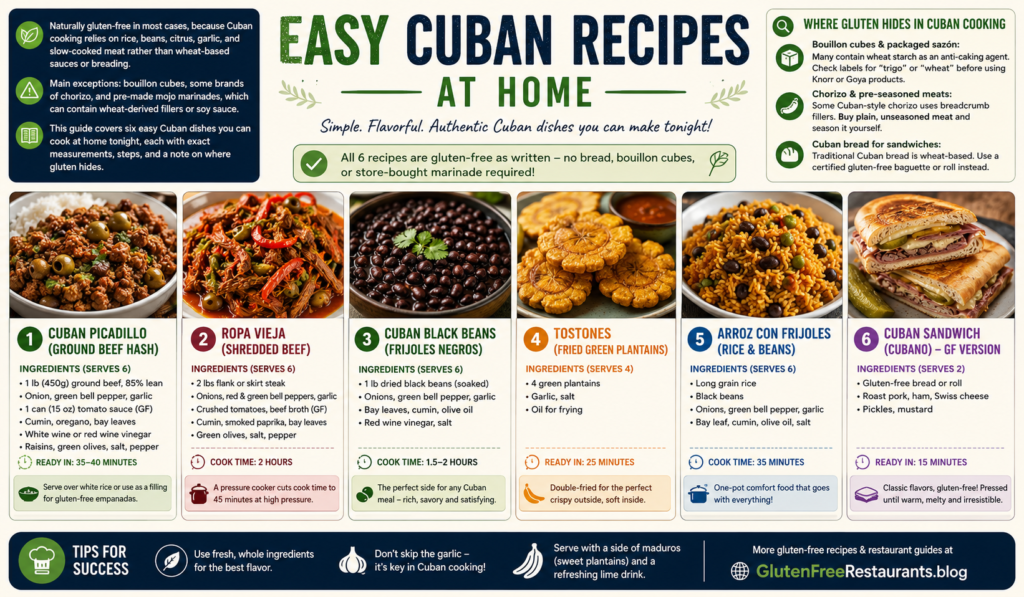
A classic first Polish dinner: kotlety mielone with mizeria and boiled potatoes, followed by one of these gluten-free dessert recipes for a sweet finish. To keep exploring hearty European home cooking, see these traditional easy Dutch recipes and easy Cuban recipes.
Frequently Asked Questions
Are pierogi naturally gluten-free?
No. Traditional pierogi dough is made with wheat flour, so a 1:1 gluten-free flour blend with added xanthan gum is required to replicate the texture.
What gives kotlety mielone their flavor if I remove the breadcrumbs entirely?
Removing breadcrumbs changes the texture significantly, so a gluten-free breadcrumb substitute is recommended instead of omitting them, since they hold moisture in the patty during frying.
Is Polish potato pancake batter gluten-free without changes?
Most recipes include a small amount of wheat flour as a binder, so a gluten-free flour blend in the same quantity produces the same result.
Can gołąbki be made without rice for a lower-carbohydrate version?
Cauliflower rice replaces regular rice in gołąbki filling in a 1:1 ratio, though the rolls will hold together less firmly during simmering.
Does barszcz need a flour-based roux?
No. Clear barszcz uses no roux; only the creamy, thickened version of some regional recipes calls for flour, and that version is not covered in this guide.
How long does gluten-free pierogi dough need to rest before rolling?
Twenty minutes of resting time allows the flour blend to hydrate fully, which prevents the dough from cracking when rolled thin.
Can I make pierogi dough ahead of time?
Yes. Wrap the rested dough tightly in plastic wrap and refrigerate it for up to 24 hours. Let it come back to room temperature for 20 minutes before rolling, since cold dough cracks more easily.
What cheese works best in pierogi ruskie?
Farmer’s cheese (twaróg) is the traditional choice. In the US, dry-curd cottage cheese or well-drained ricotta works as a substitute. Avoid regular wet cottage cheese, since the extra moisture makes the filling leak.
Why do my potato pancakes turn brown?
Grated potatoes oxidize within minutes of exposure to air. Work quickly, squeeze and mix the batter right after grating, and get the first batch into the hot oil fast. A teaspoon of lemon juice in the batter slows the browning.
Can I bake gołąbki instead of simmering them?
Yes. Arrange the rolls in a baking dish, cover with the tomato sauce, cover tightly with foil, and bake at 350°F (175°C) for 75 minutes. The result is slightly firmer than the simmered version.
Is żurek gluten-free?
No, traditional żurek is made with a fermented rye flour starter, which contains gluten. A gluten-free version needs a starter made from fermented rice flour or buckwheat flour instead.
What is the difference between pierogi ruskie and pierogi leniwe?
Pierogi ruskie are filled dumplings with potato and cheese, while pierogi leniwe (“lazy pierogi”) are unfilled cheese dumplings, closer to gnocchi. Both can be made gluten-free with a 1:1 flour blend.
Can I use a food processor for the pierogi dough?
Yes, pulse the dry ingredients first, then add the wet ingredients and pulse until a dough forms. Finish with 1 minute of hand kneading so you can feel the texture; gluten-free dough should be soft but not sticky.
How do I know when kotlety mielone are done?
They should be browned on both sides and reach 160°F (71°C) internally. If you do not own a thermometer, cut one open, the center should show no pink.
Conclusion
Easy Polish recipes at home span a cook-time range of 15 minutes to 3 hours across the six core dishes in this guide. Quick dishes such as mizeria and placki ziemniaczane fit into a weekday routine, while slow-simmered dishes such as gołąbki suit weekend cooking. Every dish above has been adjusted for gluten at the exact point where wheat would otherwise appear, so matching a recipe to the available equipment and time bracket lets you plan a Polish meal for any schedule.
Six dishes cover the core of a Polish home-cooked meal: a dumpling, a fried side, a stuffed main, a pan-fried patty, a cold salad, and a soup. Start with mizeria or placki ziemniaczane if this is a first attempt at Polish cooking; both take under 30 minutes and use no dough at all.
Polish cuisine comes from Poland, where these dishes have been prepared in home kitchens for generations.