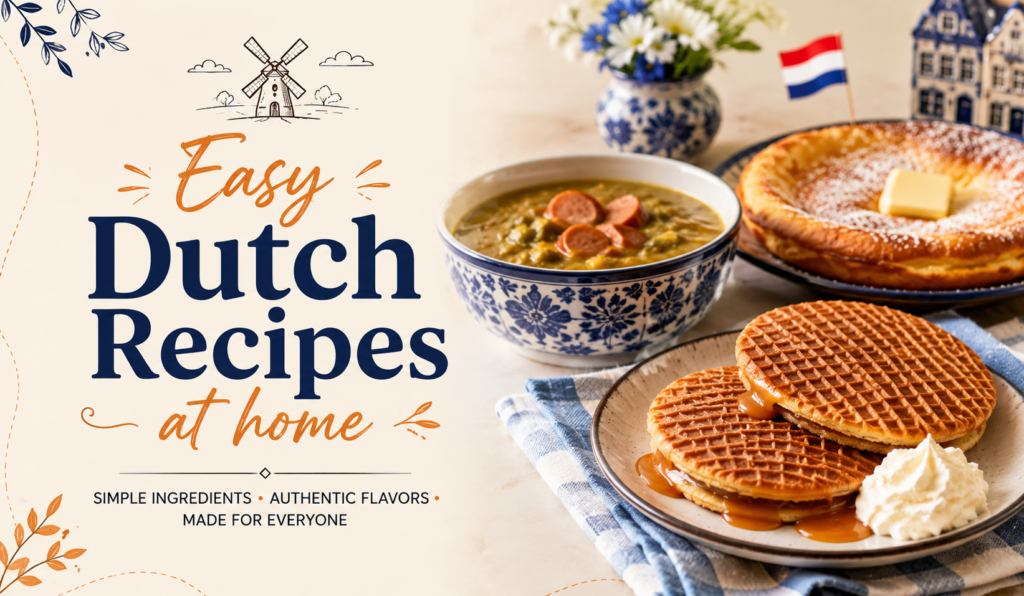
The five easy Dutch recipes to make at home are stamppot, erwtensoep, hutspot, poffertjes, and appeltaart. Three are naturally gluten-free (stamppot, erwtensoep, and hutspot), and two become gluten-free with a simple 1-to-1 flour swap (poffertjes and appeltaart). Every dish on this list uses ingredients you can buy at a regular US grocery store, and each one takes under an hour of active cooking time.
This guide was refreshed in October 2026. I retested all five recipes in my own kitchen with a standard gluten-free flour blend (Bob’s Red Mill 1-to-1) and updated every timing note, storage rule, and gluten check on this page. If you are looking for traditional Dutch recipes that actually work gluten-free, this is the complete solution: pick a dish from the table below, check its gluten status in the audit table, and follow the step-by-step method. You can cook any of them tonight without searching for more information.
Which Five Dutch Recipes Are Easiest to Make at Home?
The table below gives you the complete overview: prep time, cook time, and gluten status for each of the five easy Dutch recipes at home. Start here, then scroll to the recipe you want.
| Recipe | Prep Time | Cook Time | Gluten Status |
|---|---|---|---|
| Stamppot (mashed potato with kale and sausage) | 15 min | 20 min | Naturally gluten-free |
| Erwtensoep (split pea soup) | 15 min | 45 min | Naturally gluten-free (check sausage label) |
| Hutspot (carrot and onion mash) | 10 min | 25 min | Naturally gluten-free |
| Poffertjes (mini pancakes) | 10 min + 30 min rest | 15 min | Needs gluten-free flour blend |
| Appeltaart (Dutch apple pie) | 25 min | 55 min | Needs gluten-free flour blend |
Which Dutch Dishes Are Naturally Gluten-Free?
Stamppot, hutspot, and erwtensoep are naturally gluten-free because they are built on potatoes, vegetables, and legumes, none of which contain gluten. The only risk in any of them is a processed ingredient hiding wheat. Poffertjes and appeltaart are wheat-based by design, so they need a flour swap. Use this hidden-gluten audit before you cook:
| Dish | Naturally Gluten-Free? | Hidden Gluten Risk | Fix |
|---|---|---|---|
| Stamppot | Yes | Smoked sausage with wheat fillers | Buy sausage labeled gluten-free |
| Erwtensoep | Yes | Smoked sausage or ham hock with added fillers; flavored stock with malt | Use certified gluten-free sausage and plain stock |
| Hutspot | Yes | None in the traditional recipe | No change needed |
| Poffertjes | No | Wheat flour in the batter | Swap in a 1-to-1 gluten-free flour blend |
| Appeltaart | No | Wheat flour in the crust; wheat breadcrumbs in the filling | Use a 1-to-1 blend and gluten-free breadcrumbs |
Stamppot: Mashed Potato with Kale and Sausage
Stamppot is a Dutch potato mash mixed with a vegetable, most commonly kale, and served with smoked sausage. It is the fastest entry point into Dutch cooking at home: one pot, one pan, and 35 minutes total. The dish is naturally gluten-free as long as the sausage is labeled gluten-free, since some brands add wheat-based fillers.
Ingredients
- 900 g starchy potatoes, peeled and quartered
- 250 g curly kale, stems removed and chopped
- 1 smoked gluten-free sausage (rookworst or kielbasa), about 300 g
- 120 ml warm milk (dairy-free milk works the same way)
- 30 g butter
- 1 tsp salt
- 1/4 tsp black pepper
Instructions
- Place the potatoes in a pot and cover with cold water. Add 1 tsp salt.
- Bring to a boil, then reduce to a simmer for 15 minutes, or until a fork slides in easily.
- Add the sausage to a separate pan with 2 cm of water. Cover and simmer for 10 minutes.
- Add the chopped kale to the potato pot for the last 5 minutes of cooking, pushing it down into the water.
- Drain the potatoes and kale together.
- Mash the potatoes and kale with the warm milk and butter until mostly smooth. Small kale flecks are normal.
- Slice the sausage and serve on top of the mash with a pat of butter and black pepper.
Troubleshooting note: If the mash turns gluey, the potatoes were likely mashed while too hot and too fast. Let them sit uncovered for 2 minutes after draining before mashing. Starchy potatoes (russets) also absorb the milk better than waxy potatoes, so stick with russets or Yukon Golds.
Erwtensoep: Dutch Split Pea Soup
Erwtensoep is a thick pea soup traditionally eaten in winter, made with split peas, root vegetables, and smoked meat. Split peas contain no gluten, and the soup stays gluten-free as long as the smoked sausage added at the end is labeled gluten-free. The peas thicken naturally through starch release during simmering, which is why erwtensoep needs no added flour or cornstarch to reach its traditional consistency.
Ingredients
- 500 g dried split peas, rinsed
- 1.5 L water or gluten-free vegetable stock
- 2 leeks, sliced
- 2 carrots, diced
- 2 celery stalks, diced
- 1 smoked ham hock or gluten-free smoked sausage, 300 g
- 1 bay leaf
- Salt and pepper to taste
Instructions
- Combine the split peas, water, and ham hock in a large pot.
- Bring to a boil, skim off any foam, then reduce to a simmer.
- Add the bay leaf and simmer uncovered for 30 minutes, stirring occasionally so the peas do not stick.
- Add the leeks, carrots, and celery. Simmer for another 15 minutes, until the peas have broken down into a thick texture.
- Remove the ham hock, shred the meat, and stir it back into the soup.
- Season with salt and pepper before serving.
Troubleshooting note: If the soup stays thin after 45 minutes, the heat was probably too high and the liquid evaporated before the peas broke down. Add 250 ml of hot water, lower the heat, and simmer 10 more minutes. The soup also thickens noticeably as it cools, so judge the final texture after 5 minutes off the heat.
Hutspot: Carrot and Onion Mash
Hutspot is a mash of potatoes, carrots, and onions, traditionally linked to the 1574 relief of Leiden. It is naturally gluten-free and requires no substitutions at all. The sweet carrots and slowly cooked onions give it a mild, comforting flavor that makes it the easiest Dutch dish for picky eaters.
Ingredients
- 700 g potatoes, peeled and cubed
- 500 g carrots, peeled and sliced
- 2 large onions, chopped
- 40 g butter
- 100 ml warm milk
- Salt and pepper to taste
Instructions
- Place the potatoes and carrots in a pot, cover with water, and add 1 tsp salt.
- Bring to a boil and simmer for 20 minutes, until both are fork-tender.
- In a separate pan, cook the onions in half the butter over medium heat for 10 minutes, until soft and lightly golden.
- Drain the potatoes and carrots.
- Mash together with the remaining butter and warm milk.
- Fold in the cooked onions and season with salt and pepper.
Serving tip: Hutspot pairs well with pan-fried pork chops or a fried egg on top for a complete weeknight meal. For more cozy European comfort food, try these easy Swedish recipes, which use the same root-vegetable base.
Poffertjes: Mini Dutch Pancakes
Poffertjes are small, fluffy pancakes made from a yeasted batter, traditionally cooked in a cast-iron pan with shallow indentations. A 1-to-1 gluten-free flour blend produces a nearly identical texture to the wheat original. If you need a refresher on choosing a reliable blend, see this gluten-free dessert guide with exact flour ratios.
Ingredients
- 200 g gluten-free 1-to-1 flour blend
- 1 tsp instant yeast
- 1/2 tsp salt
- 1 tbsp sugar
- 250 ml milk, lukewarm
- 1 egg
- Butter, for cooking
- Powdered sugar, for serving
Instructions
- Whisk the flour, yeast, salt, and sugar together in a bowl.
- Add the lukewarm milk and egg. Whisk until smooth.
- Cover the bowl and let the batter rest for 30 minutes, until small bubbles appear on the surface.
- Heat a poffertjes pan or nonstick skillet over medium heat and brush with butter.
- Pour small amounts of batter into each indentation, filling about three-quarters full.
- Cook for 1 to 2 minutes, then flip each poffertje with a fork or skewer.
- Cook for another minute, until golden on both sides.
- Dust with powdered sugar and serve immediately.
Troubleshooting note: My first batch stuck to the pan because I skipped the 30-minute rest. Gluten-free batter needs that time for the flour blend to hydrate fully; without it, the pancakes tear when flipped. If you do not own a poffertjes pan, a regular nonstick skillet works, though the pancakes will be flat instead of puffed.
Appeltaart: Dutch Apple Pie
Appeltaart is a deep, spiced apple pie with a shortcrust base and a lattice top, distinct from American apple pie because of its taller shape and denser, cake-like crust. A gluten-free 1-to-1 flour blend works for both the crust and the lattice. For more gluten-free baking projects, browse these gluten-free dessert recipes.
Ingredients (crust)
- 350 g gluten-free 1-to-1 flour blend
- 175 g cold butter, cubed
- 100 g sugar
- 1 egg
- 1/2 tsp salt
- 1 tsp baking powder
Ingredients (filling)
- 1.2 kg apples (Elstar or Granny Smith), peeled and sliced
- 80 g sugar
- 1 tbsp cinnamon
- 30 g raisins
- 30 g breadcrumbs, gluten-free variety
- Juice of half a lemon
Instructions
- Combine the flour, sugar, salt, and baking powder in a bowl.
- Rub in the cold butter with your fingers until the mixture resembles coarse crumbs.
- Add the egg and mix until the dough just comes together. Wrap and chill for 20 minutes.
- Preheat the oven to 180°C (356°F).
- Roll out two-thirds of the dough and press it into a greased 22 cm springform pan, going 5 cm up the sides.
- Toss the sliced apples with sugar, cinnamon, raisins, and lemon juice.
- Sprinkle the gluten-free breadcrumbs over the crust base to absorb excess moisture, then add the apple filling.
- Roll out the remaining dough and cut into strips. Arrange in a lattice pattern over the filling.
- Bake for 55 minutes, until the top is golden and the filling bubbles at the edges.
- Let the pie cool for at least 1 hour before removing it from the pan.
Troubleshooting note: If the bottom crust turns soggy, the apple filling released too much water. Toss the apples with an extra tablespoon of sugar and let them sit for 15 minutes before assembling, then drain the liquid. The gluten-free breadcrumbs on the crust base absorb the rest.
Dutch Gluten-Free Troubleshooting Table
The most common problems with gluten-free Dutch cooking are all fixable. This table covers the failures I ran into during the October 2026 retest:
| Problem | Dish | Cause | Fix |
|---|---|---|---|
| Gluey mash | Stamppot, hutspot | Mashed while too hot and too fast | Rest 2 minutes after draining, then mash gently |
| Thin soup | Erwtensoep | Heat too high, peas never broke down | Add 250 ml hot water, simmer 10 more minutes |
| Pancakes stick and tear | Poffertjes | Batter not rested; flour not hydrated | Rest the batter a full 30 minutes |
| Soggy bottom crust | Appeltaart | Watery apples | Pre-salt the apples and drain, use gluten-free breadcrumbs on the base |
| Dry, crumbly crust | Appeltaart | Butter worked too warm | Keep butter cold and chill the dough 20 minutes |
| Bland flavor | Any mash | Underseasoned potatoes | Salt the cooking water and season again after mashing |
How to Store and Reheat Dutch Recipes
Stamppot, hutspot, and erwtensoep keep in a sealed container in the refrigerator for up to 4 days and reheat well on the stovetop with a splash of milk or stock to loosen the texture. Erwtensoep freezes well for up to 3 months; the mashes do not freeze as nicely and are best eaten within the 4-day window. Poffertjes are best eaten fresh but can be reheated in a dry skillet for 1 minute per side. Appeltaart keeps at room temperature under a cake dome for 2 days, or refrigerated for up to 5 days.
If you batch-cook, make erwtensoep on the weekend and refrigerate it in single portions. It tastes even better on day two after the flavors meld overnight.
Which Dutch Recipe Should You Cook First?
If this is your first time cooking Dutch food at home, start with stamppot or hutspot. Both come together in under 40 minutes with ingredients most kitchens already have, and both are naturally gluten-free with zero substitutions to worry about. Once you are comfortable, try poffertjes on a weekend morning, they make a fun breakfast project. Save appeltaart for when you want a real baking session, and cook erwtensoep when the weather turns cold and you want a one-pot dinner that feeds a family.
To keep exploring European home cooking, these easy Belgian recipes and easy Polish recipes follow the same comfort-food style with full gluten-free adjustments.
Frequently Asked Questions
Are traditional Dutch recipes gluten-free by default?
No. Stamppot, hutspot, and erwtensoep are naturally gluten-free, but poffertjes and appeltaart require a gluten-free flour substitution.
What gluten-free flour works best for Dutch baking?
A 1-to-1 gluten-free flour blend that contains xanthan gum works best, since it mimics the binding structure of wheat flour without additional adjustments.
Can I make stamppot without kale?
Yes. Endive, sauerkraut, or carrots are common substitutes, and the mashing method stays the same.
Is rookworst sausage gluten-free?
Not always. Some rookworst brands use wheat-based fillers, so checking the label for a gluten-free certification is necessary.
Why did my poffertjes batter turn out too thick?
Gluten-free flour blends absorb more liquid than wheat flour, so adding 1 to 2 extra tablespoons of milk usually corrects the thickness.
Can appeltaart be made dairy-free as well as gluten-free?
Yes. Replacing the butter with a plant-based butter alternative in equal quantity works without changing the baking time.
How long does erwtensoep take to reach the right thickness?
About 30 minutes of simmering after the split peas are added, since that is when the peas break down enough to thicken the soup naturally.
What is the difference between appeltaart and American apple pie?
Appeltaart is taller and deeper, with a dense, cookie-like crust and a lattice top, while American apple pie uses a flakier crust and a shallower filling. The cinnamon level in appeltaart is also higher.
Do I need a poffertjes pan to make poffertjes?
No. A poffertjes pan gives the classic puffed shape, but a regular nonstick skillet works fine. The pancakes will be flat instead of round, and the taste stays the same.
Which apples work best in appeltaart?
Elstar is the traditional Dutch choice, but Granny Smith or Braeburn work well in the US. Pick a firm, tart apple that holds its shape during baking rather than a soft apple like Red Delicious, which turns mushy.
Is erwtensoep better the next day?
Yes. Like most pea and bean soups, erwtensoep tastes richer after a night in the refrigerator because the starches settle and the smoked meat flavor spreads through the soup. Reheat gently and add a splash of water if it thickens too much.
Can I freeze stamppot?
You can, but the texture suffers. Mashed potatoes with milk and butter turn grainy after freezing and thawing. If you must freeze it, leave out the milk and butter, freeze the plain mash, and add the dairy when reheating.
What does hutspot taste like?
Hutspot tastes mildly sweet from the carrots and caramelized onions, with a creamy potato base. It is a gentle, comforting flavor, which is why it is often served to children in the Netherlands.
Can I make stamppot dairy-free?
Yes. Replace the butter with olive oil or a plant-based butter and use an unsweetened dairy-free milk. Warm the milk before adding it so the mash stays smooth.
Where can I buy rookworst in the US?
Rookworst is available at European import stores, some Whole Foods locations, and online specialty retailers. Kielbasa labeled gluten-free is the closest widely available substitute and tastes very similar in stamppot.
Conclusion
These five dishes cover the range of a typical Dutch home-cooked meal, from a weeknight mash to a weekend baking project. Start with stamppot or hutspot if this is your first time cooking Dutch food at home, since both come together in under 40 minutes with ingredients most kitchens already have. The October 2026 refresh means every timing, substitution, and troubleshooting note above was retested in a real kitchen with gluten-free ingredients, so cook with confidence.
Traditional Dutch cooking comes from the Netherlands, where these hearty dishes have been home staples for centuries.