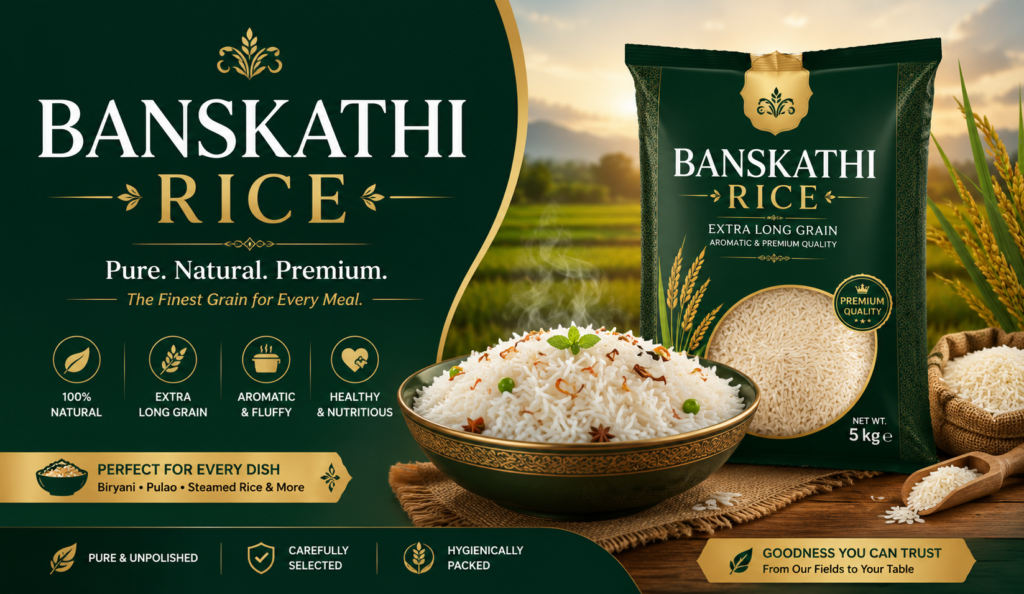
Rice is one of the safest starting points for anyone building a gluten free kitchen, and Banskathi rice — a long-grain, parboiled variety grown and traded out of West Bengal, India — is no exception. But “rice is gluten free” is only the first layer of the answer. Anyone managing celiac disease or a serious gluten sensitivity needs to understand not just the grain itself, but how it’s grown, processed, packaged, and cooked, because gluten risk almost always shows up in the details rather than the ingredient list.
This guide walks through what Banskathi rice actually is, why it’s naturally gluten free, where cross-contamination can still creep in, how it compares to other well-known rice varieties, and how to cook it so it turns out the way it’s meant to — firm, separate-grained, and reliable for everything from a simple side dish to fried rice the next day.
What Is Banskathi Rice?
Banskathi rice is a long-grain, parboiled rice variety most commonly associated with West Bengal, particularly the Bardhaman and Hooghly districts, where much of India’s commercial rice trade is concentrated. It’s sold in both single-polished and double-polished forms, with double-polished grains having a cleaner, whiter appearance because more of the outer bran layer has been removed during milling.
Unlike aromatic specialty rices such as basmati, Banskathi rice is positioned as an everyday table rice. It doesn’t carry a strong natural fragrance, and its appeal comes from practicality: consistent texture, good value, and a grain that holds up well through cooking, reheating, and repurposing into other dishes.
The name itself is tied to regional trade rather than a single farm or brand — much like “Miniket” or “Swarna,” Banskathi is a rice type that multiple mills and traders in the region process and sell under the same general name, with quality varying somewhat by supplier.
Parboiling: The Step That Defines This Rice
The defining characteristic of Banskathi rice isn’t the grain variety alone — it’s the parboiling process. Parboiling involves partially boiling the paddy (rice still in its husk) before it’s dried and milled. This step does three things:
- It gelatinizes some of the starch inside the grain, which changes the texture after cooking.
- It pushes some of the nutrients from the outer bran layer into the grain itself, since the boiling happens before the bran is removed.
- It hardens the grain slightly, which is why parboiled rice tends to stay firmer and less sticky once cooked, compared to raw-milled rice of the same variety.
This is why Banskathi rice, and parboiled rice in general, is often preferred for dishes where you don’t want the grains to clump — fried rice, rice salads, and dishes that get reheated a day or two later.
Is Banskathi Rice Gluten Free?
Yes. Banskathi rice, like all pure rice, contains no gluten. Gluten is a protein found specifically in wheat, barley, and rye. Rice belongs to an entirely different botanical family, and neither the grain nor the parboiling process introduces any gluten-containing ingredient. A bag of plain Banskathi rice — rice and nothing else — is gluten free by nature, the same way any unprocessed rice would be.
This makes rice, including Banskathi rice, one of the more dependable staples for a gluten free diet. It doesn’t require special formulation the way gluten free bread or pasta does, since there’s no gluten to replace or work around in the first place.
Where The Real Risk Comes From: Cross-Contamination
The gluten conversation around rice almost never comes down to the rice itself — it comes down to what happens to it after harvest. A few specific points are worth understanding:
- Shared processing facilities. Some rice mills also process wheat, barley, or other gluten-containing grains on the same equipment. Without dedicated lines or thorough cleaning between runs, trace amounts of gluten-containing dust can end up in the rice.
- Shared packaging lines. Even if the milling itself is separate, packaging facilities that handle multiple grain products can introduce cross-contact at the point of bagging.
- Bulk bins at retail. Loose rice sold from bulk bins, where scoops are shared across multiple grain types, carries a higher cross-contamination risk than pre-packaged rice from a single-ingredient bag.
- Home kitchen storage. Rice stored in a container that previously held flour, or scooped with a utensil also used for wheat flour, can pick up gluten even after purchase.
None of this means Banskathi rice is unsafe by default. It means that for someone with celiac disease, the safety of a bag of rice depends on the practices of the mill, packager, and retailer — not on the rice variety itself. For strict gluten free needs, looking for rice that’s explicitly labeled gluten free, or confirming directly with the brand or supplier about shared-line processing, closes that gap.
Four Checks Before Buying Banskathi Rice For A Gluten Free Kitchen
- Ingredient list contains rice only. Some packaged rice products include added coatings, flavorings, or vitamin fortification sprays that can carry hidden gluten. A single-ingredient bag is the simplest way to avoid this.
- No stated shared-line processing with wheat. Some packaging will disclose this, especially in markets with stricter allergen labeling requirements. When it isn’t stated, it doesn’t hurt to ask.
- Supplier transparency. A trustworthy supplier — whether a local mill, an online grocer, or a specialty import shop — should be able to answer a direct question about whether the same equipment handles wheat products.
- Separate home storage. Once it’s in your kitchen, storing Banskathi rice in its own clearly labeled, dedicated container avoids any risk of it picking up gluten from flour dust at home.
Nutritional Profile Of Parboiled Rice
Because parboiling pushes some nutrients from the bran into the grain before milling, parboiled rice varieties like Banskathi generally retain slightly more of their original nutrient content than fully milled raw rice of the same type. This includes a modest retention advantage for some B vitamins and minerals that would otherwise be lost when the bran is polished away.
That said, Banskathi rice is still a refined, polished rice rather than a whole-grain product like brown rice. It’s a good source of easily digestible carbohydrates and a reasonable amount of protein for a grain, but it isn’t a significant source of fiber the way brown or red rice varieties are. For anyone specifically prioritizing fiber intake alongside gluten free eating, pairing Banskathi rice with vegetables, legumes, or a whole-grain gluten free alternative on other days rounds out the nutritional picture.
How To Cook Banskathi Rice
Parboiled rice behaves a little differently on the stove than raw-milled rice, mainly because it has already absorbed some moisture during processing and has a firmer starch structure. Here’s a reliable method:
- Rinse thoroughly. Rinse the rice two to three times, swirling it with your hand each time, until the water runs mostly clear. This removes surface starch and loose debris from milling.
- Use the right water ratio. Parboiled rice generally needs slightly more water than raw rice — a ratio of about 1 part rice to 2 parts water works well for a fluffy, fully cooked result.
- Bring to a boil, then simmer. Start the rice and water on high heat until it reaches a boil, then reduce immediately to a low simmer and cover with a tight-fitting lid.
- Cook low and slow. Let it cook undisturbed for 18 to 22 minutes. Resist the urge to lift the lid partway through, since escaping steam extends the cooking time and can leave the top layer undercooked.
- Rest before fluffing. Once the water has been absorbed, take the pot off the heat and let it rest, covered, for about 5 minutes. This lets the moisture even out through the grains. Fluff with a fork afterward rather than stirring vigorously, which can break the grains and make the rice gummy.
A Few Cooking Notes
- If the rice seems slightly underdone after the resting period, add a tablespoon or two of hot water, cover again, and let it steam for a few more minutes rather than returning it to direct heat.
- A rice cooker works well for Banskathi rice using the same water ratio, and it removes the guesswork around timing.
- Leftover Banskathi rice keeps its shape better than most raw-milled rice after refrigeration, which is exactly why it holds up so well in next-day fried rice.
Also Read: Dubki Menu Gluten-Free Guide: What You Can Safely Order
Culinary Uses: Where Banskathi Rice Shines
Because of its firm, separate-grain texture, Banskathi rice tends to perform best in dishes where texture matters as much as flavor:
- Fried rice. The grains stay distinct instead of clumping together, which is the single biggest factor in good fried rice texture.
- Rice bowls. A neutral base for bowls built around vegetables, proteins, and sauces, since it doesn’t compete with other flavors.
- Simple pulao-style dishes. While not as aromatic as basmati, Banskathi rice can still carry a lightly spiced pulao well, especially when the dish leans on the other ingredients for fragrance.
- Everyday table rice. Served plain alongside curries, dals, or stir-fries, it’s a dependable, budget-friendly choice for daily meals.
It’s less suited to dishes that specifically call for an aromatic, fluffy grain with a lot of natural fragrance — for those, a basmati or a short-grain aromatic variety like Gobindobhog is a better fit.
Banskathi Rice Compared To Other West Bengal Rice Varieties
| Rice Variety | Grain Type | Aroma | Best Used For |
|---|---|---|---|
| Banskathi | Long grain, parboiled | Neutral | Everyday meals, fried rice, rice bowls |
| Miniket | Medium grain | Mild | Daily table rice, biryani-style dishes |
| Gobindobhog | Short grain | Strongly aromatic | Festive dishes, kheer, pulao |
| Swarna | Medium-long grain | Neutral | Budget everyday cooking |
Each of these is grown and traded in overlapping regions of West Bengal, and all of them are naturally gluten free in their unprocessed form, for the same reason Banskathi rice is — none of them are related to wheat, barley, or rye.
Buying Tips: How To Choose Good Banskathi Rice
- Check for uniform grain size. Good-quality Banskathi rice has consistent grain length with minimal broken pieces. A bag with a lot of broken grains often cooks unevenly.
- Look at color consistency. The grains should have a fairly even, slightly translucent appearance. A dusty or chalky look across many grains can indicate lower processing quality.
- Smell test. Rice shouldn’t have a musty or off smell through the packaging. A stale smell can indicate old stock or improper storage before it reached the shelf.
- Buy from a source you can question. Whether it’s a local South Asian grocer, an online specialty retailer, or direct from a mill, being able to ask about processing practices is more useful than any single line on the label.
Storage Tips For Banskathi Rice At Home
- Store in an airtight container to protect against moisture and pests, which affect parboiled rice the same way they affect any rice variety.
- Keep it in a cool, dry pantry away from direct sunlight, which can accelerate rancidity in the natural oils present in the grain.
- Label the container clearly, especially in a kitchen where multiple rice varieties or gluten-containing flours are also stored, to avoid any accidental cross-use of scoops or containers.
- Properly stored, dry Banskathi rice keeps well for many months, though for the best texture and flavor, using it within a year of purchase is a reasonable guideline.
Frequently Asked Questions
Does Banskathi rice contain gluten?
No. Banskathi rice is a pure rice product and contains no gluten. Any gluten risk comes from cross-contact during processing or packaging, not from the grain itself.
Is parboiled rice healthier than raw-milled rice?
Parboiling shifts some nutrients from the bran into the grain before milling, so parboiled rice like Banskathi retains slightly more of certain vitamins and minerals than fully milled raw rice of the same variety. It’s still a refined grain, though, not a whole-grain substitute.
Can Banskathi rice be used for fried rice?
Yes. Its firm, separate-grain texture after cooking makes it particularly well suited to fried rice and other dishes where you don’t want the grains to clump together.
Where is Banskathi rice grown?
It’s primarily grown and processed in West Bengal, India, with the Bardhaman and Hooghly districts commonly associated with its trade and milling.
Is Banskathi rice the same as basmati?
No. Basmati is a distinct, aromatic long-grain rice variety. Banskathi is a separate, non-aromatic long-grain rice more commonly used as an everyday table rice than for dishes that rely on a strong rice fragrance.
How do I know if a specific bag of Banskathi rice is safe for celiac disease?
Check that rice is the only listed ingredient, look for any gluten free labeling or certification if strict safety is required, and when in doubt, contact the brand or supplier directly to ask about shared-line processing with wheat products.
Does cooking method affect the gluten free status of rice?
No, cooking method doesn’t introduce gluten. What matters is whether the cooking process introduces cross-contact — for example, boiling gluten free rice in the same water previously used for pasta, or using utensils that touched wheat-based foods without washing them first.
This article is for general informational purposes and reflects publicly available information about rice processing and gluten free dietary practices. It is not medical advice. Anyone managing celiac disease or a diagnosed gluten sensitivity should consult a healthcare provider or registered dietitian for guidance specific to their situation.