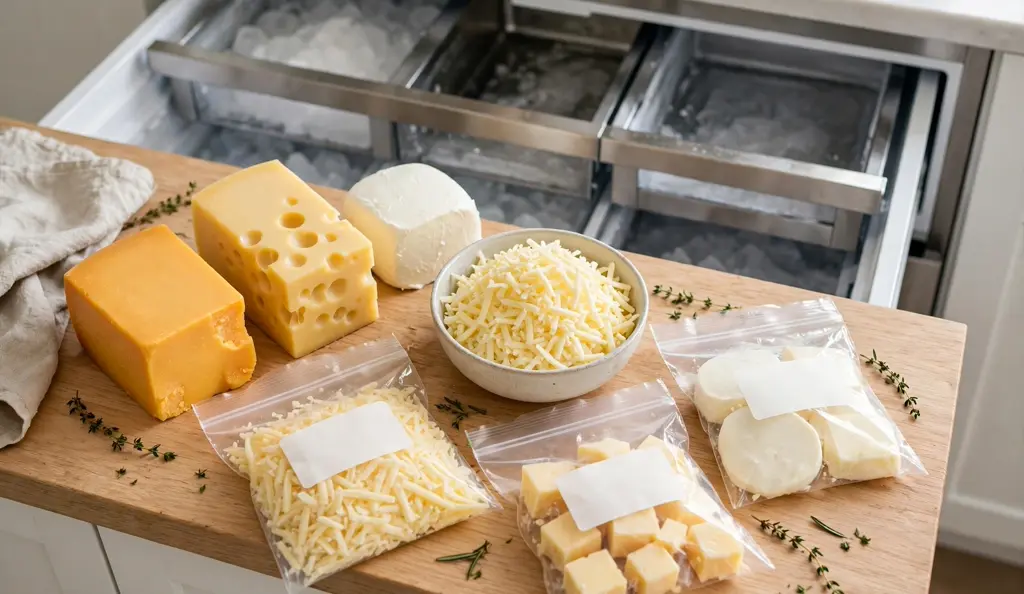
Yes, you can freeze cheese. It keeps well for up to 6 months when you freeze it right. As of October 2026, the USDA still favors hard cheeses. Cheddar and Swiss freeze best. Soft cheeses like Brie and ricotta freeze poorly. The trick is in how you wrap, portion, and thaw it.
This guide answers can you freeze cheese in full. You will learn which cheeses handle the freezer. You will get the exact steps that prevent freezer burn. Plus how long each type lasts and the best way to thaw.
Why does this matter? A 2023 report by WRAP, the UK resource-efficiency charity, tells the story. Shoppers in the UK waste 34,000 tonnes of cheese every year. That is 9% of all the cheese they buy. Freezing the right cheeses is one of the simplest ways to waste less. Your own kitchen is the best place to start.
Which Cheeses Freeze Well and Which Do Not?
So the real question is not can you freeze cheese at all. It is which cheeses survive the trip. The rule is simple. Hard, low-moisture cheeses freeze well. Soft, high-moisture cheeses do not. Fat helps too. A rich cheddar keeps its quality far better than a watery fresh mozzarella.
The USDA freezer storage guide was widely reported in February 2024. It gives hard cheeses up to 6 months in the freezer. That covers cheddar, Swiss, and Parmesan. It lists soft cheeses like Brie, cottage cheese, and ricotta as poor candidates for freezing. Freezing never makes cheese unsafe. It only changes the texture. That is the honest, full answer to can you freeze cheese. Yes, with the right type and the right method.
Cheeses that freeze best
Cheddar, Swiss, Gouda, brick cheese, and firm mozzarella are your safest bets. Shredded hard cheeses freeze especially well, because you can use them straight from the bag. Grated Parmesan and Romano also freeze fine, though they already last up to 12 months in the fridge.
Cheeses to keep out of the freezer
Skip the freezer for Brie, Camembert, fresh mozzarella, cottage cheese, ricotta, and quark. Their high water content turns them grainy or watery after thawing. Delicate artisan cheeses with live cultures also lose flavor. Aged blue cheese is one example. Freezing stalls the ripening process. Many readers ask: can you freeze cheese for a party cheese board? Soft and artisan types suffer too much. Save the freezer for cooking cheese, and buy board cheese fresh.
| Cheese | Freezes well? | Best use after thawing |
|---|---|---|
| Cheddar (block or shredded) | Yes | Sauces, pizza, casseroles |
| Swiss and Gouda | Yes | Sandwiches, gratins |
| Mozzarella (low-moisture, shredded) | Yes | Pizza, baked pasta |
| Parmesan and Romano (grated) | Okay | Topping pasta, soups |
| Cream cheese | Poor | Whip after thawing, then cook |
| Brie and Camembert | No | Eat fresh instead |
| Cottage cheese and ricotta | No | Use fresh within a week |
| Blue cheese | Okay | Crumble into cooked dishes |
| Processed slices and spreads | No | Buy fresh as needed |
How to Freeze Cheese Without Freezer Burn
This five-step method keeps the texture intact. Wrapping matters more than anything else. Air is the enemy, so your goal is to lock it out completely.
- Portion it small. Never freeze a giant block you cannot finish at once. Cut hard cheese into half-pound pieces. Shred cheddar and mozzarella before bagging. Small portions thaw faster and waste less.
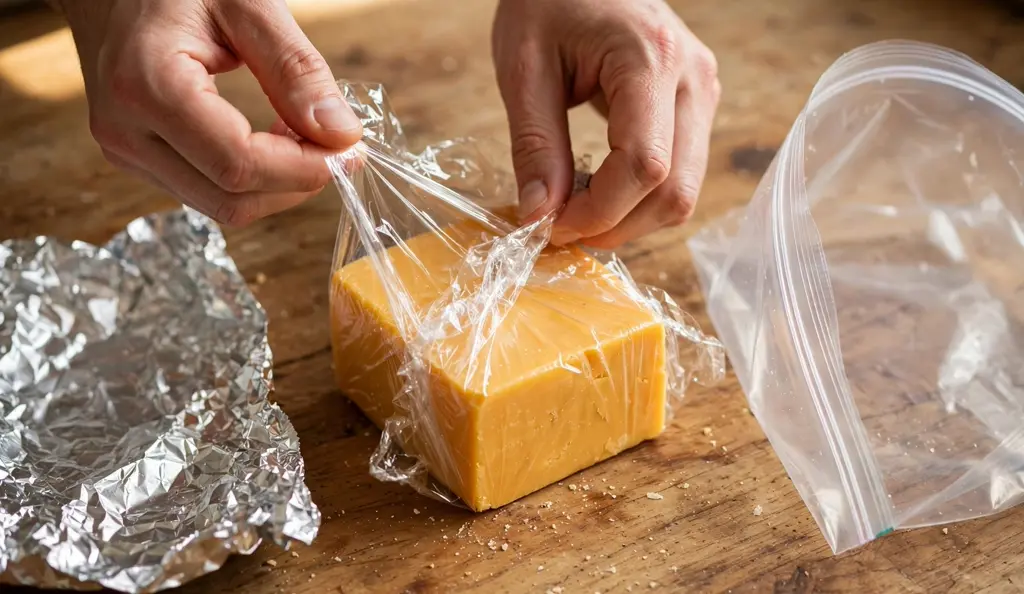
- Wrap each piece tightly in plastic wrap. Press the wrap flat against the cheese. Leave no air pockets. For slices, slip parchment paper between each one so they do not stick together.
- Add a second layer. Slide the wrapped cheese into a zip-lock freezer bag and press out the air. Or wrap it in a layer of foil. This double-wrap trick also appears in our can you freeze butter guide. It stops freezer burn cold.
- Label every bag. Write the cheese type and the freeze date. Frozen cheddar and frozen Swiss look exactly alike after a month in the freezer.
- Freeze it fast at 0°F (-18°C) or colder. Lay bags flat in the coldest part of the freezer. Use the quick-freeze setting if yours has one. Fast freezing forms tiny ice crystals, and tiny crystals do far less damage.
The International Dairy Foods Association shares a useful tip. It advises storing cheese wrapped in wax paper inside a loose bag. That keeps its moisture locked in. Freezing follows the same logic. Protect the surface from dry air, and the cheese stays better for longer.
How much cheese should go in each bag?
Keep each bag under 1 pound (about 450 grams). That amount thaws evenly in the fridge and gets used up before it can dry out.
How Long Does Cheese Last in the Freezer?
Can you freeze cheese for 6 months?
Hard cheese stays good in the freezer for up to 6 months. Shredded cheese lasts about 2 to 3 months. These figures come from USDA storage guidance reported in February 2024. Soft cheeses last about 1 month frozen, but their texture suffers badly. Always label the date, and use the oldest bags first.
These limits are about quality, not safety. Food kept at 0°F stays safe far longer. But after the quality window closes, flavor fades and texture turns crumbly. That is why the 6-month mark matters for hard cheese.
Freezer timing works the same across dairy. Our can you freeze milk guide shows how milk behaves after thawing. The rules rhyme: wrap tight, freeze fast, and label well.
The stakes are bigger than one fridge. Eurostat reported fresh numbers in September 2026. The EU threw away around 58 million tonnes of food in 2024. Households were behind 53% of it. Every bag of cheese you freeze instead of binning is a small win against that number.
How to Thaw Frozen Cheese the Right Way
Thaw it slowly in the refrigerator
Move the bag from the freezer to the fridge and give it time. A half-pound block needs 7 to 8 hours. Shredded cheese thaws in 2 to 3 hours. Slow thawing keeps the texture as close to fresh as possible.
What if I need it fast?
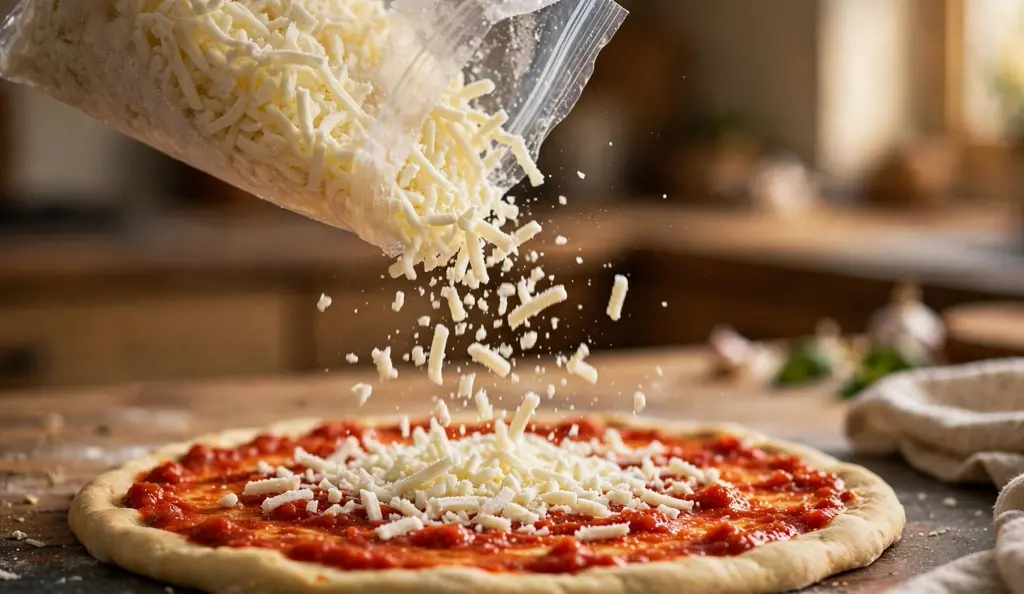
For cooked dishes, skip thawing entirely. This surprises most people. Frozen shreds go straight from the bag onto pizza or into hot sauce. The heat does the rest.
Do you need to thaw cheese before cooking?
No. Frozen shredded cheese melts well in hot dishes without any thawing. So the full answer to can you freeze cheese and cook it later is yes. Add it straight from the bag to pasta sauce, soup, or a grilled cheese pan. Cooked dishes hide every texture change that freezing causes.
One warning: never thaw cheese on the counter or in the microwave. Warm spots invite bacteria, and the microwave turns the texture rubbery. The fridge is the only safe thawing spot.
The Pizza Melt Test: A 5-Minute Check Nobody Talks About
Here is the problem most freezer guides skip. You thaw a bag of mozzarella after three months. It looks fine. But will it stretch on a pizza, or sit there in sad clumps? As of October 2026, no major guide I found offers readers a way to test this. That gap inspired the test below.
Food science backs up the worry. A study cited by Healthline tested this. Mozzarella frozen for 4 weeks melted less than mozzarella frozen for 1 week. The longer cheese sits frozen, the lazier its melt becomes. So test the bag before you serve guests. The pizza test below answers the deeper version of can you freeze cheese. It tells you whether the cheese will still melt.
- Thaw a small handful of shreds in the fridge.
- Scatter them over a slice of bread and bake at 425°F for 5 minutes.
- Watch the melt. If it flows and bubbles, the bag is guest-ready. If it stays in firm shreds, save that bag for sauces and baked pasta, where stretch matters less.
Run this test on any bag older than 2 months. It takes 5 minutes and saves a disappointing pizza night. When the test passes, build your pie on our easy gluten-free pizza recipe base. Its crust holds up well to the cheese.
Can You Freeze Cheese for Pizza Night? 7 Easy Ways to Use It
Frozen cheese shines in hot, cooked dishes, where heat erases every texture change. Stock your freezer with a purpose. A freeze-ahead breakfast stash works the same way (see our can you freeze pancakes guide). Now try these ideas:
- Top homemade pizza or flatbread straight from the bag.
- Stir shreds into mac and cheese sauce for extra stretch.
- Layer slices into grilled cheese sandwiches.
- Fold cubes into casseroles and baked pasta.
- Melt into creamy potato or broccoli soup.
- Sprinkle over nachos before a hot oven blast, then add guacamole. Our can you freeze avocado guide shows how to keep avocado ready for moments like this.
- Mix thawed shreds into quesadilla or omelet fillings.
Frequently Asked Questions About Freezing Cheese
Can you freeze shredded cheese?
Yes, and shredded cheese is one of the easiest forms to freeze. Spread the shreds on a tray, freeze for an hour, then bag them. The pre-freeze stops clumps. Toss the bag to break shreds apart before each use, and cook straight from frozen.
Can you freeze cream cheese?
You can, but expect a change. Thawed cream cheese turns grainy and may separate. Whip it hard after thawing to smooth it out. It works best in cooked dishes like cheesecake filling or creamy pasta sauce, not on a bagel.
Can you freeze mozzarella?
Yes, especially low-moisture mozzarella. Shred it first and freeze it in portioned bags. Fresh mozzarella in water freezes badly and turns rubbery. Use thawed mozzarella for pizza and baked dishes, not for a fresh caprese salad.
Can you freeze cheese slices?
Yes. Stack slices with parchment paper between each one so they do not stick together. Then wrap the stack and bag it. Thaw only the slices you need. They are perfect for grilled cheese and burgers.
Can you freeze Parmesan?
Can you freeze cheese like Parmesan that already lasts ages? You can, but you rarely need to. Grated Parmesan keeps up to 12 months in the fridge. If you freeze a wedge, wrap it well and grate it from frozen. Use it for cooking rather than shaving over a finished dish.
Can you freeze Brie?
Technically yes, but you should not. Brie turns watery and loses its creamy center after thawing. Its delicate flavor fades too. Buy Brie in small wedges and enjoy it fresh within a week instead.
Can you freeze blue cheese?
Yes, with a trade-off. Freezing stalls the live cultures that give blue cheese its sharp flavor. The cheese stays safe and usable, but it tastes milder. Crumble thawed blue cheese into salads or sauces rather than serving it on a cheese board.
Can you freeze cottage cheese or ricotta?
You can, but the texture suffers. Both turn grainy and watery when thawed. If you must freeze them, use them in cooked dishes. Lasagna and baked dips hide the change completely.
Can you refreeze cheese after thawing?
No. Do not refreeze thawed cheese. Thawing wakes up bacteria that freezing only paused, and a second freeze-thaw cycle wrecks the texture. Thaw only what you will use within 3 to 4 days.
Does freezing cheese kill bacteria?
No. Freezing pauses bacteria, yeasts, and mold. It does not kill them. They can become active again after thawing. Anyone who asks can you freeze cheese safely should know this part. Thawing must stay safe too.
Can you freeze cheese in its original packaging?
Only if the package is airtight and freezer-safe. Most store wrap lets air in. For best results, add your own layer of plastic wrap. Then add a freezer bag over the original packaging. The extra minute of work prevents freezer burn.
Can you freeze goat cheese?
Soft fresh goat cheese freezes poorly and turns crumbly. Aged, firm goat cheese handles the freezer better. Either way, use thawed goat cheese in cooked dishes. Or crumble it over salads. Skip spreading it on crackers.
Is frozen cheese gluten free?
Plain cheese is naturally gluten free, and freezing adds no gluten. But processed cheese foods, spreads, and flavored products can contain starches or flavorings that include gluten. Always check the current label, since recipes change. If you have celiac disease, check with your doctor or a registered dietitian about any new food.
The Bottom Line
Freezing cheese works when you match the method to the cheese. Hard cheeses like cheddar, Swiss, and mozzarella freeze well for up to 6 months. Soft cheeses like Brie and ricotta do not. Wrap tight, portion small, freeze fast, and thaw slow. As of October 2026, that guidance holds steady, and it saves real money.
So can you freeze cheese with confidence? Yes. Start with one bag of shredded cheddar this week. You will never toss a half-used block again.
Cheese has been made for thousands of years across many cultures. Read more about cheese and how different varieties are aged.