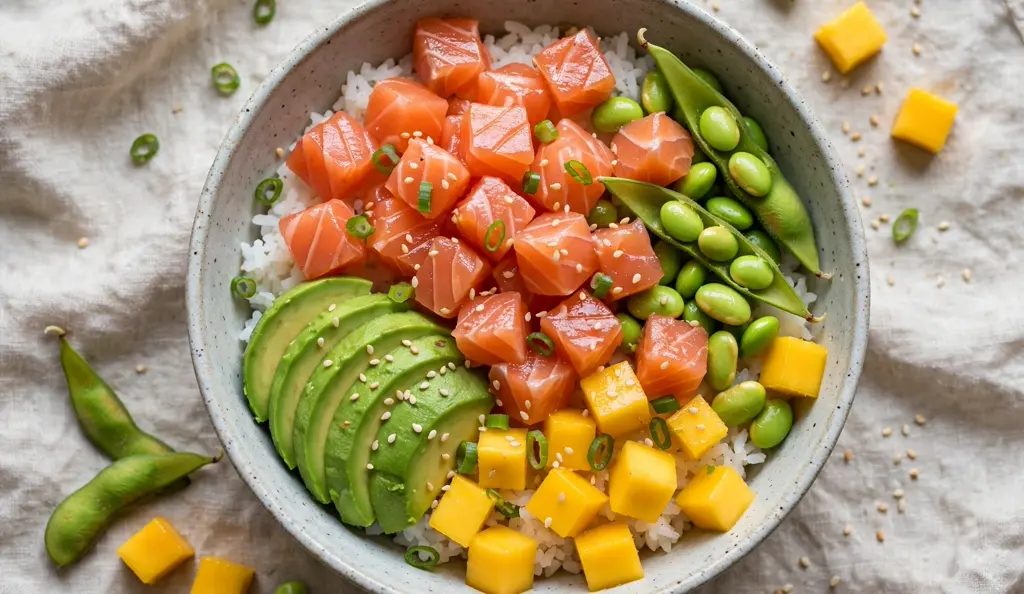
A salmon poke bowl is fresh, cubed salmon tossed in a savory sauce and served over warm rice with crisp vegetables and crunchy toppings. It is ready in about 20 minutes and needs no cooking. For gluten-free eaters, the one trap is the sauce: most recipes use soy sauce, which contains wheat. This guide fixes that with tamari and coconut aminos swaps, plus a full recipe and shop-ordering tips. It is current for October 2026.
Poke bowls have moved from Hawaiian fish-market snack to global fast-casual staple. The global poke food market was valued at USD 6.724 billion in 2024 and is projected to reach USD 7.829 billion in 2025, growing at a 16.43% annual rate through 2035, according to an EINPresswire press release from July 2026. With that many bowls sold, gluten-free eaters need a clear playbook. Below: a 20-minute recipe that is fully gluten free, the two safest sauce swaps, how to buy raw fish with confidence, and what to ask at a poke shop.
Why most salmon poke bowl recipes hide gluten
Picture someone with celiac disease building a beautiful salmon poke bowl at home. The fish is fresh, the rice is plain, the vegetables are clean. Then they pour over the classic marinade made with regular soy sauce, and the whole bowl is no longer safe. Traditional soy sauce is brewed with wheat, usually about half wheat and half soybeans. That is the single biggest gluten trap in this dish.
The risk matters because celiac disease affects about one in 100 people worldwide, according to the Celiac Disease Foundation (March 2026). For those readers, even a small amount of gluten can cause damage. Beyond Celiac also notes that cross-contact in restaurants is one of the most common ways people get “glutened” without knowing it.
The fix is simple, and it costs you nothing in flavor. Swap the soy sauce for tamari or coconut aminos. Both give you that salty, savory depth without the wheat. I compare every swap in the table below, and my guide to is soy sauce gluten free breaks down even more brands and label terms.
Other hiding spots include furikake (some blends contain soy sauce or wheat starch), imitation crab (it often uses wheat as a binder), and pre-seasoned rice at restaurants. None of these are in this recipe, but read labels on anything bottled.
Tamari vs coconut aminos: pick your safe sauce
These are the two swaps worth knowing. Tamari is the closest match to soy sauce. Coconut aminos is the backup for people who also avoid soy. Here is how they compare.
| Sauce | Gluten status | Taste | Best for |
|---|---|---|---|
| Tamari | Usually gluten free, but check the label | Rich and savory, closest to soy sauce | Readers who want real soy sauce flavor |
| Coconut aminos | Gluten free and soy free | Milder and slightly sweet | Readers who also avoid soy |
| Labeled gluten-free soy sauce | Made to be gluten free | Tastes like regular soy sauce | Readers who want zero guesswork |
| Homemade citrus ponzu | Safe if made with tamari | Bright and citrusy | Readers who like a lighter marinade |
Most tamari is brewed with little or no wheat, but a few brands add it. San-J is one widely available tamari brand that labels its product gluten free, and Coconut Secret is the best-known coconut aminos brand. Always check the current label, because recipes and ingredients change.
How to make a salmon poke bowl in 20 minutes
This is the complete recipe, written for October 2026. Follow it exactly and you get a restaurant-quality bowl that is fully gluten free. It serves 2 generously. Prep time is 15 minutes, and the salmon marinates for 10 minutes while you slice the toppings.
Ingredients
For the salmon:
- 300 g sushi-grade salmon, skinless and cut into 2 cm cubes
- 2 tablespoons tamari (certified or labeled gluten free)
- 1 tablespoon toasted sesame oil
- 1 teaspoon rice vinegar
- 1/2 teaspoon fresh ginger, finely grated
- 1 tablespoon green onions, thinly sliced
For the bowls:
- 2 cups cooked short-grain rice, still warm
- 1 ripe avocado, sliced (if yours is hard, see my guide on how to ripen avocado fast)
- 1/2 cucumber, thinly sliced into half moons
- 1/2 cup shelled edamame, steamed
- 1/4 small red cabbage, finely shredded
- 2 tablespoons toasted sesame seeds
- 2 tablespoons mayonnaise plus 1 teaspoon sriracha, mixed (check both labels for gluten)
- 1 lime, cut into wedges
Step-by-step method
- Cook the rice first so it is warm when you assemble. Short-grain rice gives the best sticky texture for holding toppings.
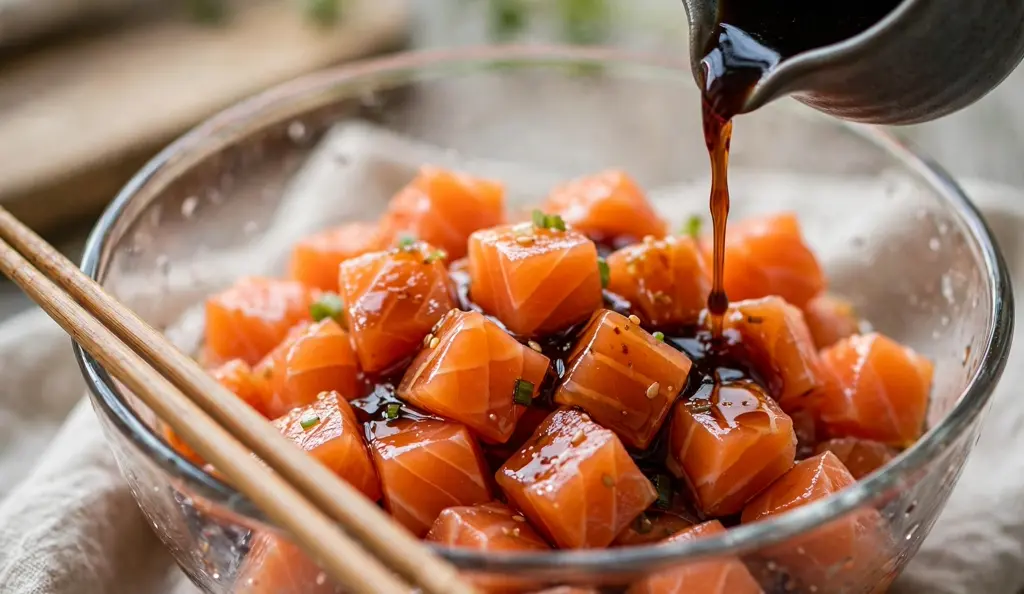
- In a medium bowl, whisk the tamari, sesame oil, rice vinegar, and ginger. This is your marinade.
- Add the salmon cubes and green onions to the marinade. Toss gently so every cube is coated. Cover and refrigerate for 10 minutes. Do not marinate longer than 30 minutes, because the vinegar starts to “cook” the fish and changes the texture.
- While the salmon marinates, slice the avocado, cucumber, and cabbage. Steam the edamame for 2 to 3 minutes if it is frozen.
- Divide the warm rice between two bowls. Arrange the marinated salmon and toppings in neat sections over the rice.
- Drizzle with the sriracha mayo and sprinkle with sesame seeds. Serve right away with lime wedges.
Keep the salmon cold while you work
Cut the salmon straight from the fridge and return the bowl to the fridge during the 10-minute marinate. Cold fish is firmer, which means cleaner cubes and a better bite. Warm fish turns soft and can develop off flavors fast.
Raw, air-fried, or seared: pick your salmon style
Classic poke uses raw fish, and this recipe is built for that. But raw is not the only way. If anyone at your table is nervous about raw fish, you have two easy options that keep the bowl delicious.
Air-fried salmon cubes work well: toss them in the same tamari marinade, then air-fry at 200 C for 8 to 9 minutes, shaking once. You get crisp edges and a juicy center. A quick pan sear also works: sear the cubes in a hot pan for about 60 seconds per side, then toss with the marinade off the heat.
One honest note: cooked salmon absorbs marinade differently. It will taste great, but the sauce sits on the surface instead of soaking in. That is a texture difference, not a flaw.
Is salmon poke bowl gluten free?
A salmon poke bowl is gluten free only when every part is free of wheat, barley, and rye. Salmon, rice, and vegetables are gluten free, so the dish is safe by default. The danger is the sauce: it is made with soy sauce, which contains wheat. Make it at home with tamari or coconut aminos and it is gluten free.
Sushi-grade salmon: how to buy it safely
“Sushi-grade” is not a regulated label. Buy salmon from a fishmonger you trust and say you plan to eat it raw. Fresh salmon should smell like the ocean, not like fish, and the flesh should spring back when you press it.
Keep the salmon refrigerated at all times and use it the same day you buy it. If you buy frozen fish labeled for raw consumption, thaw it in the fridge overnight, never on the counter. Fish quality has real variation: a USDA-led study found that Chilean farmed salmon samples averaged 756 milligrams of EPA and DHA per 85-gram serving, roughly half the legacy database figure of 1,670 milligrams (Salmon Business, August 2026). Quality varies, so a good supplier matters.
If you are pregnant or have a weakened immune system, check with your doctor before eating raw fish. When in doubt, cook the salmon using one of the methods above.
The poke shop interrogation: 5 questions to ask before you order
No recipe competitor covers this. A homemade bowl is easy to keep safe, but restaurants are where gluten sneaks in. The Gluten Intolerance Group warns that cross-contact is a major risk on fast-casual lines. Ask these five questions before you order:
- Is the fish marinated in regular soy sauce? Many shops pre-marinate salmon in wheat-based soy sauce. If it is, ask for plain, unmarinated fish.
- Do you have tamari or gluten-free soy sauce? Chains like Pokeworks keep gluten-free soy sauce packets at the end of the line, but you have to ask. No tamari means no safe marinade.
- Are the scoops and utensils shared? Shared scoops travel between the regular soy sauce bin and your bowl. Ask for fresh utensils and a clean scoop.
- Which toppings are pre-seasoned? Crispy onions, flavored seaweed salad, and imitation crab are the usual suspects. Stick to plain vegetables, avocado, and edamame.
- Can you change gloves and wipe the line? This is standard practice at good shops. If the staff looks confused by the request, eat somewhere else.
If ordering out still feels risky, my guide on finding gluten free food near me shows the trick most people miss for vetting restaurants before they go.
Which sauce swap tastes closest to soy sauce?
Tamari tastes the closest to regular soy sauce in a salmon poke bowl. It is brewed mostly from soybeans with little or no wheat, so it has the same deep, savory punch. Use it one-to-one for soy sauce. Coconut aminos works as a backup, but it is milder and sweeter, so add a squeeze of lime.
Storage and meal prep: what keeps and what does not
A salmon poke bowl is best eaten fresh, within 30 minutes of assembling. Raw salmon should not sit at room temperature, and the rice gets hard in the fridge. That said, you can prep the parts ahead. Cook the rice up to 2 days ahead and refrigerate it (see my notes on how long cooked rice lasts in the fridge), then rewarm it before serving. The tamari marinade keeps in a sealed jar in the fridge for up to 5 days. Slice vegetables the morning you plan to serve.
Do not store an assembled bowl with raw salmon overnight. Leftover marinated raw salmon should be cooked the next day, not eaten raw again. Leftover rice, vegetables, and sauce are fine for next-day bowls with freshly cooked salmon.
Salmon poke bowl FAQs
Is salmon poke bowl gluten free?
It can be, but the classic version is not. Regular soy sauce contains wheat, so any salmon poke bowl made with it is unsafe for celiac and gluten-sensitive eaters. Make it at home with tamari or coconut aminos, keep toppings plain, and the whole bowl is gluten free.
What sauce is traditionally used in salmon poke bowls?
The classic marinade is soy sauce mixed with sesame oil, sometimes with rice vinegar, ginger, or a touch of honey. For a gluten-free version, replace the soy sauce with tamari or coconut aminos and keep everything else the same.
Can I use coconut aminos instead of tamari?
Yes. Coconut aminos is gluten free and soy free, made from coconut blossom sap. It is milder and slightly sweeter than tamari, so add a squeeze of lime to keep the bowl balanced. Use the same amount as the tamari in the recipe.
Is sushi-grade salmon really safe to eat raw?
Salmon sold for raw eating is handled and stored to be safe, but the term “sushi-grade” is not regulated. Buy from a trusted fishmonger, ask how the fish was stored, keep it cold, and eat it the same day. If you are pregnant or immunocompromised, ask your doctor first or cook the salmon.
Can I cook the salmon instead of eating it raw?
Yes. Air-fry the marinated cubes at 200 C for 8 to 9 minutes, or sear them in a hot pan for about 60 seconds per side. The flavor is still excellent, though cooked salmon absorbs less marinade than raw. Many readers prefer this version.
How long should I marinate the salmon?
Ten minutes is ideal. The cubes pick up plenty of flavor in that time. Do not go past 30 minutes, because the vinegar in the marinade starts to firm up the fish and dulls its fresh texture.
Can people with celiac disease eat poke bowls at restaurants?
It depends on the shop. Cross-contact from shared scoops, pre-marinated fish, and wheat-based sauces is common on poke lines. Ask the five questions in this guide, request fresh utensils and glove changes, and skip shops that cannot answer clearly. When in doubt, make it at home.
Is imitation crab gluten free?
Usually not. Imitation crab often uses wheat starch as a binder. This recipe does not include it, and you should skip it at poke shops too unless the label or staff confirms it is gluten free. Real crab or extra salmon is a safer choice.
Is furikake gluten free?
Some blends are, and some are not. Certain furikake mixes contain soy sauce or wheat starch, so read the ingredient label every time. Plain toasted sesame seeds are the safest crunchy topping and taste just as good.
What rice is best for a salmon poke bowl?
Short-grain sushi rice is the classic choice because it is slightly sticky and holds the toppings. Serve it warm, not hot, so it does not start cooking the raw salmon. Plain white or brown short-grain rice are both naturally gluten free.
Can I use cauliflower rice instead?
Yes, cauliflower rice works for a low-carb salmon poke bowl. Squeeze out excess moisture after steaming so the bowl does not turn watery. All other ingredients and the marinade stay exactly the same.
How long does a salmon poke bowl last in the fridge?
Eat it fresh. An assembled bowl with raw salmon should not be stored overnight. Prep the components separately instead: rice, sauce, and vegetables keep for days, and you add fresh or freshly cooked salmon when you are ready to eat.
Is sriracha gluten free?
Most sriracha, including the well-known Huy Fong brand, does not list gluten ingredients, but recipes change. Always check the current label. The same rule applies to mayonnaise used in the spicy drizzle.
What toppings go in a salmon poke bowl?
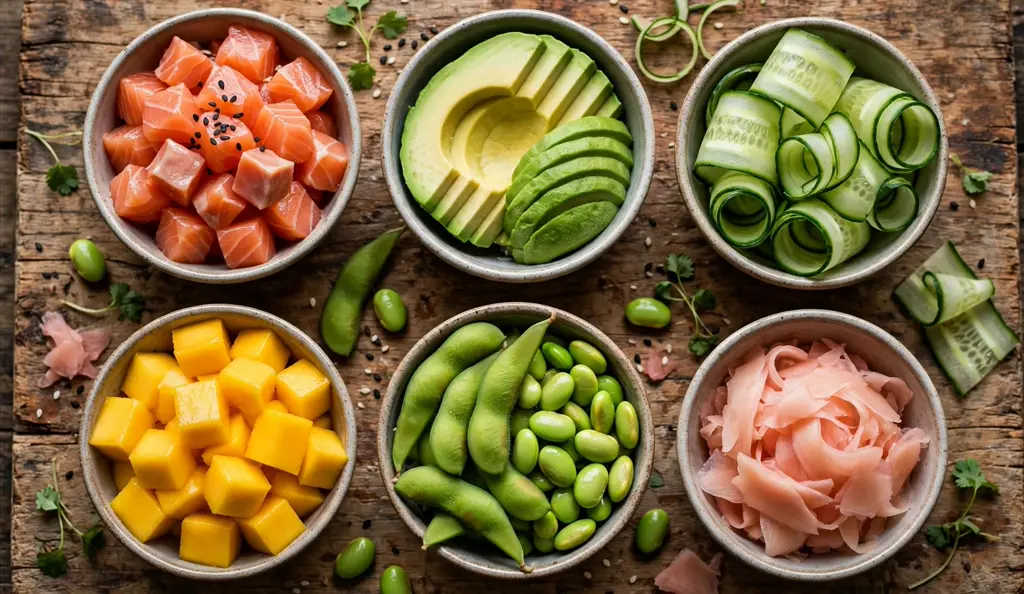
Avocado, cucumber, edamame, shredded red cabbage, green onions, sesame seeds, and lime are the core set in this recipe. Mango, shredded carrot, radish, and macadamia nuts also work. Keep every topping plain and unseasoned to stay gluten free.
The bottom line
This is one of the easiest meals to make gluten free at home. The fish, rice, and vegetables were never the problem. The sauce was. Swap soy sauce for tamari or coconut aminos, buy your salmon from a supplier you trust, and ask hard questions at poke shops. Do that, and this October 2026 recipe gives you a 20-minute bowl that is safe, fresh, and better than takeout. For a crunchy Japanese-style side to serve with it, try my Japanese cucumber salad.
Poke (pronounced poh-keh) is the Hawaiian word for “to slice,” and the dish began with fishermen seasoning their fresh catch, a history you can read on Wikipedia.