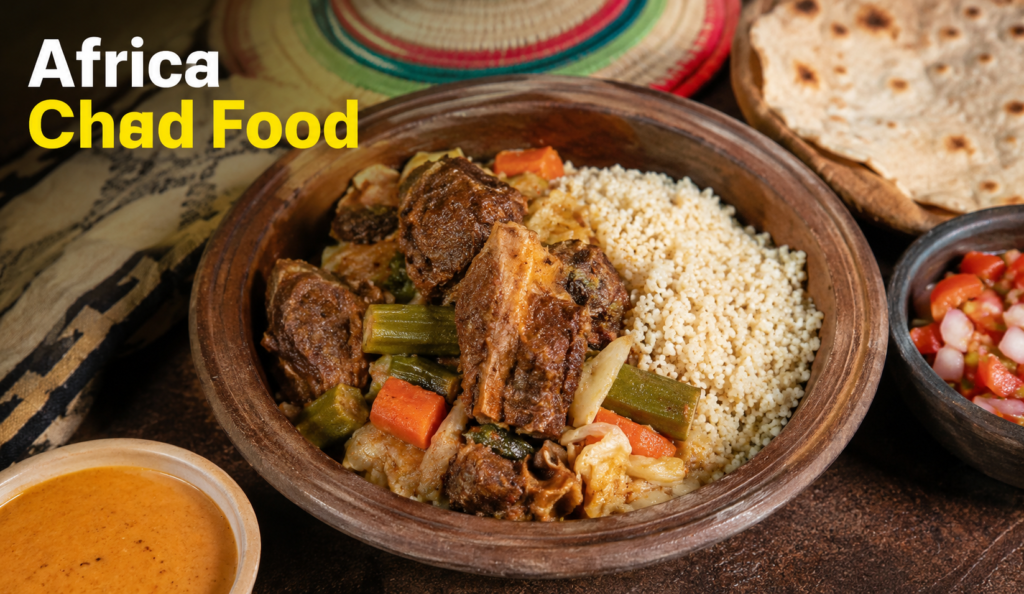
Africa Chad food divides into two regional traditions: northern dishes based on millet, sorghum, and dried meat, and southern dishes based on fish, cassava, and peanuts. Chad borders Libya, Sudan, the Central African Republic, Cameroon, Nigeria, and Niger, and its cuisine reflects both North African Arab influence and Central African ingredients.
The population includes Sara, Arab, Mayo-Kebbi, Kanem-Bornou, Maba, Daza, and Hadjarai groups, and each contributes distinct dishes to the national diet. This guide sorts 14 traditional dishes by region, lists the sauces served alongside them, and includes a step-by-step method for daraba, one of the most common vegetable stews in the country.
What Ingredients Define Africa Chad Food?
Chadian cooking centers on grains, a narrow set of vegetables, and regionally available protein. The table below lists the ingredients most used across both regions.
| Ingredient | Role | Region Most Used |
|---|---|---|
| Millet | Base grain for porridge and flatbread | North and South |
| Sorghum | Base grain for kisra bread | North |
| Rice | Side starch and porridge base | South |
| Okra | Thickener in stews | South |
| Cassava | Boiled or pounded side starch | South |
| Peanuts (groundnuts) | Base for stews and dipping sauces | South |
| Dried and fresh fish | Protein, including tilapia, perch, and catfish | South |
| Mutton and goat | Protein in stews | North |
| Beef | Protein in stews such as jarret de boeuf | North and South |
Northern Africa Chad Food
Northern Chadian dishes draw on Sahelian and Arab culinary traditions. Meals rely on millet and sorghum rather than rice, and meat is more often mutton, goat, or beef than fish.
- Kisra: A fermented sorghum or wheat bread, prepared either as thin baked sheets similar to injera or as a thick porridge called kisra aseeda, usually served with a meat-and-vegetable stew called moulah.
- Aiyash: A snack made from millet flour, sunflower seeds, silken tofu, salt, and oil, served with a dipping sauce since the base dish carries little flavor on its own.
- Tagalia: A red stew made from onion, tomato paste, minced beef, oil, and spices such as coriander and red pepper, popular during Ramadan and served with bread or a wheat, corn, or rice flour dumpling called aseeda.
- Bangaou: A stew of sweet potatoes and lamb, flavored with ginger, onion, garlic, tomatoes, and a bouillon cube, with peas added in the south of the region or beans and chickpeas added in the drier north; served with couscous or rice.
- Maharagwe: A red bean stew cooked in coconut milk with onion, cardamom, cinnamon, garlic, and chili, believed to have entered Chad through East African coastal trade routes.
Southern Africa Chad Food
Southern Chad borders more fertile land and rivers, which shapes a cuisine built on fish, root vegetables, and leafy greens rather than the grain-heavy diet of the north.
- Jarret de Boeuf: A beef shin stew simmered for at least 2 hours with carrots, sweet potatoes, leeks, and aubergine, named from the French colonial period and typically served with fufu or rice, alongside a light tomato-garlic-coriander sauce.
- Daraba: A peanut and vegetable stew made from ground peanuts, okra, tomatoes, sweet potato, aubergine, and leafy greens such as spinach, seasoned with cayenne pepper and a bouillon cube, served with rice, boiled cassava, or plantains.
- Une Aubergine: A stew of eggplant, okra, collard greens, mustard greens, sweet potato, and tomatoes, finished with smooth peanut butter and served over white or brown rice.
- Peanut and Squash Stew: A vegetarian stew of peanuts, squash, tomatoes, red peppers, and spinach, seasoned with turmeric and ginger, occasionally including beef on special occasions.
- Grilled and Dried Fish: Tilapia, perch, eel, carp, and catfish, caught from southern rivers and either grilled fresh or dried for storage, since fish is far more abundant in the south than the north.
Africa Chad Food for Breakfast
- La Bouillie: A hot porridge made from rice or wheat berry mixed with milk and flour, thickened further with peanut butter or brown sugar, and topped with bananas, strawberries, ginger, or peanuts depending on what is available.
Sauces and Dips in Africa Chad Food
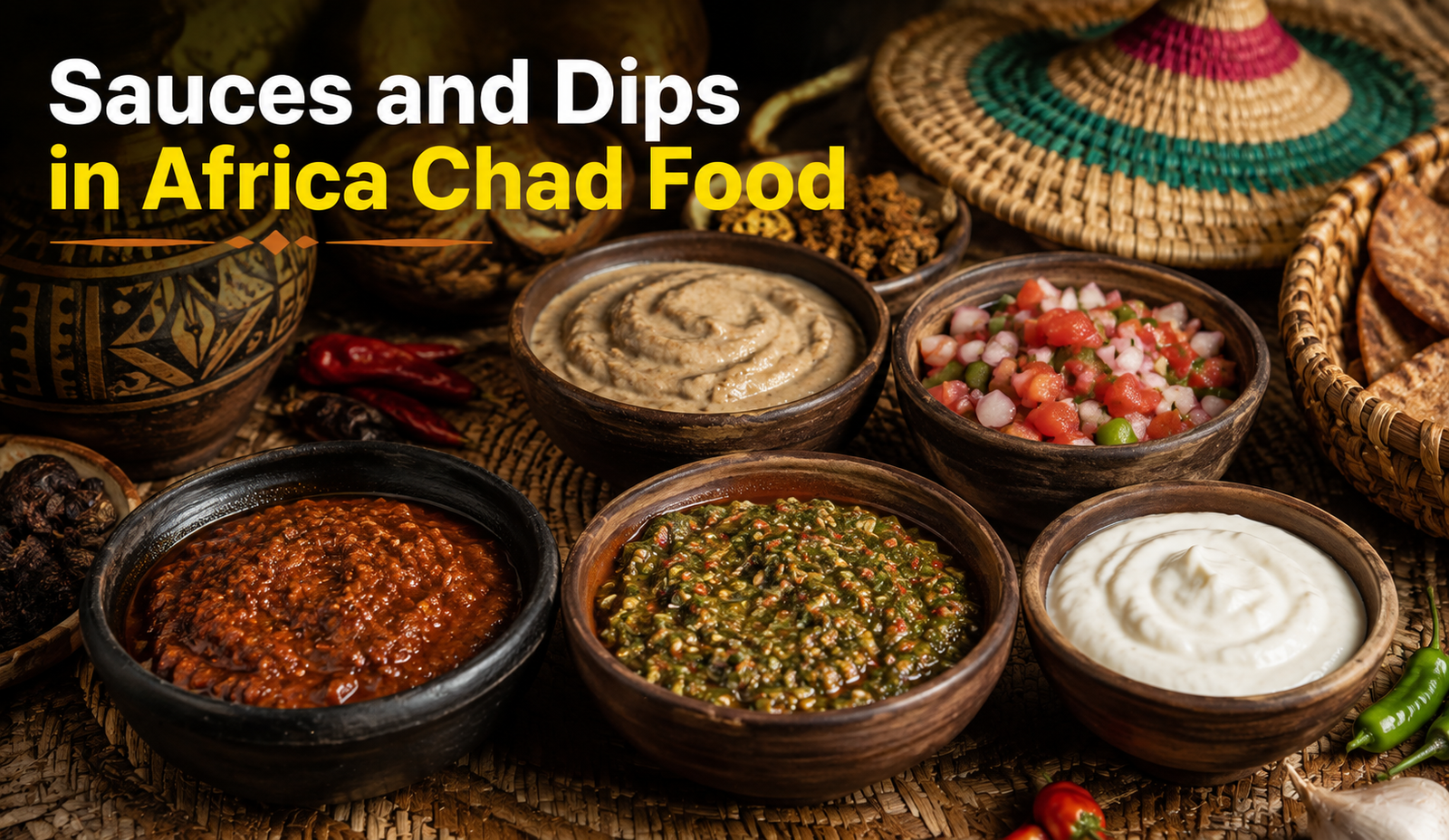
Chadian main dishes are rarely eaten plain; a sauce or dip is added at the table or mixed in during cooking.
| Sauce or Dip | Base Ingredients | Served With |
|---|---|---|
| Saka Saka | Crushed spinach and okra blended with vegetable oil | Aiyash |
| Peanut Dip | Ground peanuts, water, seasoning | Aiyash, boiled cassava |
| Moulah | Slow-cooked meat and vegetable stew | Kisra |
| Tagalia | Tomato paste, minced beef, spices | Bread, aseeda |
How to Make Daraba: Step-by-Step
- Prepare the vegetables. Chop okra, aubergine, sweet potato, and leafy greens such as spinach into bite-sized pieces.
- Simmer the base. Add the chopped vegetables to a pot with water and bring to a boil, then reduce to a simmer.
- Add the peanuts. Stir in ground peanuts or smooth peanut butter until the liquid thickens into a sauce.
- Season. Add cayenne pepper and a bouillon cube, adjusting quantity to taste.
- Add tomatoes. Stir in chopped tomatoes and simmer for a further 10 minutes.
- Serve. Serve hot over rice, boiled cassava, or plantains.
Northern vs. Southern Africa Chad Food
| Attribute | Northern Chad | Southern Chad |
|---|---|---|
| Base grain | Millet, sorghum | Rice, cassava |
| Main protein | Mutton, goat, beef | Fish (tilapia, perch, catfish) |
| Dominant flavor base | Tomato and spice stews | Peanut-based stews |
| Cultural influence | Sahelian and Arab | Central African and French colonial |
| Typical drink | Tea (red, black, green) | Millet beer (non-Muslim areas) |
How Meals Are Served in Africa Chad Food
The Chadian evening meal is typically the main meal of the day and is served on a large communal plate placed on a mat on the ground. Men and women usually eat in separate areas during this meal.
Diners sit around the shared plate rather than using individual portions, and bread or a starch such as kisra or boiled cassava is used to scoop the stew rather than a fork or spoon.
This communal format shapes portion sizes and dish consistency: stews are kept thick enough to hold on a piece of bread, and sauces are seasoned assertively enough to season the whole shared plate evenly.
Read More: Easy Belgian Recipes at Home: 22 Dishes Sorted by Cooking Method
Regional Ethnic Influences on Africa Chad Food
Chad’s population includes Sara, Arab, Mayo-Kebbi, Kanem-Bornou, Maba, Daza, and Hadjarai groups, and each community’s cooking traditions shape regional dishes.
Arab and Sahelian communities in the north favor tea culture, sorghum bread, and Ramadan dishes such as tagalia. Sara and other southern groups rely more heavily on fish, cassava, and peanut-based stews such as daraba, reflecting the more fertile land and river access in the south.
French colonial influence, present across the country but strongest in urban centers, introduced dishes such as jarret de boeuf, named using French rather than Arabic or local-language terms.
Tips for Cooking Africa Chad Food at Home
- Toast peanuts before grinding for daraba. Lightly toasting raw peanuts for 5 minutes before grinding deepens the flavor of the stew’s base.
- Use a bouillon cube sparingly at first. Chadian stews rely on bouillon cubes for salt and umami; add half a cube and taste before adding more, since brands vary in saltiness.
- Substitute canned coconut milk for maharagwe. If fresh coconut milk is unavailable, canned coconut milk works as a direct substitute in bean stews cooked in a coconut base.
- Rest kisra batter before cooking. Allowing fermented sorghum or wheat batter to rest overnight develops the sour flavor associated with authentic kisra.
- Pair rich stews with a plain starch. Since Chadian stews are heavily seasoned, plain rice, boiled cassava, or plantains balance the meal without competing with the sauce.
Frequently Asked Questions
What is the most famous dish in Africa Chad food?
Jarret de Boeuf, a beef shin stew, is one of the most widely recognized dishes in Africa Chad food, alongside daraba.
Is fish common in Chadian cooking?
Yes. Fish is common in southern Chadian cooking, including tilapia, perch, eel, carp, and catfish, since southern Chad borders fertile river systems.
What grain is most used in northern Chad?
Millet and sorghum are the most used grains in northern Chad, forming the base for kisra bread and porridge.
Is Chadian food spicy?
Chadian food uses moderate spice, typically from cayenne pepper, rather than the high heat levels found in some other African cuisines.
What do Chadians drink with meals?
Tea, including red, black, and green varieties, is the most common drink in Chad, alongside millet beer in non-Muslim areas.
Can Chadian stews be made vegetarian?
Yes. Peanut and squash stew and daraba can both be made vegetarian by omitting meat and relying on peanuts for protein.
Conclusion
Africa Chad food splits along a north-south line: northern dishes such as kisra, aiyash, and tagalia rely on millet, sorghum, and tomato-based sauces, while southern dishes such as jarret de boeuf, daraba, and grilled fish rely on rice, cassava, and peanut-based stews.
Sauces such as saka saka and moulah tie the two traditions together at the table. Following the daraba method and ingredient tables above allows a home cook to recreate an authentic Chadian meal from either region.