Gluten-free foods cost 159% more than regular foods, according to a University of Hertfordshire study published in February 2018. Yet most gluten-free foods and snacks need no special label at all. Gluten-free foods and snacks include fruits, vegetables, meat, fish, dairy, beans, nuts, and grains such as rice, quinoa, and corn. Packaged versions are safe only when labeled gluten-free, which means under 20 parts per million (ppm) of gluten. This guide, updated for October 2026, explains each category.
Introduction
People who avoid gluten face two problems. Safe options are hard to identify, and packaged options cost more. Many shoppers also assume that a gluten-free label means a snack is healthier. Research does not support that assumption.
This guide lists naturally gluten-free foods and snacks, grouped by type. It names hidden sources of gluten in soups, sauces, cereals, and drinks. It explains how to read labels under FDA rules. It also covers cost data, snacks for kids, packaged brands, and 12 common questions. Each section states the problem first and gives the fix second.
What Are Gluten-Free Foods and Snacks?
Gluten-free foods and snacks contain no wheat, barley, or rye, and no ingredients made from them. Gluten is the protein found in these three grains. Gluten-free packaged foods must contain under 20 ppm of gluten to carry the label in the United States.
Naturally Gluten-Free Food Groups
The Celiac Disease Foundation identifies six food groups that are naturally gluten-free:
- Fruits (apples, bananas, berries)
- Vegetables (carrots, spinach, potatoes)
- Meat and poultry (beef, chicken, lamb)
- Fish and seafood (salmon, tuna, shrimp)
- Dairy (milk, plain yogurt, cheese)
- Beans, legumes, and nuts (lentils, chickpeas, almonds)
The foundation calls these groups the most cost-effective and healthy base for a gluten-free diet.
Grains That Contain Gluten
Three grains contain gluten: wheat, barley, and rye. Products made from them are not gluten-free. Examples include bread, pasta, crackers, and baked goods made with wheat flour.
Other Names for Gluten Sources
Several ingredient names point to gluten. Spelt, durum, semolina, and farro are wheat varieties. Malt, malt extract, and malt vinegar come from barley. Check the ingredient list for these terms.
What Foods Are Naturally Gluten-Free?
Fruits, vegetables, meat, poultry, fish, seafood, dairy, beans, legumes, nuts, and eggs are naturally gluten-free. Grains such as rice, corn, quinoa, millet, and buckwheat are also gluten-free. Processing, seasoning, or shared equipment can add gluten, so packaged versions need a label check.
Read more: Gluten Free Wraps That Don’t Crack: Brands and Recipe
Which Grains, Seeds, and Starches Are Gluten-Free?
The Celiac Disease Foundation lists these grains, legumes, seeds, and starchy foods as naturally gluten-free:
- Amaranth
- Arrowroot
- Beans
- Buckwheat groats (also called kasha)
- Cassava
- Chia
- Corn
- Flax
- Gluten-free oats
- Millet
- Nut flours
- Potato
- Quinoa
- Rice
- Sorghum
- Soy
- Tapioca
- Teff
- Yucca
Buckwheat contains no wheat despite its name. It is a seed, not a grain.
Oats and Gluten
Oats are often harvested and processed with wheat equipment, so contamination is common. The Celiac Disease Foundation states that pure oats are tolerated by most people with celiac disease. The amount is up to 1/2 cup of dry rolled oats per day.
Some people react to avenin, an oat protein similar to gluten. These people should avoid all oats, even those labeled gluten-free. Granolas and granola bars need a gluten-free label as well.
Bulk Bins and Cross-Contact
The foundation advises against buying grains from bulk bins. Shared scoops and open bins allow cross-contact. Cross-contact means gluten-free food touches gluten-containing food. Buy sealed packages with a gluten-free label.
Rice, Rice Snacks, and Arsenic
Rice-based snacks such as rice cakes and rice crackers are gluten-free. Rice can also contain arsenic. The Celiac Disease Foundation publishes guidance on reducing arsenic in a gluten-free diet. Rotate rice with quinoa, millet, and buckwheat.
Gluten-Free Foods and Snacks That Need No Label
Naturally gluten-free snacks are the safest and cheapest choice. A Good For You Gluten Free editor advises eating snacks without labels when possible, since packaged gluten-free snacks cost more.
Fruit, Vegetable, and Nut Snacks
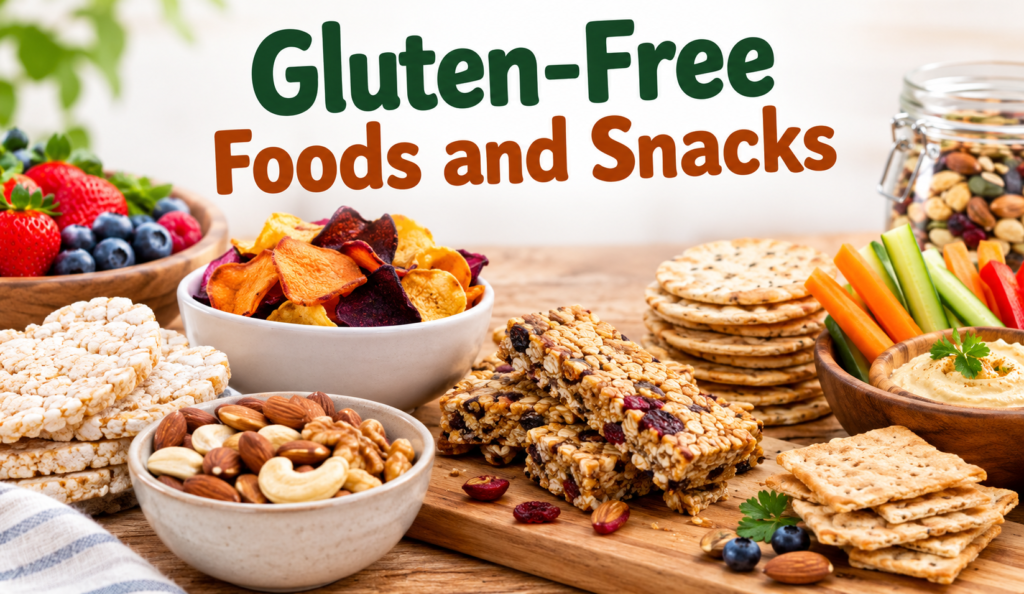
Fresh fruit contains no gluten. Examples include sliced apples with peanut or almond butter, bananas, and peaches with cottage cheese. Raw vegetables such as carrots, cucumbers, and celery work with hummus or guacamole.
Plain nuts and seeds are naturally gluten-free. Examples include almonds, walnuts, peanuts, pistachios, cashews, sunflower seeds, and pumpkin seeds.
Protein Snacks
Eggs, cheese, and meat contain no gluten. Examples include hard-boiled eggs, string cheese, plain yogurt, and cheddar rolled in sliced turkey or ham. Edamame and avocado also qualify.
Crunchy Snacks
Popcorn is naturally gluten-free. Corn tortilla chips and potato chips are naturally gluten-free in their plain form. Dried sweet potato chips and rice cakes also qualify.
Seasoned Chips and Flavored Popcorn
Flavorings change the answer. Seasoning blends, malt vinegar, and added coatings can contain wheat or barley. Read the ingredient list on every flavored chip and popcorn product.
Packaged Gluten-Free Foods and Snacks: Types and Brands
Packaged options fill gaps that whole foods do not. Pretzels, crackers, cookies, and cheese-puff snacks are the main examples. These products need a gluten-free label.
The Balanced Nutritionist, a dietitian-run site, lists these gluten-free snacks:
- Snyder’s of Hanover Gluten-Free Pretzels
- FitJoy Gluten Free Pretzels
- HIPPEAS Organic Chickpea Puffs
- Love Corn
- Quinn Gluten-Free Peanut Butter Filled Pretzel Nuggets
- Gluten-Free Oreos
Good For You Gluten Free also lists Ground Up, which makes cauliflower crackers, puffs, pretzels, and chips.
Gluten-Free Snack Quick Reference
| Snack | Naturally gluten-free? | Check before buying |
|---|---|---|
| Popcorn | Yes | Flavorings and coatings |
| Potato chips | Yes | Seasoning blends |
| Corn tortilla chips | Yes | Cross-contact, seasoning |
| Rice cakes | Yes | Flavored varieties |
| Trail mix | Most | Pretzel, granola, or cookie pieces |
| Beef jerky | Often | Soy-based or teriyaki marinades |
| Hummus | Often | Added flavorings |
| Plain yogurt | Yes | Granola or cookie add-ins |
| Granola bars | No | Gluten-free label, gluten-free oats |
| Pretzels | No | Gluten-free label required |
Where Gluten Hides in Foods and Snacks
The Celiac Disease Foundation names soups, sauces, cereals, and drinks as common hidden sources. Each needs a label check.
Soups and Sauces
Soups and sauces are among the biggest sources of hidden gluten. Many manufacturers use wheat as a thickener. Cream-based products need special attention.
Cereal
Many cereals contain wheat-based ingredients. Cornflakes and puffed rice cereals may contain malt flavoring or malt extract, which contain gluten. Not every gluten-free cereal advertises the claim, so read the ingredient list.
Processed Fruits and Vegetables
Fresh and frozen fruits and vegetables are naturally gluten-free. Processed versions, dried fruit, and pre-prepared smoothies need label checks.
Beverages
Most juices, sodas, and sports drinks are gluten-free. Wine meets the FDA standard of under 20 ppm. Distilled liquors and hard ciders are gluten-free. Traditional beers, ales, lagers, and malt-based drinks are not. Mixed drinks and flavored alcoholic beverages need an ingredient check.
Is Wheat-Free the Same as Gluten-Free?
No. Wheat-free means a product contains no wheat. Gluten-free means a product contains no wheat, barley, or rye gluten above 20 ppm. A wheat-free product can still contain barley or rye, so it may contain gluten.
The Gluten-Free Snack Trap: Higher Price, Not Higher Quality
Shoppers often treat a gluten-free label as a health signal. The data shows otherwise. Two research findings explain the gap.
The Nutrition Gap
University of Hertfordshire researchers compared 1,724 products across 10 food categories. The results appeared in the February 2018 issue of the Journal of Human Nutrition and Dietetics. Except for crackers, gluten-free products contained more fat, salt, and sugar. They also contained less fiber and protein.
The median fat content of gluten-free white and brown bread was more than double that of regular bread.
The Price Gap
The same study found gluten-free foods were 159% more expensive. A US market basket study of 2016 prices reported a 183% premium. After inflation, the premium in 2006 was 240%. The gap is narrowing, but it remains large.
Dr. Rosalind Fallaize, a research fellow at the University of Hertfordshire, warned that high costs may reduce adherence to the diet. The only treatment for celiac disease is a strict gluten-free diet.
How to Lower the Cost
- Build snack plates from naturally gluten-free foods first.
- Buy plain popcorn kernels instead of flavored bags.
- Buy plain nuts and add your own seasoning.
- Use packaged gluten-free crackers and pretzels as occasional items.
How to Read Labels on Gluten-Free Foods and Snacks
Label rules protect people with celiac disease. The FDA published a final rule on gluten-free labeling in August 2013. The rule limits gluten to under 20 ppm for any product that carries the claim. The FDA estimates that about 3 million Americans have celiac disease. Researchers at the Center for Celiac Research, led by Dr. Alessio Fasano, reported a US prevalence of 1 in 133.
Steps for Checking a Package
- Look for the words “gluten-free” on the front.
- Read the allergen statement for wheat.
- Scan the ingredient list for barley, rye, malt, and wheat varieties.
- Look for a third-party seal, such as Beyond Celiac certification.
- Contact the manufacturer when the label is unclear.
Cross-Contact in Shared Kitchens
Gluten-free foods and snacks can pick up gluten at home. Shared toasters, cutting boards, and butter dishes are common sources. Use separate tools and sealed containers.
Gluten-Free Foods and Snacks for Kids
Snacks support a child’s growth and energy. The Hospital for Sick Children (SickKids) recommends naturally gluten-free foods for children with celiac disease. Its AboutKidsHealth guide lists vegetables, fruits, nuts, seeds, and dairy products.
Easy Snack Pairings
- Canned tuna with gluten-free crackers
- Cheese slices with gluten-free rice crackers
- Gluten-free puffed quinoa cereal with gluten-free granola on sliced fruit
- Gluten-free banana bread with almond butter
Planning Tips
SickKids advises preparing snacks in advance and adding them to the weekly grocery list. It also advises including the child in snack planning and preparation.
Gluten-Free Snacks for Work and Travel
Travel removes access to a safe kitchen. Airports, offices, and road stops rarely label gluten. Packed snacks reduce the risk of an unsafe meal.
Portable Options
Pack items that need no refrigeration for several hours. Examples include plain nuts, dried fruit, rice cakes, sealed popcorn bags, and whole fruit such as apples and bananas. Sealed gluten-free bars with a clear label also travel well.
Packing Rules
- Keep gluten-free snacks in a sealed container, away from bread and crackers.
- Carry a printed list of ingredients to avoid, such as wheat, barley, rye, and malt.
- Check each bar and bag label again before eating, since recipes change.
A Week of Gluten-Free Foods and Snacks
A fixed plan removes daily label checks. The plan below uses naturally gluten-free foods and snacks, so no package needs a claim. Each day pairs one fruit or vegetable with one protein or fat source.
| Day | Snack |
|---|---|
| Monday | Sliced apples with almond butter |
| Tuesday | Carrots and cucumbers with hummus |
| Wednesday | Hard-boiled eggs with plain popcorn |
| Thursday | Cottage cheese with peaches |
| Friday | Celery with peanut butter |
| Saturday | Edamame with plain potato chips |
| Sunday | Trail mix made from plain nuts and dried fruit |
Check the label on hummus, peanut butter, and trail mix. Added flavorings and mixed-in pieces can contain gluten.
Gluten-Free Foods and Snacks Near Me
Searches for gluten-free foods and snacks near me return grocery chains first. As of October 2026, many stores group gluten-free items in one aisle. Examples include pretzels, crackers, and cookies. Naturally gluten-free foods stay in regular aisles, such as produce, dairy, and meat.
Follow these steps when shopping:
- Buy fresh produce, meat, fish, and dairy first.
- Visit the gluten-free aisle for crackers, pretzels, and cereals.
- Skip bulk bins, since scoops allow cross-contact.
- Confirm the “gluten-free” claim on each package.
Retail stock changes often. Check store websites in October 2026 for current gluten-free brands and prices.
Frequently Asked Questions About Gluten-Free Foods and Snacks
What snacks are naturally gluten-free?
Fresh fruit, raw vegetables, plain nuts, popcorn, hard-boiled eggs, cheese, plain yogurt, and edamame are naturally gluten-free. Plain potato chips and corn tortilla chips also qualify.
Is popcorn gluten-free?
Plain popcorn is naturally gluten-free. Flavored or coated popcorn can contain gluten ingredients. Check the label on microwave and ready-to-eat bags.
Are potato chips and tortilla chips gluten-free?
Plain potato chips and corn tortilla chips are naturally gluten-free. Seasoned versions need a label check. Shared fryers can also add gluten.
Are oats gluten-free?
Oats are naturally gluten-free but are often contaminated during processing. Choose oats labeled gluten-free. Some people with celiac disease react to avenin and must avoid all oats.
Is buckwheat gluten-free?
Yes. Buckwheat is a seed and contains no wheat. Buckwheat groats, also called kasha, are on the Celiac Disease Foundation’s list of naturally gluten-free foods.
Is beef jerky gluten-free?
Plain beef is gluten-free. Jerky can contain gluten when the marinade includes soy sauce or teriyaki sauce made with wheat. Choose jerky with a gluten-free label.
Is beer gluten-free?
No. Traditional beers, ales, lagers, and malt-based beverages contain gluten. Gluten-free beers are available. Wine, distilled liquors, and hard ciders are gluten-free.
Are gluten-free snacks healthy?
Not automatically. A 2018 University of Hertfordshire study found that most gluten-free products contained more fat, salt, and sugar. Naturally gluten-free whole foods are the stronger base.
Are gluten-free foods more expensive?
Yes. Studies report premiums of 159% in a 2018 University of Hertfordshire study and 183% in a US study of 2016 prices. Naturally gluten-free foods cost less than packaged substitutes.
What are good gluten-free snacks for kids?
Fruit, vegetables, cheese, nuts, seeds, and plain yogurt suit most children. Pair gluten-free crackers with tuna or cheese. Check nut rules at school before packing nuts.
How do I know if a snack is gluten-free?
Look for a “gluten-free” claim on the package. The FDA limit is under 20 ppm. Check the allergen statement for wheat. Look for a third-party seal such as Beyond Celiac certification.
Is dairy gluten-free?
Yes. The Celiac Disease Foundation lists dairy as a naturally gluten-free food group. Flavored yogurts and cheese spreads with added ingredients need a label check.
Conclusion
Gluten-free foods and snacks start with whole foods: fruit, vegetables, meat, fish, dairy, beans, nuts, and gluten-free grains. These foods need no label and cost less. Packaged items need a gluten-free claim of under 20 ppm.
Hidden gluten appears in soups, sauces, cereals, beer, and seasoned snacks. A gluten-free label does not mean healthier, since packaged versions often carry more fat, salt, and sugar. Fill the cart with whole foods, read every package, and treat packaged snacks as extras.
Read more about the gluten-free diet.