
A scoop of vanilla looks innocent. No bread, no crust, no crumbs. Yet some tubs hide wheat in places you would never suspect. As of October 2026, plain ice cream remains one of the safer desserts for gluten-free eaters, but flavors with cookie dough, cake chunks, and malt can turn a treat into a trigger. So, is ice cream gluten free? Plain ice cream made from milk, cream, and sugar usually is. Flavored varieties often are not, because of gluten-containing mix-ins, thickeners, and cross-contact in factories and scoop shops. Here is how to know which scoop is safe.
You will learn what ice cream is actually made of, where gluten hides in it, how to read a label in sixty seconds, which brands are safest, and why scoop shops and soft-serve machines deserve extra caution. You will also get a three-ingredient home recipe that removes all doubt. By the end, you will pick up any tub with total confidence.
What Is Ice Cream Actually Made Of?
Real ice cream is simple at its core: milk, cream, sugar, and flavoring. US rules require ice cream to contain at least 10 percent milkfat, which gives it that rich texture. Eggs sometimes join the mix in custard-style flavors like French vanilla.
Then come the stabilizers. A stabilizer is an ingredient that keeps ice cream smooth and stops ice crystals from forming. Common ones like guar gum and locust bean gum are gluten free. The risk is not the stabilizer itself, but wheat-based thickeners and vague “natural flavors” that some brands use instead. That is where the label check earns its keep.
Where Gluten Hides in Ice Cream
Ice cream starts gluten free and picks up gluten in four places. Learn them once and you will spot the risk in any flavor.
Cookie Dough, Cake Pieces, and Brownie Chunks
This is the obvious one, and still the most common trap. Cookie dough, brownies, cake batter swirls, and pie crust pieces are all wheat-based. A tub of cookies and cream is never gluten free unless the cookies themselves are certified gluten free. Fun flavors are the riskiest flavors.
Malt, Malt Flavoring, and Cereal Add-Ins
Malt comes from barley, and barley contains gluten. Malted milk balls, malt flavoring, and cereal crunch toppings all carry gluten into the tub. “Malted” on any label is an instant no for a gluten-free diet.
Thickeners and “Natural Flavors”
Some brands use wheat-derived thickeners or modified food starch of unknown origin to cut costs. The phrase “natural flavors” can also hide gluten, because flavor suppliers are not always required to name a wheat-based carrier. If a label lists either without a gluten-free claim, put the tub back.
Cones, Sandwiches, and Cake Cups
Sometimes the scoop is safe and the serving is not. Regular cones, ice cream sandwiches, and cake cups are made with wheat flour. Order your scoop in a cup, and make sure the server uses a clean scoop that has not touched a cone.
- Look for a “gluten-free” or certified gluten-free mark first.
- Read the full ingredient list, including the small print.
- Watch for wheat, barley, rye, malt, and “natural flavors”.
- Skip flavors with cookie, cake, brownie, or pastry pieces unless labeled gluten free.
- Check the allergen line: “contains wheat” is an instant no.
- When in doubt, check the brand’s website before you buy.
Is Vanilla Ice Cream Gluten Free?
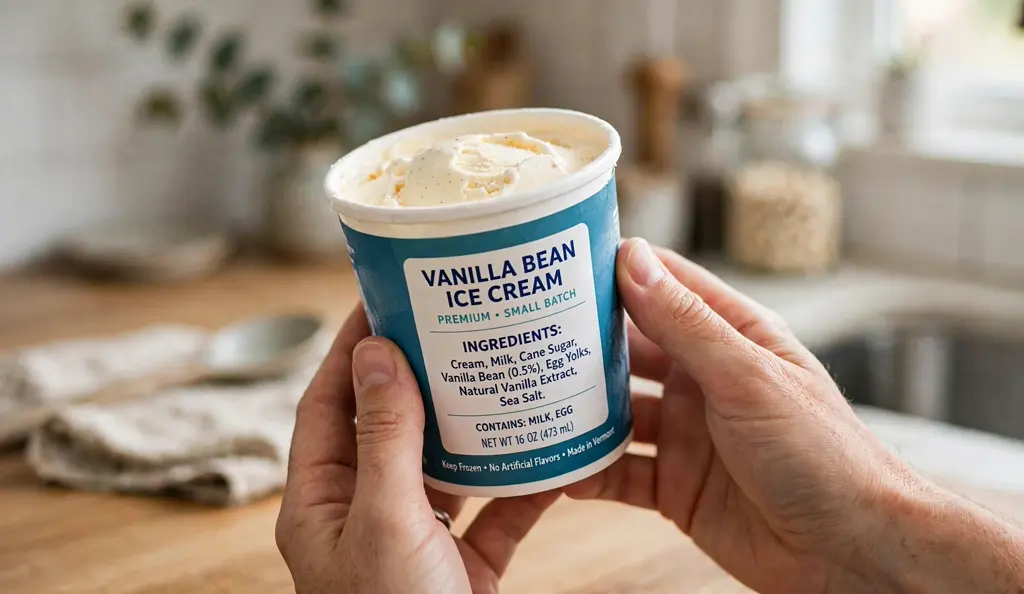
Usually, yes. Plain vanilla ice cream is made from milk, cream, sugar, and vanilla, none of which contain gluten. It becomes risky only when brands add wheat-based thickeners or make it on shared equipment with cookie dough flavors. Choose tubs labeled gluten-free or certified gluten free, and read the ingredient list every time, since recipes change.
Which Ice Cream Brands Are Gluten Free?
Ben & Jerry’s stands out: the brand lists several flavors certified gluten free by the Gluten-Free Certification Organization (GFCO), including Cherry Garcia and Phish Food. Häagen-Dazs, Breyers, and Dreyer’s (sold as Edy’s in some regions) generally treat plain flavors as gluten free while warning that flavors with bakery mix-ins are not.
Here is the catch: none of these brands run dedicated gluten-free factories. That means cross-contact is still possible, even in a plain flavor. As of October 2026, always verify on the brand’s current site before you buy, and favor the certified mark when you can find it.
What “Certified Gluten Free” Actually Means
A plain “gluten-free” label follows the FDA rule from August 2013: the food must contain less than 20 parts per million of gluten. A GFCO certification mark is stricter. The Gluten-Free Certification Organization, founded by the Gluten Intolerance Group in 2005, requires certified products to test at 10 parts per million or less, with annual plant audits. For the strictest diets, the certified mark is the safer pick.
The Scoop Shop Problem
Scoop shops are where good tubs go bad. Shared scoops dip into cookie dough tubs and then into vanilla. Cone crumbs fall into open freezers. Staff handle cones all day and then grab your cup. About 1 percent of people worldwide have celiac disease, according to the Celiac Disease Foundation, and for them these small contacts matter.
Protect yourself with a simple ask: a fresh scoop from a new tub, a washed scoop, and clean gloves. If the shop will not do it, buy a sealed pint instead. Our guide Gluten Free Dessert Near Me: How To Find A Safe One can point you to safer dessert stops.
Why Asking for a Fresh Scoop Matters
A fresh scoop from an unopened tub skips every risk at once: no shared scoop, no cone crumbs, no drips from the flavor above it. It is the single most effective thing you can ask for at any counter.

Why Soft-Serve Machines Are Riskier Than You Think
Here is the angle no competitor covers. Soft-serve machines mix flavors through shared nozzles, so a twist cone with cookie dough swirl leaves residue for the next customer. Crushed cone toppings sit in open bins right above the machine, shedding crumbs. Staff rarely sanitize the nozzle between flavors during a rush.
If you eat gluten free, skip the twist. Ask which flavors run through a dedicated machine, or choose hard-packed scoops from a tub instead. A sealed pint from the grocery freezer will always beat a mystery swirl.
How to Make Gluten Free Ice Cream at Home
Homemade ice cream removes every unknown. Picture a mom in Manchester making this with her celiac daughter on a hot afternoon in October 2026. Three ingredients, zero label anxiety, and it tastes better than the store tub.
- Whip 2 cups of heavy cream until soft peaks form.
- Fold in one can of sweetened condensed milk and 2 teaspoons of vanilla extract.
- Pour into a loaf pan, cover, and freeze for at least 6 hours.
- Scoop and serve. Add fresh berries or a drizzle of honey.
Every ingredient is naturally gluten free, and your kitchen has no cookie dough tub nearby. Turn it into an ice cream sandwich with our gluten free cupcakes, or explore more ideas in our best gluten free desserts collection. Leftover cream keeps well in the freezer; our guide Can You Freeze Milk? covers dairy storage in detail. If you have celiac disease or a serious sensitivity, talk to your doctor or a registered dietitian about which brands fit your diet.
Can People With Celiac Disease Eat Ice Cream?
Yes, but only with care. People with celiac disease should choose ice cream labeled gluten-free or certified gluten free, and avoid flavors with cookie, cake, or malt ingredients. Scoop shops carry real cross-contact risk from shared scoops and cones. When symptoms or safety are in doubt, talk to your doctor or a registered dietitian before trying a new brand.
Ice Cream Gluten Free FAQs
Is ice cream gluten free?
Plain ice cream made from milk, cream, and sugar usually is. Flavored varieties with cookie, cake, or malt mix-ins often are not.
Is vanilla ice cream gluten free?
Usually yes. Plain vanilla has no gluten ingredients. Choose tubs labeled gluten-free and read the label, since recipes change.
Is chocolate ice cream gluten free?
Plain chocolate ice cream is usually gluten free. Avoid versions with brownie chunks, cookie swirls, or malt flavoring.
Which Ben & Jerry’s flavors are gluten free?
Ben & Jerry’s lists several flavors certified gluten free by the GFCO, including Cherry Garcia and Phish Food. Check their current site for the full list.
Is Häagen-Dazs ice cream gluten free?
Häagen-Dazs treats most plain flavors as gluten free but does not certify them. Flavors with bakery mix-ins are not gluten free.
Is Breyers ice cream gluten free?
Breyers labels many plain flavors gluten free. Avoid flavors with cookies, cake, or candy pieces unless the label says gluten free.
Does ice cream contain wheat?
Plain ice cream does not. Flavors with cookie dough, cake pieces, brownies, or malt contain wheat or barley. Always read the ingredient list.
Are ice cream cones gluten free?
No. Regular cones are made with wheat flour. Buy certified gluten-free cones or serve your scoop in a cup.
Is soft serve ice cream gluten free?
Risky. Soft-serve machines share nozzles between flavors, and cone crumbs fall in from nearby bins. Hard-packed scoops or sealed pints are safer.
Is gelato gluten free?
Plain gelato flavors are usually gluten free, since gelato is made from milk, sugar, and flavoring. The same mix-in and cross-contact rules apply.
Is dairy-free ice cream gluten free?
Not automatically. Dairy-free does not mean gluten free. Check for a gluten-free label, because some dairy-free brands still use gluten-containing mix-ins.
Can I eat ice cream from a shared freezer at a party?
Be careful. Shared tubs at parties often have crumb-covered scoops from the cones nearby. Bring your own sealed pint or scoop first with a clean spoon.
What should I do if a label says “may contain wheat”?
Treat it as a no, especially with celiac disease. The warning means the product was made on shared equipment with wheat products.
The Bottom Line on Ice Cream and Gluten
Ice cream starts safe and only becomes risky through mix-ins, thickeners, and shared equipment. Plain labeled flavors from trusted brands are fine for most gluten-free eaters. Skip the cookie dough swirls, question every scoop shop, and think twice about soft-serve machines. When in doubt, the three-ingredient home recipe never lets you down. That is the whole game: simple ingredients, clean scoops, and no guessing. It helps to know your enemy too, so read up on gluten, the protein hiding in more foods than most people expect.