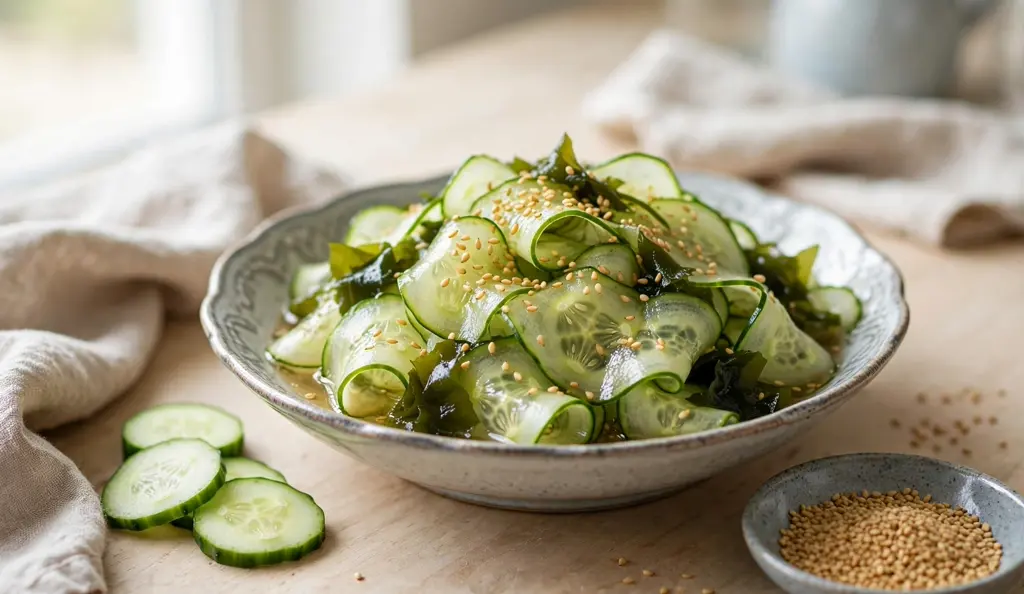
Japanese Cucumber Salad: The 15-Minute Sunomono Guide
This Japanese cucumber salad, called sunomono in Japan, is made from paper thin cucumber slices tossed in a sweet and tangy rice vinegar dressing. It is ready in 15 minutes, naturally gluten free when made with tamari instead of soy sauce, and stays crisp for up to three days in the fridge. This guide from October 2026 gives you the full recipe, the dressing ratios, and the gluten safety checks.
Think of the first bite at your favorite sushi spot. The cucumbers snap, the vinegar wakes up your tongue, and a mild sweetness rounds it off. That is sunomono, and home cooks often assume it is hard to copy. It is not. You need one trick, one ratio, and ten quiet minutes while the cucumbers rest.
In this article you will learn what sunomono really is, how to make a safe gluten free version, which cucumbers give the best crunch, and the five mistakes that turn this salad soggy. By the end you can serve a restaurant quality Japanese cucumber salad without a second search.
What Is Japanese Cucumber Salad (Sunomono)?
Sunomono means “vinegared thing” in Japanese. It is a family of light side dishes made with a seasoned vinegar dressing. Cucumber sunomono is the most famous member of that family.
The dish sits on Japanese menus as a small side or appetizer. It refreshes the palate between rich bites like sushi, tempura, or grilled fish. Cooks make it in many homes across Japan as an everyday side.
The classic build is simple. Thin cucumber rounds get a quick salt cure, then join a dressing of rice vinegar, sugar, salt, and a splash of soy sauce. Wakame seaweed and sesame seeds often finish the bowl. Each element earns its place, and the recipe in this guide keeps all of them.
Is Japanese Cucumber Salad Gluten Free?
Is traditional sunomono safe for celiacs?
Traditional sunomono is not safe for celiacs because it uses regular soy sauce, which contains wheat. This Japanese cucumber salad becomes fully gluten free when you swap soy sauce for certified gluten free tamari and use unseasoned rice vinegar. Always check the tamari label, since recipes and factories change.
Here is the three level check that matters in October 2026.
- Naturally gluten free: Cucumbers, rice vinegar, sugar, salt, wakame, and sesame seeds. No wheat, barley, or rye grows in these ingredients.
- Labeled gluten free: Tamari and gluten free soy sauce. The FDA final rule of August 2013 says foods labeled gluten free must contain less than 20 parts per million of gluten (source: FDA, August 2013).
- Certified gluten free: A third party such as the Gluten Free Certification Organization has tested the product. Choose this tier if you cook for someone with celiac disease.
The danger spots are small but real. Regular soy sauce uses wheat in the brew, so it always needs a swap. Seasoned rice vinegar sometimes carries extra additives, so read the label and pick plain unseasoned bottles. Imitation crab, a popular add in, often lists wheat starch as an ingredient. Cross contact is another quiet risk. A shared cutting board or knife can carry gluten onto your cucumbers, so wash tools well before you start.
The Celiac Disease Foundation estimates that about 1 in 100 people worldwide has celiac disease, with about 3 million affected in the United States. If you are cooking for someone newly diagnosed, talk to a doctor or a registered dietitian before you try a new recipe.
Japanese Cucumber Salad Recipe: The 15-Minute Version
This is the core of the guide. The recipe keeps it authentic and fully gluten free, with exact amounts for four side servings.
Prep time: 15 minutes
Cook time: none
Total time: 15 minutes
Servings: 4 side portions
Diet: naturally gluten free, dairy free, vegan
What You Need
- 4 Persian cucumbers, or 2 English cucumbers, washed
- 1 tablespoon dried wakame seaweed
- 1 teaspoon kosher salt for salting, plus 1/4 teaspoon for the dressing
- 1/4 cup unseasoned rice vinegar
- 2 tablespoons white sugar
- 1 teaspoon gluten free tamari or gluten free soy sauce
- 1 teaspoon toasted white sesame seeds
- 1/4 teaspoon grated fresh ginger, optional
How to Make Japanese Cucumber Salad
Step 1: Rehydrate the wakame. Put the dried wakame in a small bowl and cover it with cold water. Leave it for 5 to 10 minutes until soft and dark green. Squeeze it gently to remove the water.
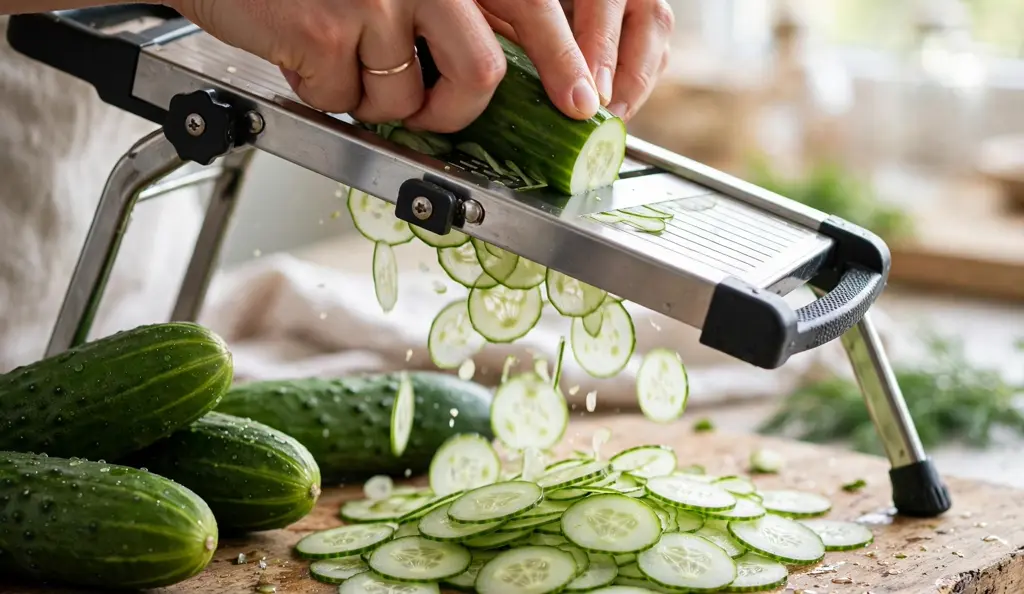
Step 2: Slice the cucumbers thin. Use a mandoline or a sharp knife and cut the cucumbers into rounds about 2 millimeters thick. Thin slices pick up the dressing fast and stay crisp. If you use English cucumbers, slice them on a slight angle for larger pieces.
Step 3: Salt and rest. Put the slices in a large bowl. Sprinkle the teaspoon of kosher salt over them and toss with clean hands so every slice gets coated. Let the bowl sit for 10 minutes. The salt pulls water out of the cucumbers, and that water would have diluted your dressing.
Step 4: Squeeze firmly. Take small handfuls of cucumber and press them gently over the sink or a second bowl. Pour off all the liquid. Do not crush the slices, just press until they stop dripping.
Step 5: Mix the dressing. In a small bowl, whisk the rice vinegar, sugar, 1/4 teaspoon salt, and gluten free tamari until the sugar fully dissolves. Taste it. It should be bright, sweet, and lightly salty.
Step 6: Toss and serve. Add the cucumbers, drained wakame, and ginger if you use it to the dressing. Toss gently. Sprinkle the toasted sesame seeds on top and serve right away, or chill for up to 30 minutes first.
The salting step, explained
Skipping the salt rest is the top reason home sunomono turns watery. Cucumbers are about 96 percent water, per USDA based nutrition data reported by Environmental Nutrition in July 2025. Ten minutes with salt draws out enough of that water for the dressing to cling instead of pooling. The slices also turn silkier and bend without breaking.
The dressing ratio, memorized
The classic sunomono ratio is 4 parts rice vinegar, 2 parts sugar, and a splash of tamari. For our recipe that is 1/4 cup vinegar, 2 tablespoons sugar, and 1 teaspoon tamari. Memorize the ratio once and you can scale it to any batch size.
Sunomono Dressing Ratios for Every Taste
| Style | Vinegar | Sugar | Tamari | Best for |
|---|---|---|---|---|
| Classic sweet tart | 1/4 cup | 2 tbsp | 1 tsp | First time cooks |
| Less sweet | 1/4 cup | 1 tbsp | 1 tsp | Savory palates |
| Extra tangy | 1/3 cup | 2 tbsp | 1 tsp | Rich main dishes |
| Mild kid friendly | 3 tbsp | 3 tbsp | 1/2 tsp | Young eaters |
Which Cucumbers Make the Best Japanese Cucumber Salad?
The cucumber decides the crunch. Choose wrong and the salad weeps even with good salting.
- Japanese cucumbers: The top pick. Thin skin, almost no seeds, sweet flesh.
- Persian cucumbers: The best substitute. Small, crisp, seedless, and sold in most grocery stores.
- English cucumbers: Works well. Long and seedless, but slightly more watery, so rest them the full 10 minutes.
- American garden cucumbers: Avoid these for this salad. Thick waxy skin and large seeds give a bitter, limp result.
Peeling is optional. Leave the skin on for Persian and Japanese types, since it adds color and nutrients. If the skin looks waxed and shiny, peel it in stripes with a vegetable peeler. Monash University lists cucumber as low FODMAP in normal serving sizes, which is one more reason this salad suits sensitive stomachs.
Why Restaurant Sunomono Is Rarely Celiac Safe
Here is the angle no recipe blog covers. Your Japanese cucumber salad at a restaurant is almost never safe for celiac disease, and the menu will not warn you.
Restaurants build speed, not safety. Most kitchens use one bottle of regular soy sauce for everything, so the splash in your sunomono brings wheat. The seasoned rice vinegar they buy in bulk often contains additives the server cannot name. Prep cooks slice cucumbers on the same board that just held a breaded cutlet, and that board dusts your salad with crumbs you cannot see.
This does not mean you must avoid eating out. It means you ask three short questions before you order. Does the dressing use regular soy sauce or tamari. Do you use plain rice vinegar or a seasoned mix. Can the cook use a clean board and knife. A kitchen that answers all three clearly is usually safe. One that shrugs is not.
This is exactly why the home version wins. You control the bottle, the board, and the bowl. For about two dollars of cucumbers you get a salad that tastes like the restaurant plate and skips every hidden risk.
Easy Variations of This Japanese Cucumber Salad
Once the base recipe feels easy, try one add in at a time. Each keeps the salad gluten free if you follow the note.
- Shrimp sunomono: Add 1/2 pound of cooked, peeled shrimp. Toss them in at the dressing step.
- Real crab sunomono: Add lump crab meat from a can. Skip imitation crab sticks, since most brands add wheat starch.
- Octopus sunomono: Add thin slices of boiled octopus for a traditional Japanese pairing.
- Vegetable sunomono: Add thin radish rounds, shredded carrot, or cherry tomato halves for color.
- Spicy sunomono: Add 1/4 teaspoon of chili oil or a pinch of red pepper flakes to the dressing.
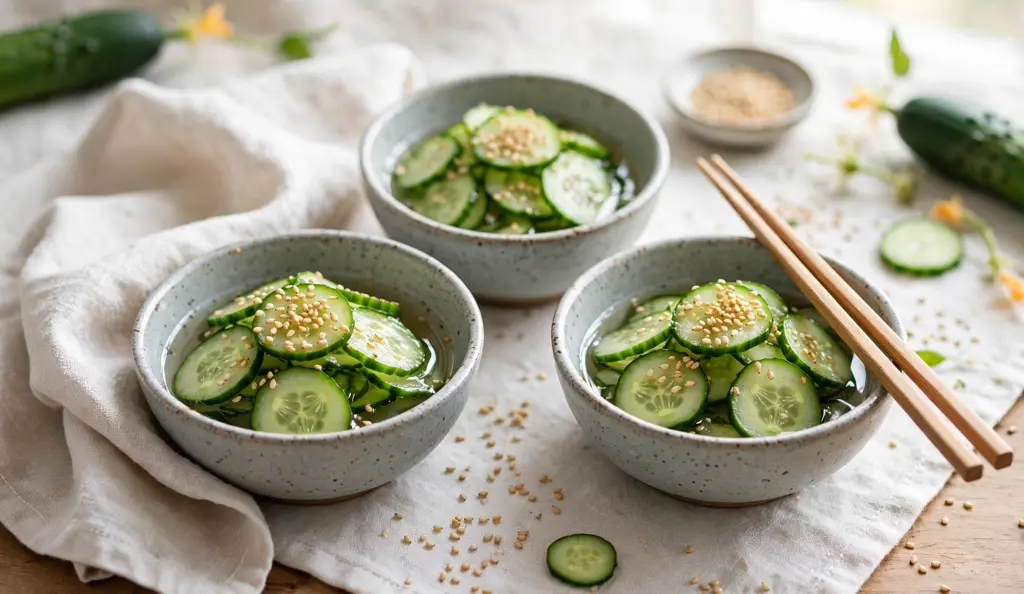
Pair this salad with a full meal to make it shine. It cools down spicy dishes and cuts the richness of fried foods. For dinner ideas, read our gluten free appetizers guide for party spreads, or see how to order gluten free Chinese food safely when eating out.
How to Store Japanese Cucumber Salad Leftovers
This salad keeps for 2 to 3 days in an airtight container in the fridge. The dressing will slowly pull more water from the cucumbers, so expect a small pool of liquid by day two. Pour it off and the slices stay tasty.
For the crispest result, some cooks store the salted squeezed cucumbers and the dressing in separate jars, then mix them an hour before serving. Do not freeze this salad. Cucumbers turn limp and watery after thawing.
The flavor deepens overnight, so many people enjoy it more on day two. Add the sesame seeds right before serving instead of at mixing time, so they keep their crunch. If you are planning sides for the week, rice holds up well next to it, and our guide on banskathi rice covers storage too.
Is Sunomono Healthy?
Yes, this is one of the lightest salads you can make. One cup of cucumber has only about 16 calories, per USDA based nutrition data reported by Environmental Nutrition in July 2025. The vinegar adds almost no calories, and the salad is naturally dairy free and vegan.
The mild sugar in the dressing is the only thing to watch. Two tablespoons of sugar across four servings is about 1.5 teaspoons per person. If you need less, use the less sweet ratio from the table above. For more dairy free sides, see our gluten free dairy free recipes collection.
Japanese Cucumber Salad FAQs
Is Japanese cucumber salad the same as sunomono?
Yes. Sunomono is the Japanese name for this salad, and most English recipes call it by the English name. Both names describe thin cucumber slices in a sweet rice vinegar dressing. When you see either name, expect the same dish.
What does Japanese cucumber salad taste like?
It tastes cool, crisp, sweet, and lightly tart. The rice vinegar gives a bright tang, the sugar softens it, and the tamari adds a mild savory depth. Sesame seeds add a nutty finish. It is refreshing rather than heavy.
Can I make Japanese cucumber salad without a mandoline?
Yes, a sharp chef knife works fine. The key is even, thin slices, so take your time and cut them as uniform as you can. Thick uneven pieces do not absorb the dressing evenly. A mandoline just makes the job faster.
Do I have to peel the cucumbers?
No, not for Persian, Japanese, or English cucumbers. Their skins are thin and edible. Peel only waxy American cucumbers, or peel in stripes for a pretty look. The peel adds fiber and color to the finished salad.
What is wakame, and is it required?
Wakame is a mild edible seaweed sold dried in Asian grocery stores. It is not required, and the salad tastes great without it. Soak it for 5 to 10 minutes in cold water, then squeeze it dry before mixing it in. It adds a soft texture and ocean flavor.
Can I use white vinegar instead of rice vinegar?
You can, but the taste changes. White vinegar is sharper and harsher than rice vinegar. If you must substitute, use half white vinegar and half water, and add a touch more sugar. Apple cider vinegar is a gentler swap than white vinegar.
Can I make this salad ahead of time?
Yes. Make the dressing up to 5 days ahead and keep it in a sealed jar in the fridge. Salt and squeeze the cucumbers up to one day ahead, then store them plain. Toss everything together 30 to 60 minutes before you serve it.
Why did my salad turn watery?
The cucumbers did not rest long enough in salt, or you skipped the squeeze step. Salt draws water out before the dressing goes on, so ten minutes plus a firm squeeze keeps the bowl crisp. Also avoid garden cucumbers, which hold more water.
Is this salad good for meal prep?
It works for short meal prep of 2 to 3 days. Portion it into small airtight containers for lunches. The flavor improves overnight. Keep the sesame seeds separate and add them fresh so they stay crunchy.
Is this salad keto or low carb?
It is naturally low carb, since one cup of cucumber has only about 4 grams of carbs. The classic dressing adds sugar, so cut the sugar to 1 tablespoon or use a keto sweetener. The vinegar, cucumbers, and sesame seeds are all keto friendly.
What should I serve with Japanese cucumber salad?
Serve it with sushi, grilled fish, teriyaki chicken, or fried rice. Its cool tang balances rich or spicy food. It also opens a meal well as a small appetizer before the main course. Keep portions small, since it is a side dish.
Can kids eat this salad?
Yes, kids often like it because it is sweet and crunchy. Use the mild kid friendly dressing ratio from the table, with a little less vinegar. The thin slices are easy for small mouths to chew. Skip the chili oil version for children.
Where does the soy sauce gluten risk come from?
Regular soy sauce is brewed with wheat and soybeans, so it always contains gluten. Tamari is made mostly from soybeans and is often gluten free, but you must check the label for a certified gluten free mark. Our full breakdown lives in is soy sauce gluten free.
Final Take
This salad is proof that the simplest dishes are often the best. Fifteen minutes, one salt rest, and one dressing ratio give you a crisp, bright sunomono that beats most restaurant versions. The tamari swap keeps it fully gluten free with zero flavor loss.
Make it once this week in October 2026 and the recipe will stay in your rotation. It pairs with almost any dinner, costs very little, and tastes like something far more complicated. Keep the mandoline thin, squeeze the cucumbers dry, and the bowl will never fail you. Learn more about classic dishes in our guide to Japanese cuisine.