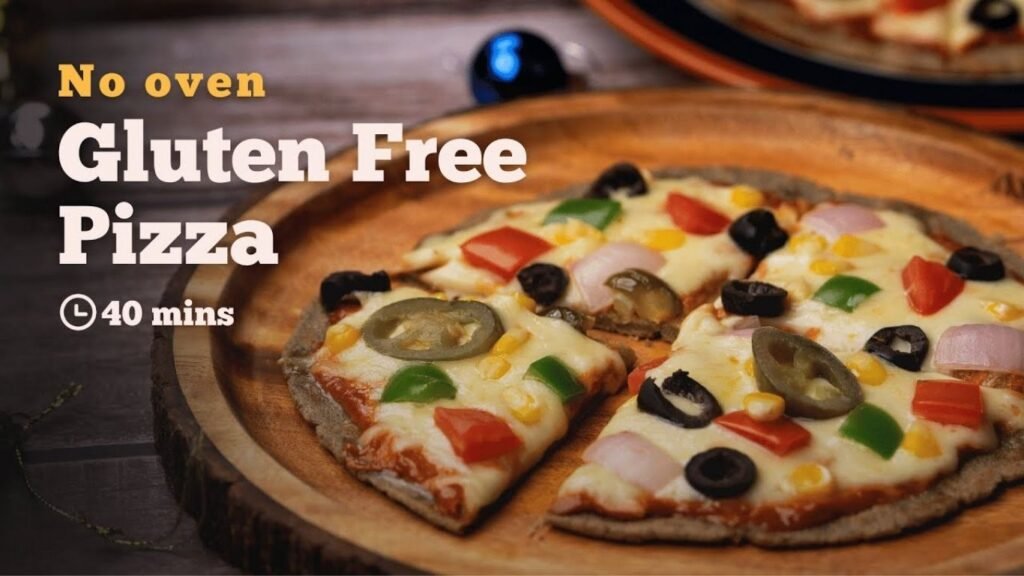
To make gluten free pizza, mix a rice-based gluten free flour blend with xanthan gum, instant yeast, salt, sugar, warm water, and olive oil, let it rise once for one hour, shape two rounds, par-bake at 430°F for 5 to 7 minutes, add toppings, and bake for 5 to 7 minutes until the cheese melts and the edges turn golden.
Gluten free pizza dough fails most often for three reasons: the wrong flour blend, a missing binder, and toppings added to raw dough. This guide fixes all three with weighed ingredients, a par-bake step that prevents a soggy center, and a flour-blend comparison table. The recipe makes two 10-inch pizzas and was last tested and updated in October 2026.
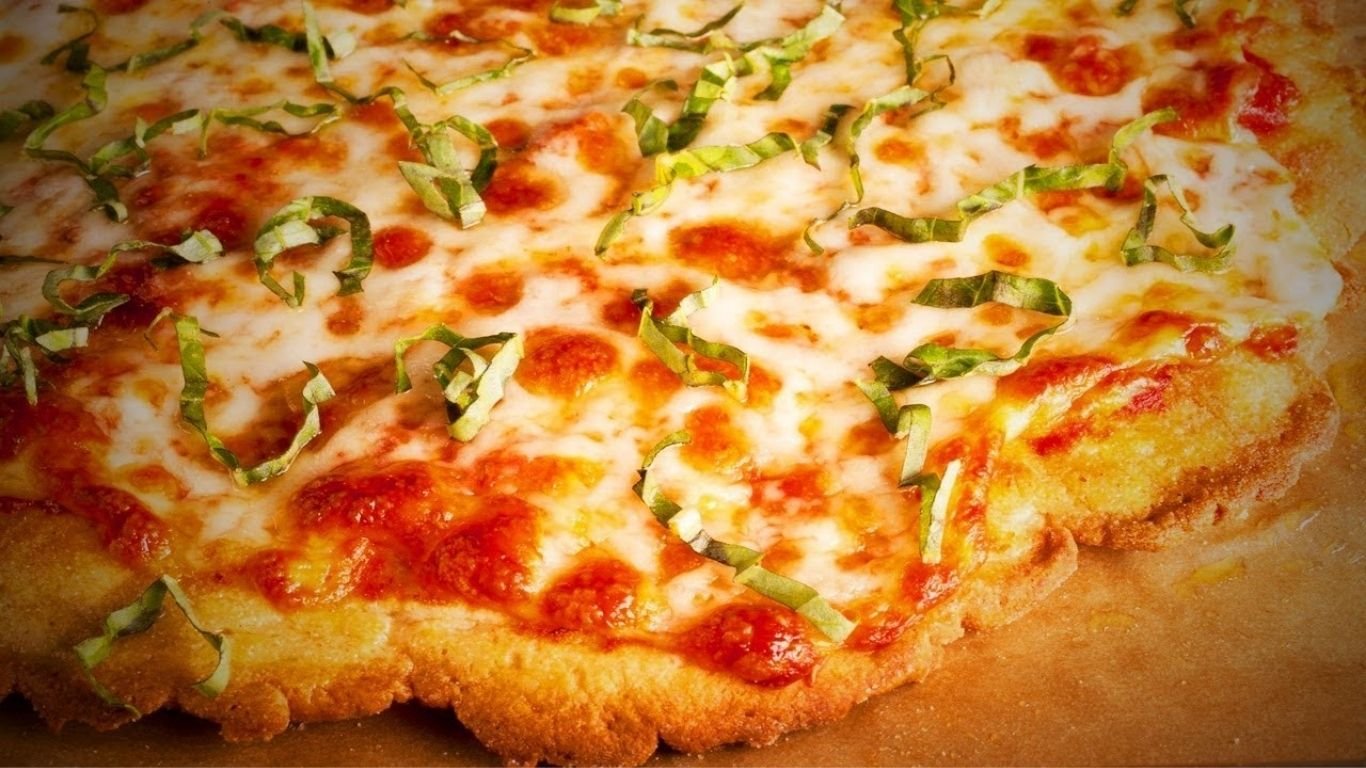
Caption: A homemade gluten free pizza with a golden, crisp crust.
What Makes a Pizza Gluten Free?
A pizza qualifies as gluten free when every ingredient in the dough, sauce, and toppings contains no wheat, barley, rye, or their derivatives. The flour blend is the main variable. Common gluten free flour blends include rice flour, potato starch, tapioca starch, and sorghum flour.
Gluten free pizza dough requires xanthan gum or psyllium husk to replace the binding function of gluten. Gluten is the protein that gives wheat dough its stretch. Without a binder, gluten free dough tears during shaping and crumbles after baking. This substitution allows the dough to hold its shape without tearing during shaping or baking.
People with celiac disease or gluten sensitivity need this substitution because gluten triggers an immune response in the small intestine. A 2013 study published in the American Journal of Gastroenterology confirms that even trace amounts of gluten can cause intestinal damage in celiac patients, which makes accurate ingredient selection necessary for this recipe.
Cross-Contamination During Preparation
Shared cutting boards, shared ovens, and shared utensils with wheat-based products introduce gluten particles. The Celiac Disease Foundation states that a food only qualifies as gluten free in the United States if it contains fewer than 20 parts per million (ppm) of gluten. If you plan to order out, read our guide to gluten free pizza crust first, since it explains what to ask about a restaurant’s crust and prep area.
Key Ingredients and Their Functions
| Ingredient | Function | Amount |
|---|---|---|
| Gluten free flour blend | Replaces wheat flour | Rice flour, sorghum flour, tapioca starch |
| Xanthan gum | Binds dough, replaces gluten elasticity | 1 to 3 teaspoons per 3 cups of flour |
| Psyllium husk | Alternative binder to xanthan gum | 20 grams per batch |
| Instant yeast | Leavens the dough | 9 grams per 3 cups of flour |
| Olive oil | Adds moisture and browning | 60 to 70 grams per batch |
What Ingredients Do You Need for Gluten Free Pizza Dough?
The following ingredients make one batch of gluten free pizza dough, enough for two 10-inch pizzas.
- 420 grams gluten free all-purpose flour blend
- 3 teaspoons xanthan gum (omit if the flour blend already contains it)
- 9 grams instant yeast
- 6 grams granulated sugar
- 9 grams kosher salt
- 260 milliliters warm water, about 35°C (95°F)
- 63 grams extra-virgin olive oil, plus more for brushing
Each ingredient serves a distinct function. Xanthan gum replaces the elastic protein network that gluten normally forms. Instant yeast produces carbon dioxide, which creates air pockets in the dough. Warm water activates the yeast faster than cold water. Weighing the flour on a kitchen scale matters more than any other step, since gluten free flour packs into a cup unpredictably.
How Do You Make Gluten Free Pizza Dough?
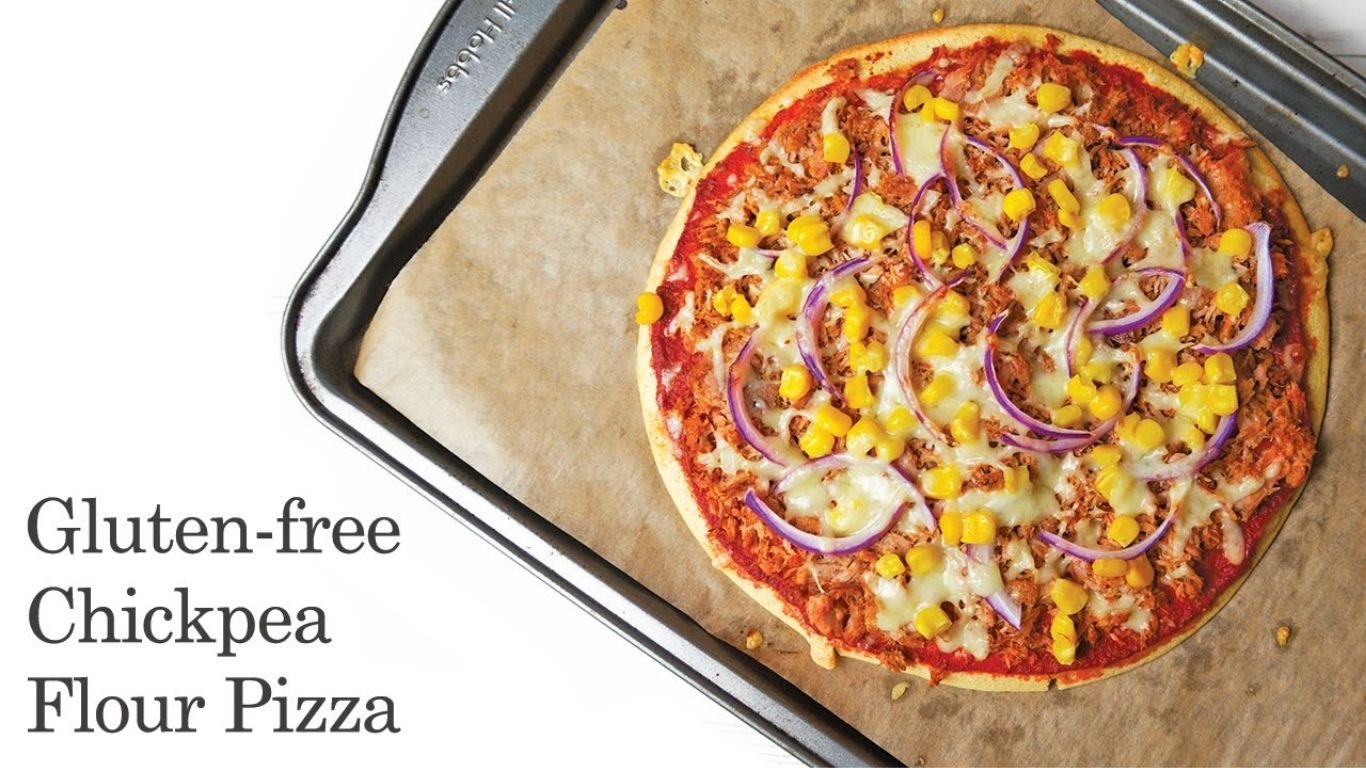
Caption: Mixing gluten free pizza dough until it pulls from the bowl.
The process for gluten free pizza dough differs from wheat dough because it does not require kneading. The steps below produce a workable, non-sticky dough.
- Whisk the flour blend, xanthan gum, sugar, and salt together in a stand mixer bowl.
- Add the yeast to the dry mixture and whisk again.
- Pour in the warm water and olive oil.
- Mix on medium speed for 3 to 5 minutes until the dough looks aerated and pulls slightly from the bowl sides.
- Transfer the dough to an oiled container with a lid.
- Let the dough rise for 1 hour at room temperature, or refrigerate it for up to 3 days for deeper flavor.
- Divide the risen dough into two equal portions before shaping.
How Do You Shape and Bake Gluten Free Pizza?
- Preheat the oven to 220°C (430°F) with a pizza stone or inverted baking sheet inside.
- Press the dough from the center outward using floured fingers to form a 25 to 28-centimeter round.
- Transfer the shaped dough onto parchment paper.
- Brush the surface with olive oil.
- Par-bake the crust for 5 to 7 minutes before adding toppings.
- Add sauce, cheese, and toppings after par-baking.
- Return the pizza to the oven for another 5 to 7 minutes, until the cheese melts and the edges turn golden brown.
- Remove the pizza and let it rest for 3 minutes before slicing.
Par-baking prevents a soggy center. Gluten free dough holds less structural strength than wheat dough, so baking the crust alone first allows it to firm up before it carries the weight of the toppings.
Which Flour Blends Work Best for Gluten Free Pizza?
Not every gluten free flour blend performs the same way in pizza dough. The table below compares four commonly used blends.
| Flour Blend | Texture Result | Xanthan Gum Needed | Best For |
|---|---|---|---|
| Rice-based all-purpose blend | Crisp outside, chewy inside | 1 to 3 tsp per 3 cups | Standard thin-crust pizza |
| Bob’s Red Mill 1-to-1 | Denser, requires adjustment | Additional 1 tsp needed | Not ideal for yeast dough |
| Caputo Fioreglut | Absorbs more moisture | Built into blend | Neapolitan-style pizza |
| Tapioca-starch heavy blend | Chewier, more elastic | 1 to 2 tsp per 3 cups | Deep-dish or thicker crusts |
Bob’s Red Mill 1-to-1 flour does not contain enough xanthan gum for yeast-based dough on its own. Adding an extra teaspoon improves the structure, though results remain denser than a purpose-built pizza blend.
What Can You Substitute in Gluten Free Pizza?
- Xanthan gum substitute: replace with 20 grams of psyllium husk powder, dissolved in the water before mixing.
- Yeast substitute: for a yeast-free version, use baking powder as the leavening agent, though the texture becomes denser.
- Dairy-free cheese: use cashew-based or coconut oil-based mozzarella alternatives for a dairy-free and gluten-free pizza.
- Egg-free binding: gluten free pizza dough typically contains no egg, so no substitution is needed for egg allergies.
What Are the Nutrition Facts for Gluten Free Pizza?
The table below lists approximate nutrition values per pizza crust, without toppings, based on a standard rice-flour blend recipe.
| Nutrient | Amount per Crust |
|---|---|
| Calories | 305 kcal |
| Carbohydrates | 55 g |
| Protein | 6 g |
| Fat | 10 g |
| Fiber | 3 g |
| Sodium | 480 mg |
These values change based on the specific flour blend, oil quantity, and portion size used.
How Do You Store and Reheat Gluten Free Pizza?
Raw gluten free pizza dough keeps in a sealed container in the refrigerator for up to 3 days. Freezing raw dough is not recommended, since the freezing process can kill the yeast before it activates.
A parbaked crust, however, freezes well. Wrap the cooled parbaked crust tightly and store it in the freezer for up to 3 months. Defrost it at room temperature before adding toppings and finishing the bake.
For leftover baked slices, wrap them in freezer-safe wrap and refrigerate for up to 3 days. Reheat in a toaster oven at 150°C (300°F) for 5 minutes to restore crispness.
What Should You Serve With Gluten Free Pizza?
Pizza night works best as a menu, not a single recipe. These pairings keep the whole meal gluten free:
| Course | Gluten Free Pick | Why It Works |
|---|---|---|
| Starter | 10-minute guacamole with vegetable sticks | No flour in the recipe, and it is ready before the oven heats up |
| Side | Gluten free bread garlic knots from parbaked dough | Uses the same dough batch as the pizzas |
| Drink | Gluten free beer, chilled | A classic pairing without the gluten risk |
| Dessert | Fresh fruit with whipped cream | Skips flour entirely, like the starter |
Frequently Asked Questions About Gluten Free Pizza
Is gluten free pizza healthier than regular pizza?
Gluten free pizza is not automatically healthier. It contains a similar calorie and fat count to regular pizza, and it only offers a health benefit for people with celiac disease or gluten sensitivity.
Can I make gluten free pizza dough without a stand mixer?
Yes, though the dough requires a food processor or vigorous hand mixing with a dough hook to reach the correct aerated texture, since gluten free dough lacks the elasticity of wheat dough.
Why does my gluten free pizza crust turn out crumbly?
Crumbly crust results from too much flour, an incorrect flour blend, or an over-measured amount of oil. Add water by the teaspoon until the dough smooths out.
What temperature bakes gluten free pizza best?
220°C (430°F) produces the best results for home ovens, while wood-fired ovens that reach 400°C (750°F) bake gluten free pizza in around 90 seconds.
Does gluten free pizza dough need to rise twice?
No. Gluten free pizza dough only needs one rise before shaping, since the crust develops its final rise during the first bake in the oven.
Can almond flour replace gluten free all-purpose flour in pizza dough?
No. Almond flour cannot replace an all-purpose gluten free blend, since pizza dough recipes are formulated around rice-based or starch-based blends that behave differently from nut flours.
How long does gluten free pizza dough last in the refrigerator?
Gluten free pizza dough lasts up to 3 days in a sealed container in the refrigerator, and cold dough is easier to shape than dough at room temperature.
Can I freeze parbaked gluten free pizza crusts?
Yes. Cool the parbaked crusts completely, wrap them tightly, and freeze for up to 3 months. Defrost at room temperature, then add toppings and bake as usual.
Why is my gluten free pizza soggy in the middle?
Skipping the par-bake step is the usual cause. Bake the crust alone for 5 to 7 minutes before adding toppings, and go lighter on wet sauces and fresh mozzarella.
Do I need xanthan gum if my flour blend already contains it?
No. Check the ingredient list of your blend first. Adding extra xanthan gum on top of a blend that already contains it can make the crust gummy.
Can I make gluten free pizza on a grill?
Yes. Heat the grill to medium-high, place the parbaked crust directly on the grates, add toppings, and close the lid for 3 to 4 minutes until the cheese melts.
Is frozen gluten free pizza crust as good as homemade?
Store-bought crusts save time but often bake up thinner and drier than homemade. Homemade dough gives a better chew and lets you control every ingredient.
Can I make gluten free pizza dairy free too?
Yes. Pair the dairy-free crust options above with cashew-based or coconut oil-based mozzarella. The bake temperature and times stay the same.
Conclusion
Gluten free pizza comes down to three controls: a weighed rice-based flour blend, xanthan gum or psyllium husk as the binder, and a par-bake before the toppings go on. Master those, and the crust turns out crisp and chewy instead of crumbly or soggy. If you want to understand how restaurant options differ, the next step is learning what goes into a reliable gluten free pizza crust.
This recipe provides food guidance, not medical advice. Readers with celiac disease should confirm ingredient choices against current labeling standards.
Read more about pizza and its regional styles.