How to Make Guacamole: The 10-Minute Foolproof Recipe
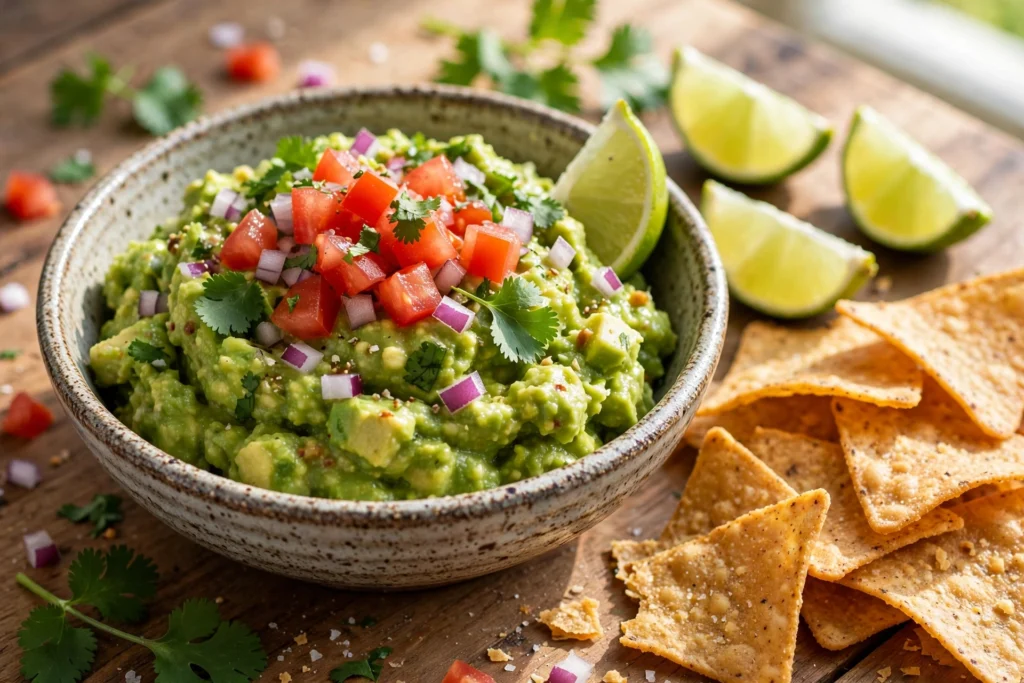
Learning how to make guacamole in October 2026 is simple: mash 3 ripe avocados with 2 tablespoons of fresh lime juice, half a teaspoon of salt, a quarter cup of diced red onion, 2 tablespoons of chopped cilantro, and 1 minced jalapeno. It takes 10 minutes and serves 4 to 6 people.
That is the whole recipe, and it is all most people need. But there is a gap between guacamole that is fine and guacamole that makes people ask for the recipe. The difference is ripe avocados, enough salt, and a few small moves most recipes skip. If you have ever wondered how to make guacamole without it turning brown or bland, this guide covers the full method, mistakes to avoid, smart substitutions, and how to keep every batch naturally gluten-free.
Why Does This Guacamole Recipe Work Every Time?
Guacamole is a dip made from mashed ripe avocados, and it comes from Mexico, where it has been eaten for hundreds of years. The classic version needs only a few fresh ingredients. Nothing is cooked. The avocado does most of the work, so your job is to pick ripe fruit and season it well.
This recipe follows three rules. First, it uses ripe Hass avocados, the variety with dark, pebbly skin that most stores carry. Second, it adds lime juice and salt early, which brightens the flavor and slows browning. Third, it keeps the mash chunky, which gives the dip its classic texture. In May 2026, the Hass Avocado Board reported U.S. per capita avocado consumption of 9.03 pounds in 2025, and a huge share ends up as guacamole.
Here is the best part: guacamole is naturally gluten-free. That means the plain ingredients contain no wheat, rye, or barley on their own. Avocado, lime, onion, cilantro, jalapeno, and salt are all naturally free of gluten. The risks only appear with add-ins, spice blends, and the chips you serve it with, and this guide shows you how to handle those.
Is Guacamole Gluten Free?
Yes, homemade guacamole from plain avocados, lime juice, salt, onion, cilantro, and jalapeno is naturally gluten-free. None of these ingredients contain wheat, rye, or barley. Watch out for flavored versions with soy sauce or spice blends, and for chips fried in shared oil. Always check current labels on packaged ingredients.
What Do You Need to Make Guacamole?
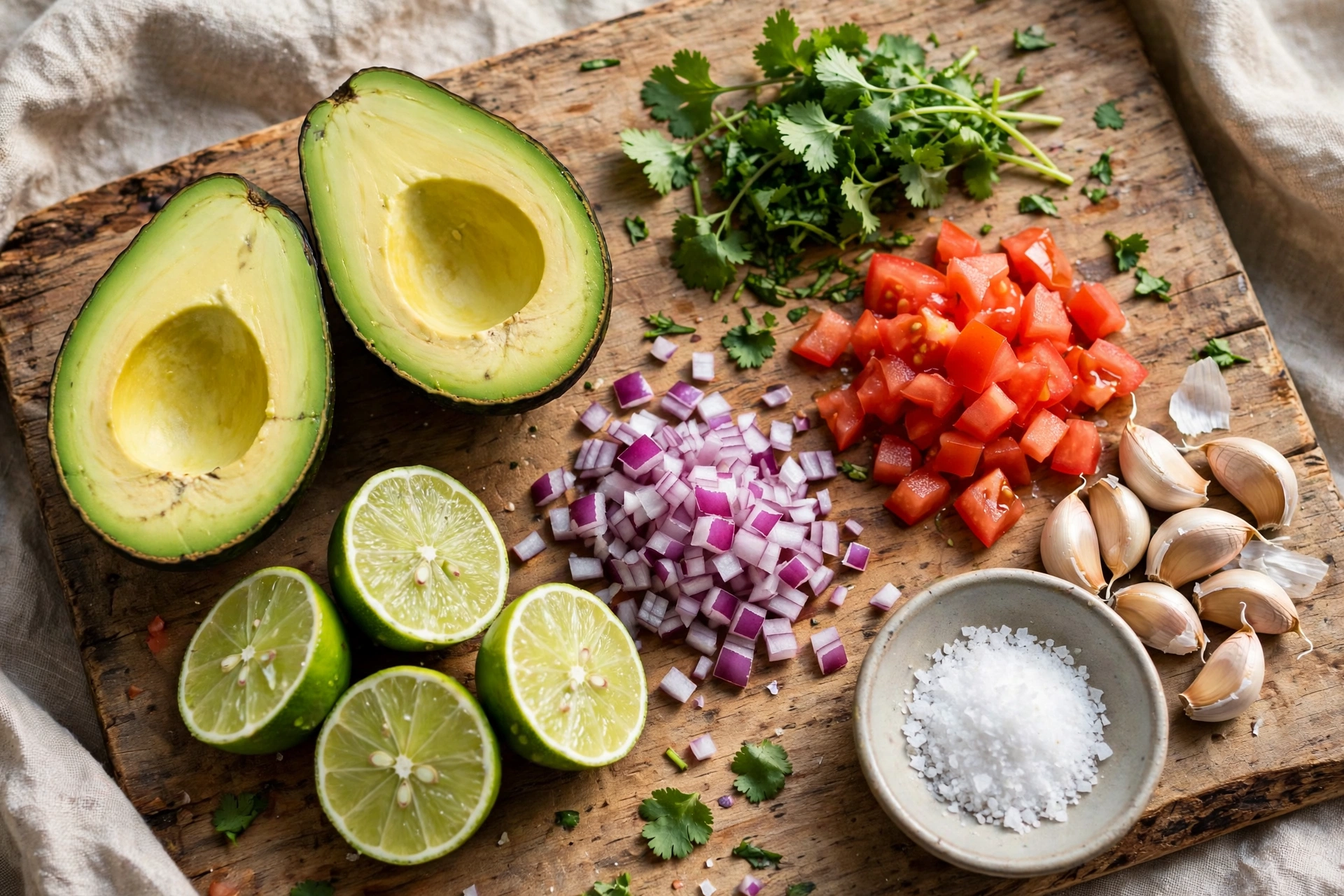
You need only 7 ingredients to learn how to make guacamole at home, and each one has a job. Buy the avocados 2 to 3 days ahead so they ripen on your counter.
- 3 ripe Hass avocados (the small, dark-skinned variety with rich, creamy flesh)
- 2 tablespoons fresh lime juice (about 1 large lime; fresh juice slows browning better than bottled)
- 1/2 teaspoon fine sea salt, plus more to taste
- 1/4 cup red onion, finely diced
- 2 tablespoons fresh cilantro, roughly chopped
- 1 small jalapeno, seeds removed and finely minced
- 1 small garlic clove, grated or very finely minced (optional but worth it)
How Do You Pick a Ripe Avocado?
Hold the avocado in your palm and press gently. It should yield slightly, like a ripe peach. Hard means it needs 2 to 4 more days on the counter. Mushy with deep dents means overripe. You can also pull off the small stem cap: green underneath means ready, brown means past its prime. Atlanta chef Kevin Maxey, known for his chunky guacamole at the restaurant Superica, says the whole dish comes down to ripeness and texture.
How Do You Make Guacamole Step by Step?
Here is how to make guacamole the reliable way, from cutting the fruit to the final taste test. Total time: 10 minutes. Serves 4 to 6 as a dip.
- Step 1: Cut and pit. Slice each avocado in half lengthwise around the pit and twist the halves apart. Tap the pit firmly with the heel of a chef’s knife, twist, and lift it out.
- Step 2: Scoop. Spoon the flesh into a medium bowl. Score the flesh in a crosshatch pattern before scooping if you want neat cubes.
- Step 3: Add lime and salt first. Pour the lime juice over the avocado and sprinkle on the salt right away. The acid slows the browning that starts the moment avocado flesh meets air.
- Step 4: Mash lightly. Use a fork to mash until the mixture is broken up but still chunky. Stop early. You can always mash more, but you cannot undo a puree.
- Step 5: Fold in the rest. Add the red onion, cilantro, jalapeno, and garlic. Fold them through so every bite has a little of everything.
- Step 6: Taste and adjust. Taste with a chip or a spoon. Add more salt first, then more lime. Bland guacamole almost always needs more salt, not more ingredients.
How Do You Get the Perfect Guacamole Texture?
Texture is what separates good guacamole from great guacamole, and learning how to make guacamole with the right texture is mostly about how you mash. Aim for a mix: creamy mashed avocado holding together visible chunks about the size of a pea. That contrast is what makes each bite interesting.
How Chunky Should Guacamole Be?
Many cooks mash only two thirds of the avocado and fold the last third in as rough chunks. If every bite tastes identical, you mashed too far.
The Fork Test: Your 30-Second Texture Check
Drag your fork through the bowl in one slow stroke. The trail should hold its shape for a second, then slowly relax. If the trail fills in instantly, the mix is too loose. If the fork meets hard lumps, those avocados were underripe, and no amount of mashing will save them.
Should You Mash Guacamole in a Molcajete?
A molcajete is a traditional Mexican mortar carved from volcanic stone, and it is the classic tool for guacamole. Grinding onion, jalapeno, and salt in it first releases their juices into the avocado. It is lovely for weekends, but a fork and bowl give nearly the same result on weeknights. Never use a food processor: it whips air in and turns the dip into a pale paste.
The Furikake Trap: Why Trendy Guacamole Can Hide Gluten
Most articles about how to make guacamole never mention gluten, and that is a problem for celiac readers. Guacamole itself is naturally gluten-free, but the trendy versions going viral in 2026 are not always safe. One popular recipe collection mixes a full tablespoon of soy sauce into a furikake-style guacamole and suggests serving it with wonton crisps, with no gluten warning anywhere on the page. Regular soy sauce is brewed from wheat, and wonton wrappers are made from wheat flour.
Restaurants add their own risks. Some stretch guacamole with sour cream, and flavored versions can contain wheat-based thickeners. Once a wheat cracker touches a shared dip bowl, the whole bowl is unsafe for someone with celiac disease. This is called cross-contact, which means gluten touches a gluten-free food by accident. A market analysis from IMARC Group, published in October 2026, valued the global guacamole market at USD 1.48 billion in 2025, with much of the growth in packaged dips like Wholly Guacamole. The Celiac Disease Foundation, a nonprofit supporting people with celiac disease, reminds shoppers that only a “gluten-free” label means a product was made to a gluten standard. In August 2013, the U.S. Food and Drug Administration (FDA) finalized its rule: a food may carry a “gluten-free” label only if it contains less than 20 parts per million of gluten.
The fix is simple. Make guacamole at home with plain ingredients, serve it in its own bowl with its own spoon, and keep wheat crackers on a separate plate. If celiac disease or another health condition affects your food choices, check with your doctor or a registered dietitian before changing your diet.
What Can You Substitute in Guacamole?
Once you know how to make guacamole the classic way, small swaps are easy. Keep the avocado, lime, and salt as your base.
- No cilantro? Use flat-leaf parsley or skip the herb entirely. Some people taste soap in cilantro because of a gene variant.
- No lime? Lemon juice works in the same amount. It tastes a little less bright but still keeps the dip fresh.
- No red onion? White onion or green onion both work. Soak diced onion in cold water for 10 minutes for a milder bite.
- Want it milder? Skip the jalapeno, or remove every seed and white rib, where most of the heat lives.
- Want it hotter? Keep the jalapeno seeds, or swap in half a serrano pepper.
- No fresh garlic? Use a quarter teaspoon of garlic powder, and check the label for pure garlic with no wheat flour added.
- Like tomato? Fold in half a diced Roma tomato at the very end. Firm Romas add the least water.
What Goes Wrong When You Make Guacamole?
The biggest mistake in how to make guacamole is using underripe avocados and hoping seasoning will fix them. It will not. The second biggest mistake is under-salting. Avocado is mild and fatty, and it needs more salt than you think. Run through this rescue checklist the next time you learn how to make guacamole for guests.
Guacamole Rescue Checklist
- Bland and flat: add salt first, then a squeeze of lime. Repeat until it tastes bright.
- Too spicy: mash in half an extra avocado and a spoonful of sour cream to cool it down.
- Turning brown: press plastic wrap directly onto the surface so no air touches it, then refrigerate.
- Watery on top: drain the liquid, stir, and fold tomato in at the end next time instead of the start.
- Bitter taste: the avocados were overripe or the garlic was old. Use firm-ripe fruit and fresh garlic next batch.
- Mushy texture: fold in one roughly chopped avocado to bring back the chunks.
How Do You Store Guacamole So It Stays Green?
Guacamole turns brown because of oxidation, a natural reaction between avocado flesh and air. Smooth the top flat, press plastic wrap directly onto the surface, and seal the lid.
How Long Does Homemade Guacamole Last?
Homemade guacamole lasts 1 to 2 days in the fridge with plastic wrap pressed on its surface to block air. After 2 days the flavor fades, so make only what you need. You can freeze it up to 3 months in a sealed bag with air pressed out.
What Do You Serve with Guacamole?
Serving is the fun part after you learn how to make guacamole. Set out a big bowl with a spoon, plus lime wedges and chopped cilantro for guests.
- Tortilla chips: choose chips labeled gluten-free, and skip restaurant baskets where chips may be fried in shared oil with wheat items.
- Warm gluten-free tortillas: scoop the dip into gluten-free tortillas that fold without cracking for quick tacos.
- Gluten-free wraps: spread a thick layer inside gluten-free wraps with grilled chicken or beans.
- Fresh vegetables: cucumber rounds, bell pepper strips, and jicama sticks keep the whole snack naturally gluten-free.
- A full Mexican spread: pair the dip with our Mexican desserts collection for a complete themed night.
- Snack boards: build the board from our gluten-free foods and snacks guide so every item on the table is safe.
FAQs About How to Make Guacamole
Is guacamole healthy?
Avocados are rich in monounsaturated fats, the heart-friendlier fats, plus fiber and potassium. Homemade guacamole has no cooking and no preservatives.
How do you keep guacamole from turning brown?
Add lime juice right away, then press plastic wrap directly onto the surface before refrigerating. The acid slows oxidation, and the wrap blocks the air.
Can you freeze guacamole?
Yes. Scoop it into a freezer bag, press out the air, and freeze up to 3 months. Leave out tomato and onion before freezing, since they turn watery. Thaw in the fridge and stir.
Why does my guacamole taste bitter?
Bitter guacamole usually means overripe avocados or old garlic. Check for brown streaks inside before mashing, and use firm, fresh garlic.
Do you need tomatoes in guacamole?
No. Traditional Mexican guacamole often has no tomato at all. If you use tomatoes, choose firm Romas and fold them in at the very end.
How many avocados do I need for 10 people?
Plan 5 to 6 avocados for 10 people as an appetizer, about 3 cups of dip. If guacamole is the main snack, use 8. Scale the lime juice and salt with the fruit.
Is it hard to learn how to make guacamole?
Not at all. If you can mash with a fork and chop an onion, you can make guacamole. The gentle squeeze test for ripeness takes seconds to learn.
Can I learn how to make guacamole without cilantro?
Yes. Replace cilantro with flat-leaf parsley, or leave it out entirely. The avocado, lime, and salt carry the flavor on their own.
What is the difference between guacamole and avocado dip?
Guacamole is the traditional Mexican preparation with lime, onion, chili, and cilantro. “Avocado dip” is a loose term that can include versions with sour cream or ranch seasoning.
Is store-bought guacamole gluten free?
It depends on the brand. Plain packaged guacamole is often gluten-free, but flavored versions may contain wheat-based ingredients. Buy only tubs with a clear “gluten-free” label and read the list every time.
How do you ripen avocados fast?
Put hard avocados in a paper bag with a banana or apple and fold it closed. The fruit releases ethylene gas, a natural ripening hormone that the bag traps. Most soften in 1 to 2 days.
Can you make guacamole the night before a party?
You can, but same-day is better. Make it the evening before, press plastic wrap on the surface, and refrigerate. Hold back cilantro and tomato until serving, then add lime juice and stir.
What chips are gluten free for guacamole?
Look for tortilla chips with a “gluten-free” label and a short list of corn, oil, and salt. Flavored chips and restaurant chips fried in shared oil are not safe.
Why is my guacamole watery?
Watery guacamole comes from tomatoes or onion added too early, since salt draws moisture out over time. Fold them in right before serving, and drain any pooled liquid.
Conclusion
Great guacamole comes down to three things: ripe Hass avocados, enough salt, and a light hand with the fork. You now know how to make guacamole that is creamy, chunky, and naturally gluten-free in just 10 minutes. Keep it simple at home, watch for hidden gluten in trendy versions and shared restaurant bowls, and press plastic wrap right on the surface for storage. Once this 10-minute method is in your hands, you will never need another recipe. Make a batch this October 2026 and taste how much better fresh beats store-bought.
Guacamole begins with one of the most popular fruits on Earth: the avocado.