Store-bought tubs cost a fortune and taste flat. Learning how to make hummus at home changes that in one evening. Blend chickpeas, tahini, lemon juice, garlic, olive oil, salt, and ice water for five full minutes for a silky dip that beats the tubs. As of October 2026, homemade is still the cheapest and safest route.
In this guide you will learn how to make hummus step by step, the exact ratios that work, and the three texture tricks that turn grainy paste into restaurant-level silk. You also get a troubleshooting table, smart flavor twists, storage rules, and a quick gluten-free label check for store-bought tubs. Read once and you can make perfect hummus without searching again.
How to Make Hummus in 10 Minutes
This is the fastest way to learn how to make hummus that actually tastes good. No soaking. No overnight planning. Just a food processor and pantry staples. The recipe makes about 2 cups, which serves 8 as a generous snack.
The order of ingredients matters more than most recipes admit. Blend the tahini and lemon juice first. That step alone gives you half the creaminess. Then add everything else and let the machine run longer than feels right.
What you need
- 1 can (15 oz) chickpeas, drained and rinsed
- 1/3 cup well-stirred tahini
- 1/4 cup fresh lemon juice (about 1 large lemon)
- 1 small garlic clove
- 2 tablespoons extra-virgin olive oil, plus more for serving
- 1/2 teaspoon fine salt
- 1/2 teaspoon ground cumin (optional but good)
- 3 to 4 tablespoons ice water
- Paprika and chopped parsley, for serving
What to do
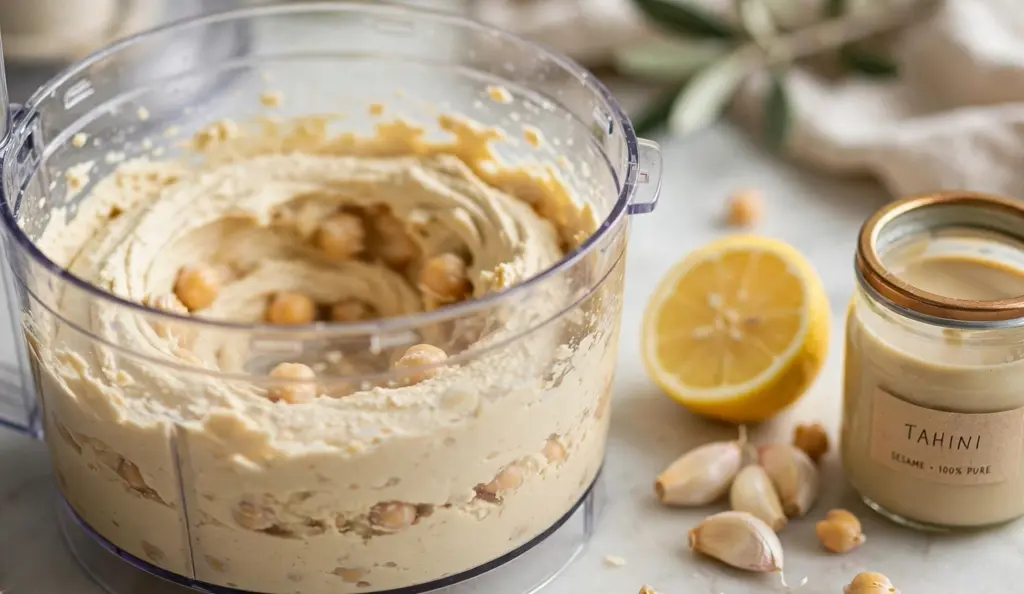
- Add the tahini and lemon juice to a food processor. Blend for 1 full minute until thick and pale. Scrape down the sides once.
- Add the garlic, salt, and cumin. Pulse a few times to break the garlic down.
- Add the chickpeas and 2 tablespoons of ice water. Blend for 4 to 5 minutes straight. Do not stop early. The long blend is what makes hummus silky.
- Drizzle in the olive oil while the machine runs. Add more ice water, one tablespoon at a time, until the texture looks like soft whipped butter.
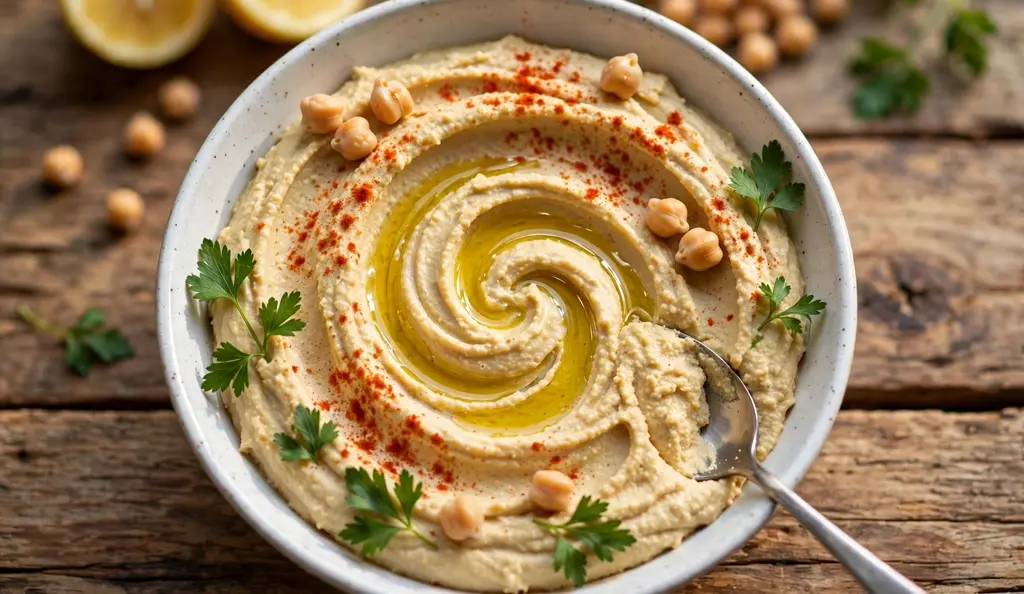
- Taste. Add more salt, lemon, or garlic if it feels flat. Spoon into a shallow bowl, drag the back of a spoon through the center to make a swirl, and finish with olive oil, paprika, and parsley.
That is the whole recipe. Prep takes 5 minutes and the machine does the rest. If you follow the blend order, your first batch already beats most store tubs.
The Real Secret to Silky Hummus
Grainy hummus comes from three small mistakes. Fix them and the texture problem disappears. None of these tricks takes extra time.
First, blend the tahini and lemon juice alone for a full minute. Tahini firms up when it meets lemon juice, then turns fluffy with continued blending. Skipping this step leaves tiny gritty specks in the finished dip.
Second, use ice water, not room temperature water. Cold water helps the mixture whip air in. The result is lighter and fluffier. Add it a spoon at a time so you stay in control of thickness.
Third, blend for 4 to 5 minutes, not 60 seconds. Most home cooks stop far too early. Chickpea skins need time to break down. Set a timer. Walk away from the counter if you must, but let the machine run.
Want one more level of silk? Rub the chickpeas between two clean kitchen towels after rinsing. Most of the skins slip off. This takes about 2 minutes. Chefs like Yotam Ottolenghi have long argued that skinless chickpeas are the shortcut to ultra-smooth hummus, and in testing that claim holds up.
Should you add baking soda?
Some recipes simmer canned chickpeas with a pinch of baking soda for 15 minutes. The soda softens the skins fast. It works, but it also adds 15 minutes and a pot to wash. For a 10-minute recipe, the long blend plus the towel trick gives you nearly the same result. Save baking soda for days when you start from dried chickpeas.
Tahini: The Ingredient That Makes or Breaks It
Tahini is ground sesame paste. It gives hummus its nutty depth and creamy body. Bad tahini ruins the whole batch, so this section earns its place.
Open a new jar and stir it well. The oil separates in storage. If the paste looks dark brown or smells bitter, do not use it. Fresh tahini should smell nutty and pour like thick peanut butter.
For gluten-free readers, one warning matters here. Tahini is naturally gluten free. But some tahini brands process sesame in facilities that also handle wheat. Check the current label every time you buy, because recipes and suppliers change. A tub that says “gluten free” on the label follows the FDA rule: less than 20 parts per million of gluten. That rule took effect on August 5, 2014, and still stands in October 2026. Certified gluten free seals from groups like the Gluten-Free Certification Organization (GFCO) add a second layer of testing.
How to Make Hummus Smoother: Fix Every Problem
If your first try at how to make hummus goes wrong, use this table. Find your problem, see the cause, and apply the fix. It covers every common failure.
| Problem | Likely cause | Fix |
|---|---|---|
| Grainy texture | Too short a blend | Blend 4 to 5 minutes, add ice water slowly |
| Too thick | Too little liquid | Add ice water, 1 tablespoon at a time |
| Too thin | Too much water or oil | Blend in a spoonful of extra chickpeas |
| Bitter taste | Old or low quality tahini | Use fresh tahini, add extra lemon juice |
| Flat flavor | Too little salt or lemon | Add salt first, then lemon, taste again |
| Harsh raw garlic | Garlic too large or too fresh | Use half a clove, or rest the dip 1 hour |
| Dry after a day | Water separated in fridge | Stir well, add a splash of water |
| Beige and dull | Over-blended skins or old peas | Remove skins with the towel trick |
Canned vs Dried Chickpeas: Which Wins?
Canned chickpeas win on speed, and speed is the point of this recipe. Dried chickpeas win on cost and flavor depth, but only if you plan a day ahead.
A side-by-side test shows the difference clearly. Soak 1 cup of dried chickpeas overnight, then simmer them for about an hour until they fall apart. Blend with the same ratios as this recipe. The dried batch tastes slightly nuttier and sweeter. The canned batch is ready in 10 minutes and still excellent.
One nutrition note helps the dried case. Cooked chickpeas deliver about 8.9 grams of protein and 7.6 grams of fiber per 100 grams, according to the USDA Food Composition Database (April 2018). Either form gives you those numbers. Home cooking just saves you the can liner and the extra sodium.
For busy weeks, keep both options. Use canned for speed. Use dried when you want the best version and have an evening to spare. The method never changes, only the starting point.
Is Homemade Hummus Gluten Free?
Is hummus naturally gluten free?
Yes. Plain homemade hummus is naturally gluten free. Chickpeas, tahini, lemon juice, garlic, olive oil, salt, and cumin contain no wheat, barley, rye, or their relatives. The Celiac Disease Foundation lists chickpeas as naturally gluten free foods. Risk appears only in tubs with shared lines or flavorings. If this affects your diet, check with your doctor or a registered dietitian.
This is where the three categories matter. Naturally gluten free means the food has no gluten ingredients by nature. Labeled gluten free means the product follows the FDA rule and stays under 20 parts per million. Certified gluten free means an outside group like GFCO tested it. For someone with celiac disease, certified is the safest pick. For a homemade batch with clean ingredients, “naturally gluten free” is the right description.
Your 30-Second Gluten-Free Label Check for Store Tubs
No competitor covers this well, so here is the angle that matters for this blog. Store-bought hummus is usually gluten free, but not always, and the label tells you in 30 seconds.
First, look for the words “gluten free” on the tub. Brands like Sabra print the claim clearly on many products. That claim means the FDA rule applies: under 20 parts per million, verified by the manufacturer. Second, scan the ingredients for flavorings, spice blends, and starches. Those are the spots where gluten hides. Third, read the allergy line. “Made in a facility that also processes wheat” is an advisory, not a violation, but celiac shoppers should weigh it.
Do this every time you shop. Brands reformulate without warning, and a tub you trusted in September can change by October. The check takes half a minute and removes all doubt.
Serving, Storing, and Freezing Hummus
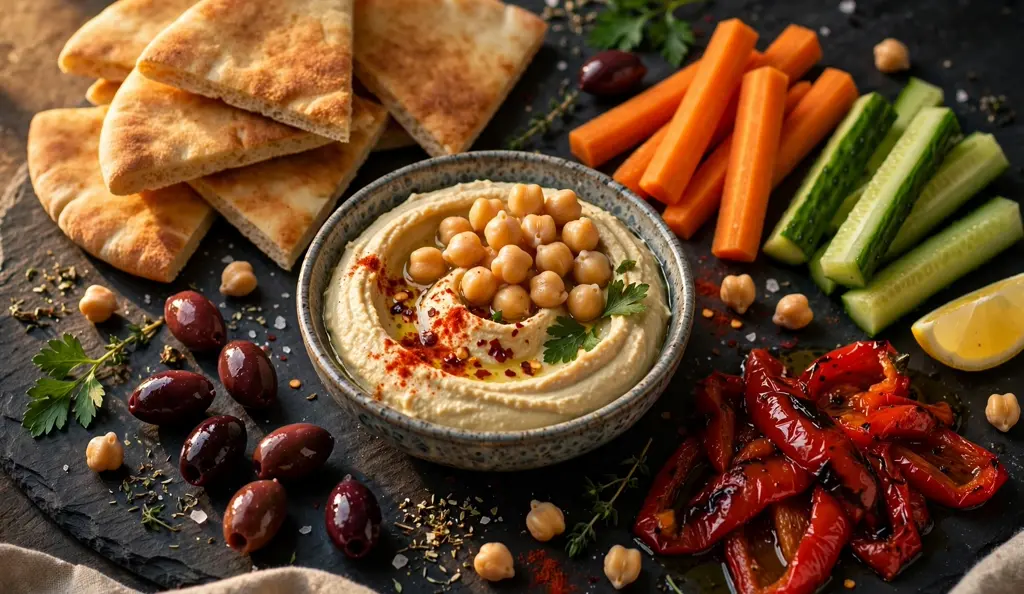
Hummus deserves better than a plastic tub in the fridge door. Scoop it into a wide shallow bowl. Use the back of a spoon to drag a spiral from the center outward. Pour a thin ribbon of olive oil into the swirl. Add paprika, whole chickpeas, or toasted pine nuts on top.
Serve it the classic way with warm pita and crunchy vegetables. Once you learn how to make hummus, you will keep a batch ready. It also works as a sandwich spread, a wrap filling, and a base for grain bowls. Our How to Make Guacamole sits next to it perfectly on a party table, and our 23 easy gluten-free appetizer ideas give you a full spread around it.
Refrigerate leftovers in an airtight container. Homemade hummus keeps for 4 to 5 days. The olive oil may firm up in the cold. Let the bowl sit at room temperature for 15 minutes, then stir before serving.
Freezing works better than most people expect. Portion the hummus into small containers, leave a little headspace, and drizzle olive oil over the surface. Freeze for up to 3 months. Thaw overnight in the fridge, stir well, and add a squeeze of lemon to wake the flavor back up.
How long does homemade hummus last in the fridge?
Homemade hummus stays fresh for 4 to 5 days in an airtight container in the fridge. Lemon juice and salt slow spoilage, but there are no preservatives, so trust your nose. If it smells sour or off, throw it out. For longer storage, freeze it in small portions for up to 3 months, then thaw overnight in the fridge.
How to Make Hummus Your Own: 5 Flavor Twists
Once you master how to make hummus, the variations take seconds. Stir these into the finished batch.
- Roasted red pepper: Blend in 1/2 cup of drained roasted peppers. Sweet and smoky.
- Roasted garlic: Swap the raw clove for a whole head of roasted garlic. Mellow and rich.
- Spicy: Add 1 teaspoon of harissa or a pinch of cayenne. Stir in slowly and taste.
- Herb: Blend in a handful of parsley and mint. Bright green and fresh.
- Olive: Pulse in 1/3 cup of pitted kalamata olives. Salty and bold.
Each twist pairs well with our gluten-free wraps that do not crack for quick lunches. And since hummus has no dairy at all, it slots straight into our gluten-free dairy-free recipe collection without a single change.
Frequently Asked Questions
Can I make hummus without tahini?
Yes, but it will not taste like classic hummus. Swap in 2 tablespoons of olive oil plus 1 tablespoon of sesame oil for a close match. Some cooks use sunflower seed butter. The result is smoother than oil alone but less nutty than real tahini.
Can I make hummus in a blender instead of a food processor?
Yes, with one adjustment. Add more liquid early so the blades can catch the mixture. A high-speed blender actually makes very smooth hummus. Stop and scrape the sides twice during blending.
Why is my hummus bitter?
Old tahini is the most common cause. Tahini turns bitter with age, especially near the bottom of the jar. Taste your tahini before you start. If it is bitter, open a fresh jar or add extra lemon juice to balance it.
Do I have to peel the chickpeas?
No, but peeling gives a silkier result. Rub rinsed chickpeas between two kitchen towels and the skins slip off in about 2 minutes. With a 5-minute blend, unpeeled chickpeas still turn out smooth enough for most people.
Can I use dried chickpeas instead of canned?
Yes. Soak 1 cup of dried chickpeas overnight, then simmer for about 60 minutes until very soft. You get about 3 cups cooked. Use 1 1/2 cups for this recipe and save the rest for another batch.
What is aquafaba and can I use it in hummus?
Aquafaba is the liquid from a can of chickpeas. You can swap it for the ice water, one tablespoon at a time. It adds a little body and protein. Do not use the full can liquid, or the hummus turns too thin.
How many calories are in hummus?
WebMD notes that a cup of hummus holds about 435 calories, which means a two-tablespoon scoop lands around 55 calories. Most of the calories come from tahini and olive oil. It is a filling snack because of the protein and fiber.
Can you freeze hummus?
Yes. Freeze it in small airtight containers for up to 3 months. Leave headspace and drizzle olive oil on top. Thaw overnight in the fridge, stir well, and add fresh lemon juice to brighten the flavor.
Why did my hummus turn out grainy?
Three fixes solve it. Blend longer, a full 4 to 5 minutes. Blend the tahini and lemon juice first before adding chickpeas. Add ice water slowly. One of those three is almost always the missing step.
Is hummus healthy?
Hummus is a solid choice as far as dips go. Chickpeas bring protein and fiber, tahini brings healthy fats, and olive oil brings more of the same. Watch your portion if calories matter to you. Two tablespoons is a sensible serving.
What do you eat hummus with?
Warm pita is the classic partner. Crunchy vegetables like carrots, cucumber, and bell peppers work well. Spread it on sandwiches and wraps, dollop it on grain bowls, or thin it with water into a salad dressing.
Why does my hummus taste like nothing?
It needs more salt and lemon. Add salt first, a quarter teaspoon at a time, tasting after each addition. Then add lemon juice a teaspoon at a time. Under-seasoning is the number one reason homemade hummus tastes bland.
Can I make hummus without garlic?
Yes. Leave the garlic out entirely. The lemon and tahini carry the flavor on their own. Add a little extra cumin or a spoonful of roasted red pepper to keep it interesting.
How do I keep hummus from drying out?
Press plastic wrap or a lid directly onto the surface before refrigerating. This stops a skin from forming. If it still dries out, stir in a spoonful of water or olive oil and it comes back to life.
The Last Word
Learning how to make hummus takes one can of chickpeas, one good tahini, and ten minutes. Blend the tahini and lemon first, run the machine for five full minutes, and season boldly. That is the whole secret.
Homemade beats the tubs on price, freshness, and flavor, and in October 2026 it remains one of the simplest wins in a gluten-free kitchen. Make a double batch this weekend. Your future self, opening the fridge on a busy Tuesday, will thank you.
New to this way of eating? Read more about the gluten-free diet on Wikipedia.