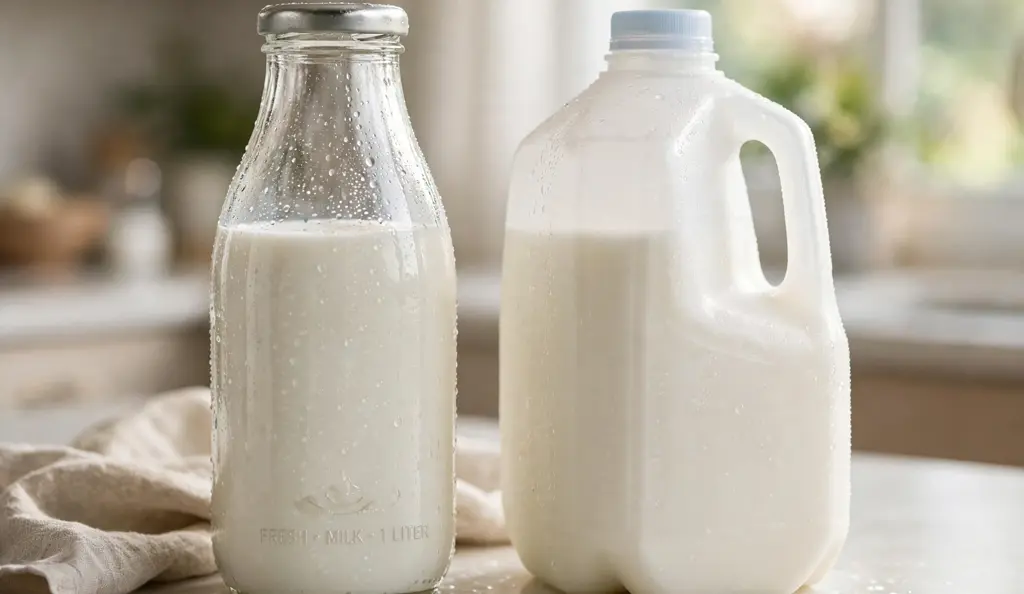
Yes, you can freeze milk safely at home. Pour it into a clean, freezer-safe container, leave about two inches of headspace for expansion, and store it at 0°F (-18°C) or below. Frozen milk keeps its nutrients for up to three months. Thaw it in the fridge, shake well, and use it within a few days. It is that simple.
That quick answer covers the basics, but the details matter. As of October 2026, food-safety experts agree that freezing is one of the best ways to stop milk going to waste. This guide shows you exactly how to freeze milk, which types freeze well, how to thaw it safely, and the small mistakes that can ruin the result. You will finish this page knowing everything needed to freeze a whole gallon with confidence.
How to Freeze Milk in 5 Simple Steps
Freezing milk is easier than most people think. You do not need special equipment. Follow these five steps and your milk will thaw in the best possible shape.
Step 1: Freeze milk while it is still fresh
Freeze milk well before its use-by date. Freezing stops the clock on spoilage, but it does not reverse it. Milk that is already sour will thaw sour. Always start with milk that tastes fresh.
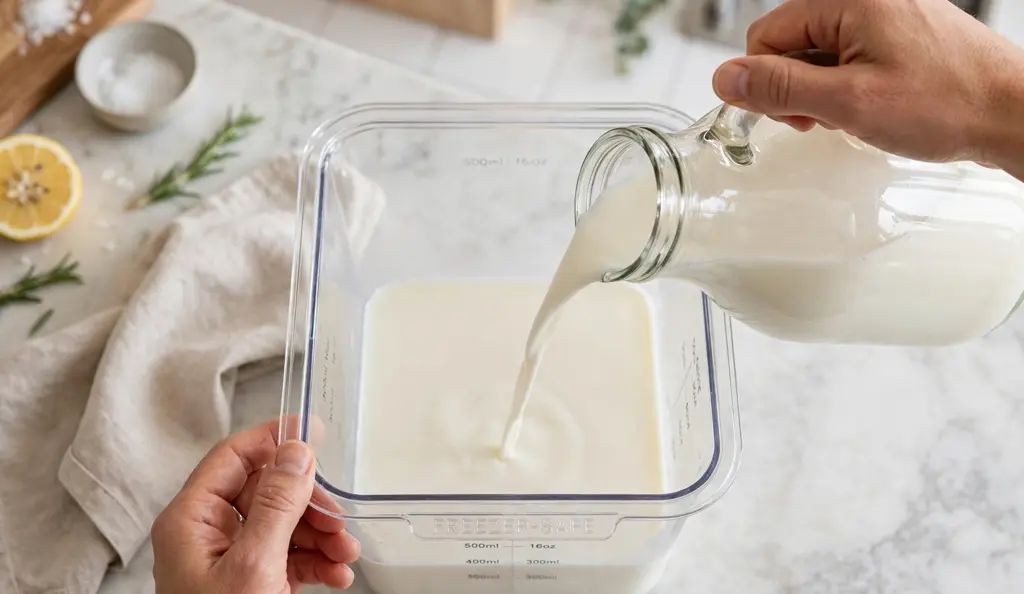
Step 2: Pour it into a freezer-safe container
Use clean plastic jugs, freezer bags, or glass jars labeled as freezer safe. Avoid thin paper cartons, which can leak and pick up freezer odors. Freezer bags save the most space if you lay them flat.
Quick tip: freeze in small portions
Small containers thaw faster and let you defrost only what you need. Ice cube trays are perfect for coffee portions. Muffin trays work well for recipe portions.
Step 3: Leave room for expansion
Milk expands as it freezes, just like water. Leave at least two inches of headspace at the top of the container. If you skip this step, the container can crack or burst open in the freezer.
Step 4: Seal, label, and date every container
Press out extra air before sealing bags. Write the date on each container with a marker. The old use-by date no longer applies once milk is frozen, so your label is your new reference.
Step 5: Place it in the coldest part of the freezer
Store milk toward the back of the freezer, where the temperature stays steadiest. Keep your freezer at 0°F (-18°C) or below. The USDA says food stored constantly at 0°F stays safe indefinitely, though quality slowly drops over time.
Which Types of Milk Freeze Best?
Almost every milk freezes safely, but results differ by type. Fat is the main reason. Higher-fat milks separate more after thawing, while lower-fat milks stay smoother. Here is how the common types compare.
| Milk type | Freezes well? | What to expect after thawing |
|---|---|---|
| Skim and low-fat milk | Yes, best choice | Minimal separation, smooth after shaking |
| Whole milk | Yes, with care | Fat separates, shake or blend to smooth it |
| Goat milk | Yes | Slight separation, blends back easily |
| Lactose-free milk | Yes | Similar to regular milk, mild separation |
| Buttermilk | Yes | Separates, best saved for cooking and baking |
| Oat, almond, soy milk | Okay | Can turn grainy, best for smoothies and cooking |
| Coconut milk (canned) | Okay | Never freeze in the can, separation is likely |
| Evaporated milk | Okay | Never freeze in the can, shake well after thawing |
| Sweetened condensed milk | No | High sugar stops it from freezing solid |
Picture a busy dad in Chicago who buys two gallons of whole milk on sale. He freezes one gallon in quart bags and keeps one in the fridge. A week later, he thaws one bag overnight, shakes it hard, and pours it over cereal. It tastes close enough that nobody at the breakfast table notices the difference.
If your thawed milk looks best for cooking rather than drinking, that is completely normal. Use it in your favorite batters, like this fluffy gluten free pancake recipe or these soft gluten free cinnamon rolls. Thawed milk also works well as a buttermilk substitute when you add a spoonful of lemon juice or vinegar.
How Long Can You Freeze Milk Before It Goes Bad?
You can keep milk in the freezer for up to three months and still enjoy good quality. This three-month limit comes from USDA-backed food storage charts, which list fresh milk at a 0°F freezer temperature for up to three months. Milk kept longer stays safe, but its flavor and texture keep declining. For the best results, label every container and use the oldest milk first.
Refrigerated milk only lasts about one week, according to USDA guidance. That short window is why freezing matters so much. A gallon bought on Monday can easily become half a gallon of waste by Sunday. In the freezer, those extra days turn into months.
How to Thaw Frozen Milk Safely
Thawing is where food safety really counts. Bacteria grow quickly at room temperature, so never thaw milk on the counter. The fridge is the safest method every time.
- Move the frozen container to the refrigerator the night before you need it.
- Allow up to 24 hours for a large container to thaw fully.
- Shake the milk hard or whisk it once thawed to mix the fat back in.
- Use the thawed milk within two to three days.
- Never refreeze milk after it has thawed.
Thawed milk often looks separated or slightly lumpy. That is just the fat and water parting ways during freezing. A good shake or a quick spin in the blender usually fixes it. Some people notice a faint yellow tint. This comes from riboflavin, a vitamin in milk that freezes at a different rate. It is harmless and does not change the nutrition.
If the milk smells sour or off after thawing, do not taste it to check. The USDA gives the same advice it gives for any doubtful food: when in doubt, throw it out. Trust your nose and your judgment.
Can You Freeze Milk in the Carton It Came In?
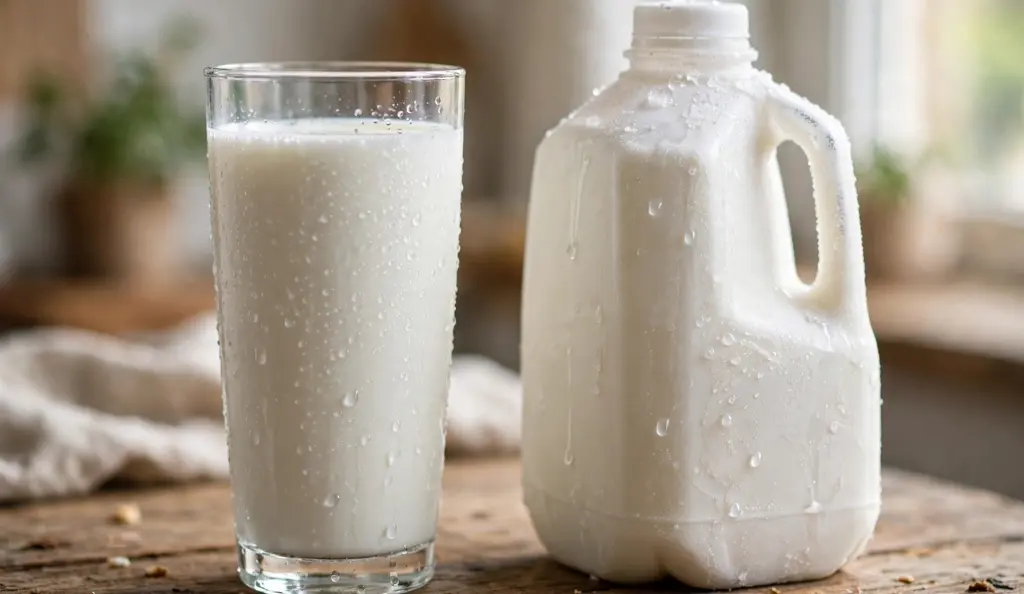
Technically yes, but it is not the best choice. Pour about one cup out of a full gallon first, because milk needs room to expand. Even then, paper cartons are not fully airtight and can leak or absorb freezer smells. A sturdy freezer bag or a plastic jug works much better. If you only have the original carton, wrap it tightly in plastic wrap or slip it inside a freezer bag for extra protection.
The 24-Hour Taste Test: Freeze One Bottle First
Here is the trick almost no freezing guide mentions. Before you freeze a whole gallon, freeze one small bottle as a test. Thaw it the next day and taste it. Some families find thawed milk perfectly fine for drinking. Others notice enough change that they prefer it for cooking only. This one-day test, run in October 2026 with the milk you already buy, removes all the guesswork.
This test also saves real money. WRAP, the UK waste charity, reported in its 2018 milk waste study that UK homes throw away around 490 million pints of milk every year, with nearly 90 percent of all milk waste happening in the home. Freezing milk before its date runs out is one of the simplest ways to cut that waste. WRAP also found that keeping the fridge at or below 5°C (41°F) could cut milk waste by 50,000 tonnes a year, saving shoppers £25 million. Freezing works the same way: it protects both your wallet and the food itself.
What About Raw Milk, Goat Milk, and Infant Formula?
These special cases need extra care. The rules change a bit for each one.
Can you freeze raw milk?
Yes, raw milk freezes the same way as pasteurized milk. However, freezing does not kill harmful bacteria. Pasteurization is the only step that makes raw milk reliably safe, and the FDA requires it for milk sold across state lines in the US. If you choose to drink raw milk, buy it from a licensed, inspected source and keep every safety step strict.
Can you freeze goat milk?
Yes. Goat milk freezes well and shows only slight separation after thawing. It behaves much like cow milk in the freezer. Many families who drink goat milk for digestion reasons freeze extra cartons the same way.
Can you freeze infant formula?
No, this one is different. Ready-to-feed liquid formula should not be frozen, and opened powdered formula belongs in a cool, dry place, not the freezer. The National Dairy Council and pediatric guidance both point parents toward following the package instructions exactly. When feeding a baby is involved, the label is the authority.
When in Doubt, Throw It Out
Freezing is safe, but it is not magic. These rules keep your milk safe every time:
- Keep the freezer at 0°F (-18°C) or below, always.
- Freeze milk before its use-by date, not after.
- Thaw only in the refrigerator, never on the counter.
- Use thawed milk within two to three days.
- Never refreeze milk that has already thawed.
- Discard any milk that smells or tastes off after thawing.
Freezing preserves quality. It does not improve it. Milk that was already turning will not get better in the freezer. Start fresh, freeze promptly, and thaw safely.
Can You Freeze Milk? Your Questions Answered
Does freezing milk change its nutrition?
No, freezing causes little to no nutrient loss in milk. Protein, calcium, and vitamins survive the freeze and thaw cycle well. The USDA and dairy experts agree that thawed milk is nutritionally almost identical to fresh milk.
Why does thawed milk look separated or lumpy?
Milk is mostly water with fat and protein mixed in. During freezing, the water freezes first and pushes the fat and protein apart. When it thaws, those parts do not fully reunite on their own. Shaking or blending fixes the texture in seconds.
Can you freeze milk twice?
No. Once thawed, milk should be used and never refrozen. Refreezing lets bacteria that woke up during thawing multiply further. Food-safety agencies are clear on this rule for all dairy products.
How do you know if frozen milk has gone bad?
Check the date on your label first. If it has been frozen longer than three months, quality may be poor. After thawing, sniff it. Sour smell, odd color, or a slimy feel all mean it should go down the drain.
Can you freeze milk in glass jars?
Yes, but only in jars marked as freezer safe. Leave at least two inches of headspace and do not tighten the lids fully until the milk is frozen solid. Regular glass jars can crack from the pressure of expanding milk.
Can you freeze milk in ice cube trays?
Yes, and it is one of the handiest methods. Freeze milk in trays, pop the cubes into a labeled freezer bag, and drop them straight into coffee, smoothies, or sauces. No thawing needed for hot drinks.
Does frozen milk taste the same as fresh milk?
It tastes very close, but not exactly the same. Most people notice a slight change in texture rather than flavor. Whole milk shows the biggest difference. Skim and low-fat milk taste nearly identical after thawing.
Can you cook with frozen milk?
Absolutely. Frozen and thawed milk works perfectly in cooking and baking. Sauces, soups, pancakes, and baked goods will not show any difference at all. Many cooks freeze milk specifically for recipe use.
How fast can you thaw milk in a hurry?
The safe shortcut is a bowl of cold water in the sink. Change the water every 30 minutes. Never use hot water or the microwave to speed things up, since warm spots let bacteria grow. Fridge thawing stays the safest method.
Can you freeze chocolate milk or flavored milk?
Yes. Flavored milks freeze the same way as plain milk. Shake them well after thawing, since the cocoa or flavoring settles. Kids rarely notice any difference once it is cold and shaken.
Should you freeze milk before or after the sell-by date?
Always before. Freezing locks in quality at the moment of freezing. Milk frozen on its sell-by date may already be declining. Freeze it at least a few days before the date for the best results.
Can you freeze milk that is close to expiring to make cheese?
Yes, milk that is near its date but still smells fresh can be frozen for later cooking. Thawed milk works well in recipes that heat it, like sauces or homemade ricotta-style cheese. If it already smells sour, skip it and throw it away.
Is it cheaper to buy milk in bulk and freeze it?
Often, yes. Buying larger containers on sale and freezing the extra can cut your milk spending noticeably. As of October 2026, grocery prices remain a pressure point for many families, so freezing sale-priced milk is a practical budget move.
The Bottom Line
Freezing milk is safe, simple, and smart. Use clean containers with headspace, keep the freezer at 0°F, use the milk within three months, and always thaw in the fridge. Thawed milk shines in cooking and usually drinks fine after a good shake. Start with one small test bottle this week, and you may never pour milk down the drain again. Your wallet, your recipes, and the planet all win when good milk stops going to waste. Bookmark this guide, share it with a friend, and make freezing milk your new household habit.
Want the science behind safe milk handling? Read more about pasteurization on Wikipedia.