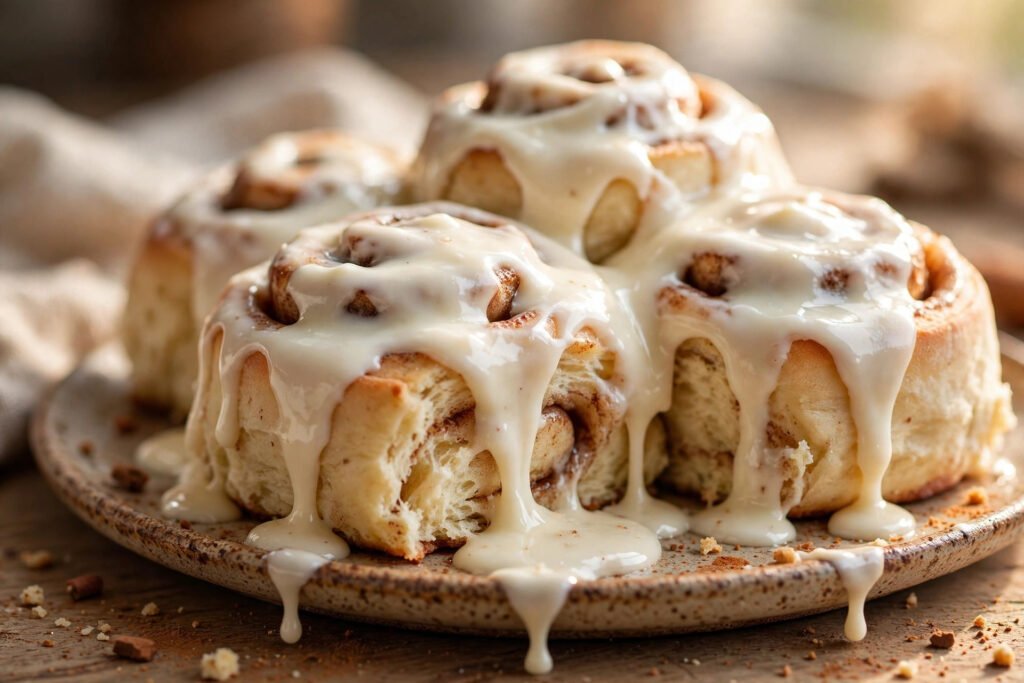
Gluten Free Cinnamon Rolls (Soft & Gooey Recipe)
Yes, you can make bakery-level gluten free cinnamon rolls at home, and they do not have to taste gluten free. It is October 2026, and gluten free baking has come a long way from the dry, gritty rolls of the past. This recipe gives you soft, pillowy rolls with a gooey cinnamon center and a tangy cream cheese icing. The method fixes the two biggest problems with gluten free cinnamon rolls: gummy middles and dough that tears when you roll it.
In this guide, you will learn which flour blend actually works, how to make gluten free cinnamon rolls step by step, how to freeze them for later, and which pantry ingredients can hide gluten where you least expect it. You will also get dairy-free and egg-free swaps, plus answers to the 12 questions readers ask most.
Why Most Gluten Free Cinnamon Rolls Turn Out Gummy
Regular cinnamon roll dough gets its stretch from gluten, the protein in wheat. Without it, most recipes end up with one of two failures. Either the rolls turn out dense and gritty, or the middles stay raw and gummy even after a full bake. Both problems come from the same root cause: a flour blend that cannot hold gas from the yeast, plus too much moisture trapped in the center.
The fix for gluten free cinnamon rolls has three parts. First, use a protein-enriched gluten free bread blend or a cup-for-cup mix with xanthan gum, because protein helps the yeast and gives the dough stretch. Second, knead the sticky dough for five full minutes so it builds structure. Third, space the rolls an inch apart so heat reaches every center.
Gluten free baking is worth the effort. According to BCC Research, the global gluten free products market was worth $11.8 billion in 2025 and is projected to reach $19.2 billion by 2031 (BCC Research, July 2026). Bakery treats like these rolls are one of the fastest growing categories, because more home bakers are learning the tricks that make them work.
Ingredients for Gluten Free Cinnamon Rolls
This recipe makes 9 large rolls and uses one flour blend, so there is no measuring of five different flours. Everything here is easy to find in a regular grocery store.
- 3 cups (360g) gluten free bread flour blend or cup-for-cup all purpose blend with xanthan gum
- 2 1/4 tsp (1 packet) instant yeast
- 1/4 cup granulated sugar
- 1 tsp salt
- 1 cup warm milk, about 110°F (dairy or oat milk)
- 1/4 cup unsalted butter, melted
- 2 large eggs, room temperature
- 1 tsp apple cider vinegar
- 1/3 cup unsalted butter, very soft, for the filling
- 3/4 cup packed brown sugar, for the filling
- 2 tbsp ground cinnamon, for the filling
- 4 oz cream cheese, softened, for the icing
- 2 tbsp unsalted butter, softened, for the icing
- 1 cup powdered sugar, for the icing
- 1 tsp vanilla extract, for the icing
Which Gluten Free Flour Works Best for Cinnamon Rolls
A gluten free bread blend gives the softest, stretchiest result because it is enriched with extra protein, often from whey or egg, to support yeasted dough. If you cannot find one, a cup-for-cup all purpose blend works too. Check that it lists xanthan gum on the label, since that gum replaces the stretch that gluten used to provide. A trusted example is the measure-for-measure style flour from King Arthur Baking Company, which many home bakers already keep in their pantry.
Do not use a single flour like rice flour or almond flour on its own. Single flours have no structure, so the rolls will crumble or spread flat. For more on how these flours behave in yeasted dough, read our gluten free bread guide.
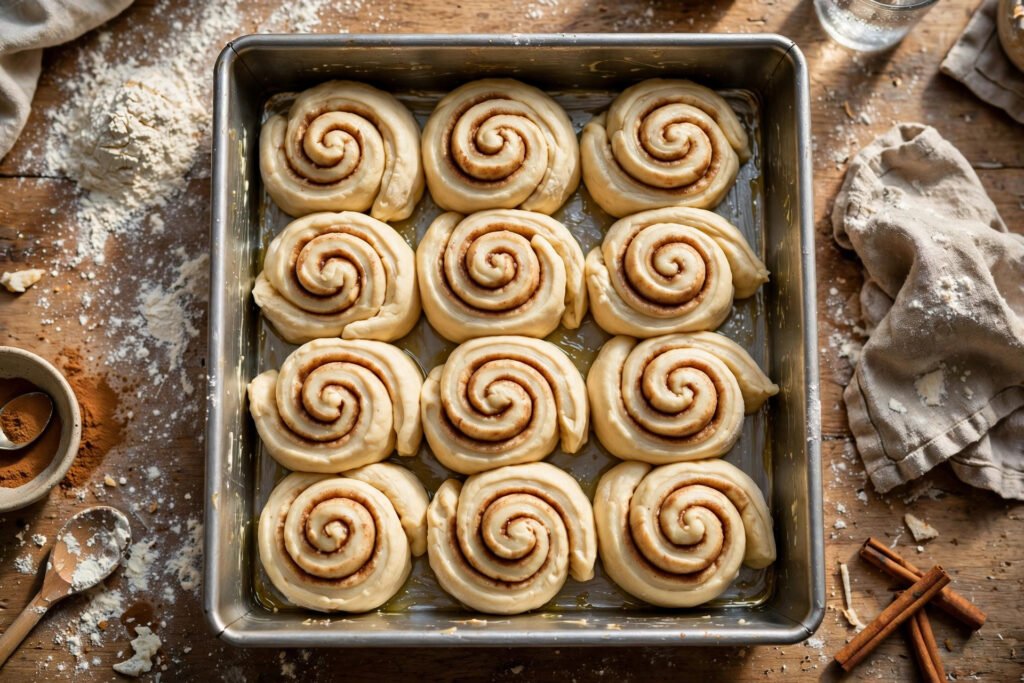
How to Make Gluten Free Cinnamon Rolls: Step-by-Step
Set aside about 2 hours of rise time and 25 minutes of baking. The hands-on work takes less than 30 minutes.
- Wake up the yeast. Stir the warm milk, a pinch of the sugar, and the yeast in a small bowl. Wait 5 to 7 minutes until it turns foamy. No foam means the yeast is dead, so start over.
- Mix the dry base. Whisk the flour blend, remaining sugar, and salt in the bowl of a stand mixer.
- Combine wet and dry. Add the yeast mixture, melted butter, eggs, and vinegar to the bowl. Mix on medium with the dough hook for 5 minutes. The dough will look sticky and shaggy at first, then turn smooth.
- Rest the dough. Cover the bowl with a clean towel and let it rest for 10 minutes. This short rest makes rolling much easier.
- Roll it out. Dust a large sheet of plastic wrap with gluten free flour. Press the dough into a rectangle about 12 by 16 inches. The dough should be about 1/4 inch thick.
- Add the filling. Spread the very soft butter edge to edge. Mix the brown sugar and cinnamon, then sprinkle it evenly over the butter and press it down gently.
- Roll and slice. Start at the long edge and roll into a tight log, using the plastic wrap to lift and guide. Slide unflavored dental floss under the log and cross the ends to slice clean pieces. A knife squishes soft dough, but floss keeps each roll round.
- Pan and rise. Grease a 9 by 13 inch pan. Place the rolls with about an inch of space between them. Cover and let rise in a warm spot for 45 to 60 minutes, until puffy.
- Bake. Bake at 350°F (175°C) for 25 to 30 minutes, until golden on top and the centers spring back when pressed.
- Ice and serve. Beat the cream cheese, butter, powdered sugar, and vanilla until smooth. Spread over the warm rolls and serve right away.
The Rolling Trick That Prevents Tearing
The plastic wrap is the secret to rolling sticky gluten free dough. It acts like an extra pair of hands, lifting the dough as you roll so it never sticks to the counter or splits. If a small tear does appear, just pinch it closed with damp fingers. The seam bakes shut and nobody will see it.
Do I Need a Stand Mixer for Gluten Free Cinnamon Rolls?
No. Mix the dough with a sturdy wooden spoon for 6 to 7 minutes until it turns smooth and stretchy. A hand mixer with dough hooks also works. Full mixing time matters more than the tool, because that is what builds the structure gluten free flour needs.
How to Freeze Gluten Free Cinnamon Rolls (Three Ways)
Freezing is the trick most recipes skip, and it is perfect for holiday mornings. One baking session in October 2026 can give you warm rolls for the holidays with almost no extra work.
| Freeze stage | How to do it | How long it keeps |
|---|---|---|
| Unbaked, after shaping | Freeze rolls solid on a tray, then bag them | Up to 2 months |
| Baked, no icing | Cool fully, wrap each roll in foil, then bag | Up to 3 months |
| Icing only | Freeze in a small container or zip bag | Up to 1 month |
For unbaked rolls, thaw them in the pan overnight in the fridge, then let them rise at room temperature for an hour before baking. For baked rolls, reheat in a 325°F oven for 10 to 12 minutes. Frosting goes on after reheating, never before freezing, because cream cheese icing turns watery when frozen and thawed.
The Hidden Gluten Audit: 5 Pantry Spots That Can Ruin Your Rolls
Most bakers check the flour bag and stop there. But gluten hides in the quiet corners of a pantry, and this is the audit no other cinnamon roll recipe walks you through.
Powdered sugar. Many brands add cornstarch to stop clumping, and shared factory lines can dust it with wheat. Look for a “gluten free” label on the bag, or a certification mark from the Gluten-Free Certification Organization (GFCO), which tests products to under 10 parts per million.
Brown sugar. Plain brown sugar is naturally gluten free, but flavored or “baking blends” sometimes add wheat-based anti-caking agents. Read the ingredients on anything with extra words on the package.
Bulk bin cinnamon. Loose spices from bulk bins pick up cross-contact from shared scoops and neighboring bins. Buy sealed jars instead. While you are at it, choose true Ceylon cinnamon if you bake often, since common cassia cinnamon carries more coumarin, a compound linked to liver concerns at high doses.
Shared tools. A rolling pin or pastry brush used with wheat flour can dust your rolls with gluten even if every ingredient is safe. Keep one set of tools that only touches gluten free baking.
Butter and cream cheese. Plain dairy is fine, but flavored spreads and some “whipped” products contain wheat starch. Stick to plain, full-fat versions and read every label. If you live with celiac disease, this matters more than it sounds: Beyond Celiac reports that about 1 in 133 Americans has celiac disease and up to 83% of them are undiagnosed, which means many home bakers cook for guests who cannot risk even a trace.
If you are new to label reading, our guide on gluten free foods and snacks explains the difference between naturally gluten free, labeled gluten free, and certified gluten free products. And as always, check the current label, because recipes and factory lines change. If you have celiac disease, check with your doctor or a registered dietitian about which products are safe for you.
Why Are My Gluten Free Cinnamon Rolls Gummy in the Middle?
Gummy centers usually mean crowded rolls, an early pull from the oven, or a starch-heavy flour blend. Space rolls an inch apart, and bake until the centers spring back when pressed. A protein-enriched bread blend gives a cleaner crumb than starch-heavy mixes.
Easy Swaps: Dairy-Free and Egg-Free Versions
Dairy free. Replace the milk with oat milk, the butter with a vegan butter stick, and the cream cheese with a dairy-free cream cheese. The recipe bakes the same and tastes just as rich.
Egg free. Swap the two eggs for 6 tablespoons of aquafaba (the liquid from a can of chickpeas), whisked until foamy. The rolls rise a little less tall but stay soft and hold together well.
Fully vegan. Combine both swaps above. One reader favorite trick is to brush the tops with oat milk right before baking for a golden finish. For more dessert inspiration that adapts well to these swaps, browse our gluten free desserts collection.
Gluten Free Cinnamon Rolls: Frequently Asked Questions
Are cinnamon rolls gluten free by default?
No. Classic cinnamon rolls are made with wheat flour, so they contain gluten. Only rolls made with a gluten free flour blend and gluten free pantry ingredients are safe, and they must be baked with clean tools to avoid cross-contact.
Can I make gluten free cinnamon rolls the night before?
Yes. Shape the rolls, place them in the greased pan, cover tightly, and refrigerate overnight. The next morning, let them sit at room temperature for 45 to 60 minutes to finish rising, then bake as directed.
Why did my gluten free cinnamon rolls not rise?
The most common cause is dead yeast or milk that was too hot. Yeast dies above 130°F, so keep the milk near 110°F. Cold kitchens also slow rising, so let the pan rise in a turned-off oven with the light on for gentle warmth.
Can I use regular all purpose flour instead?
No, regular flour contains gluten and would make the rolls unsafe for anyone avoiding gluten. It would also change the recipe completely, since this method is built around how gluten free flour behaves.
What is the best icing for gluten free cinnamon rolls?
Cream cheese icing is the classic choice because its tang balances the sweet filling. A simple powdered sugar glaze works too. Both must be made with gluten free labeled sugar and vanilla.
How do I store leftover gluten free cinnamon rolls?
Keep them covered at room temperature for up to 2 days, or in the fridge for up to 5 days. Reheat single rolls in the microwave for 15 to 20 seconds, or warm the whole pan in a 325°F oven for 10 minutes.
Can I make gluten free cinnamon rolls without yeast?
You can, but the texture changes. A yeast-free version uses baking powder for lift and tastes more like a scone. For the soft, stretchy bakery texture in this recipe, instant yeast is worth it.
Are gluten free cinnamon rolls safe for celiac disease?
They can be, if every ingredient is labeled gluten free and the kitchen is free of cross-contact. The FDA requires foods labeled gluten free to contain under 20 parts per million of gluten (FDA final rule, August 2014). If you have celiac disease, confirm with your doctor or dietitian which products are safe for you.
Why is my gluten free dough so sticky?
Gluten free dough is supposed to be sticky. Without gluten, the dough cannot form a smooth elastic ball like wheat dough. Resist the urge to add lots of extra flour, since that makes the rolls dry and gritty.
Can I add nuts or raisins to the filling?
Yes. Add 1/2 cup of chopped pecans or raisins over the cinnamon sugar before rolling. Make sure any add-ins are labeled gluten free, since bulk nuts and dried fruit can carry cross-contact.
What pan works best for gluten free cinnamon rolls?
A 9 by 13 inch metal pan works best because it conducts heat evenly to the centers. Glass pans work too, but reduce the oven temperature by 25°F. A cast iron skillet also works and gives crisp edges.
Can I make mini gluten free cinnamon rolls?
Yes. Cut the log into 12 smaller rolls instead of 9 and use the same pan. Bake for 18 to 22 minutes, and check early, since smaller rolls brown faster.
How many calories are in a gluten free cinnamon roll?
A large bakery-style roll with cream cheese icing has roughly 380 to 450 calories, depending on size and icing amount. Treat this as a rough estimate, since exact values depend on your specific brands and portion sizes.
The Last Word on Gluten Free Cinnamon Rolls
Great gluten free cinnamon rolls come down to three things: a protein-rich flour blend, a full five-minute mix, and enough space in the pan for heat to reach the centers. It is October 2026, the perfect season for warm baking, so roll up a batch this weekend and freeze a second pan for the holidays. Warm rolls, zero gluten, and not a single gummy middle. Once you master this base recipe, adapt it into sticky buns, orange rolls, or a holiday morning centerpiece.
For background on the protein that these rolls leave out, read about celiac disease.