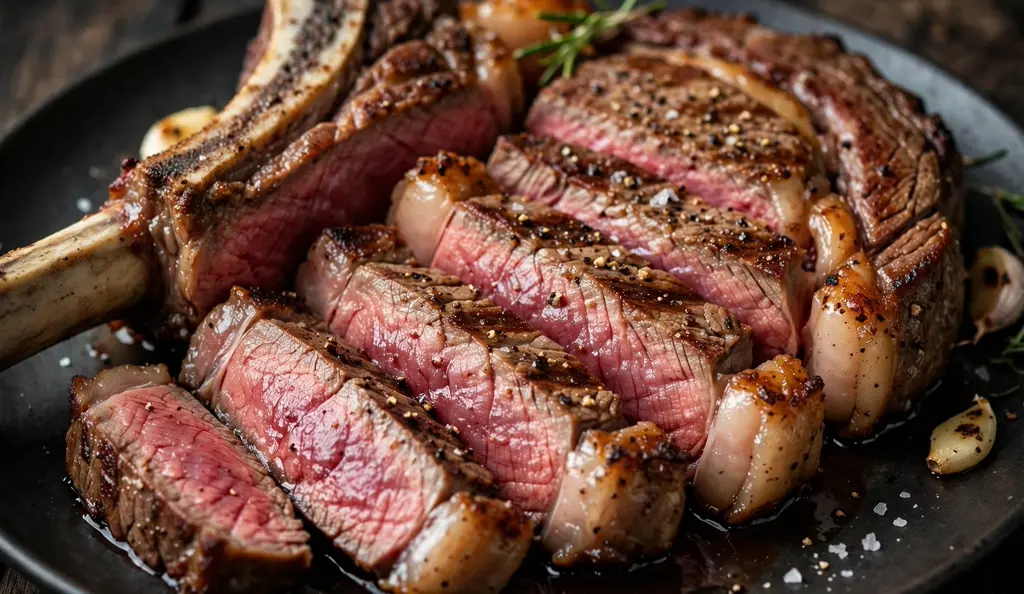
Ribeye Bone Steak: The Perfect Gluten-Free Cook Guide
A ribeye bone steak is a thick ribeye cut with the rib bone still attached, and you can cook it perfectly at home with a hot pan sear and a short oven finish. It is naturally gluten free when you season it yourself with plain salt and pepper. This guide shows you how to buy it, cook it to the right temperature, and keep every seasoning and sauce safe.
As of October 2026, more home cooks are skipping the steakhouse and cooking bone-in cuts themselves. You get the same rich flavor for less money, and you control every ingredient that touches the meat. That control matters a lot when gluten is a concern. Below you will find the full method, a doneness chart, thermometer tips, and the hidden-gluten traps most steak guides never mention.
What Is a Ribeye Bone Steak?
A ribeye bone steak is a ribeye with a short section of rib bone left attached. Butchers cut it from the rib primal, the same part of the cow that gives us prime rib. You may also see it sold as a cowboy steak. A tomahawk is its close cousin, with a much longer, cleaned bone that looks like an axe handle.
The ribeye muscle is famous for marbling. Marbling means the thin white flecks of fat running through the red meat. That fat melts as the steak cooks. It bastes the meat from the inside and keeps each bite juicy. This is why a ribeye tastes richer than leaner cuts like sirloin.
The bone does two jobs. First, the meat hugs the bone and cooks a touch slower, so the area near the bone stays extra juicy. Second, the bone adds flavor to the meat around it during cooking. Fans of bone-in cuts say the bites closest to the bone taste the best. Try it once and you may agree.
How to Buy a Ribeye Bone Steak
Start with thickness. Pick a steak that is 1.5 to 2 inches thick. Thin steaks overcook before a good crust forms. Thick steaks give you time to build a deep brown crust while the center stays pink.
Look at the grade if your store shows it. The USDA, the United States Department of Agriculture, grades beef as Prime, Choice, or Select. Prime has the most marbling, then Choice, then Select. Choice is the sweet spot for most budgets and cooks beautifully.
Talk to your butcher. Ask for a center-cut bone-in ribeye, cut fresh that day if possible. Many shops will cut one to order when you call a day ahead, a handy option in October 2026 as holiday cooking season starts early. Ask them not to add any seasoning or tenderizer. You want plain, untouched meat.
Check the color. Fresh ribeye should look bright cherry red with creamy white fat. Avoid steaks with gray spots or a sour smell. Get the steak home cold and keep it in the fridge until 45 minutes before cooking.
How to Cook a Ribeye Bone Steak at Home
The most reliable home method is a hard sear plus a short oven finish. The screaming-hot pan builds the crust. The oven cooks the thick center gently. This two-step method beats a pan-only approach for any steak thicker than one inch.
What You Need
- 1 bone-in ribeye steak, 1.5 to 2 inches thick (about 1 to 1.5 pounds)
- 1 tablespoon coarse kosher salt or sea salt
- 1 teaspoon coarse black pepper
- 1 tablespoon high-smoke-point oil, such as avocado oil
- 2 tablespoons butter (optional, for basting)
- 2 crushed garlic cloves and a sprig of thyme (optional)
- A cast-iron skillet or other heavy oven-safe pan
- An instant-read meat thermometer
- Tongs and a cutting board
The Sear-and-Oven Method, Step by Step
- Take the steak out of the fridge 45 minutes before cooking. Pat it very dry with paper towels. A dry surface browns faster.
- Salt both sides generously and add the pepper. Press the seasoning in lightly with your hands.
- Heat your oven to 400°F (200°C).
- Set the skillet over high heat for 3 to 4 minutes. Add the oil. It should shimmer but not smoke hard.
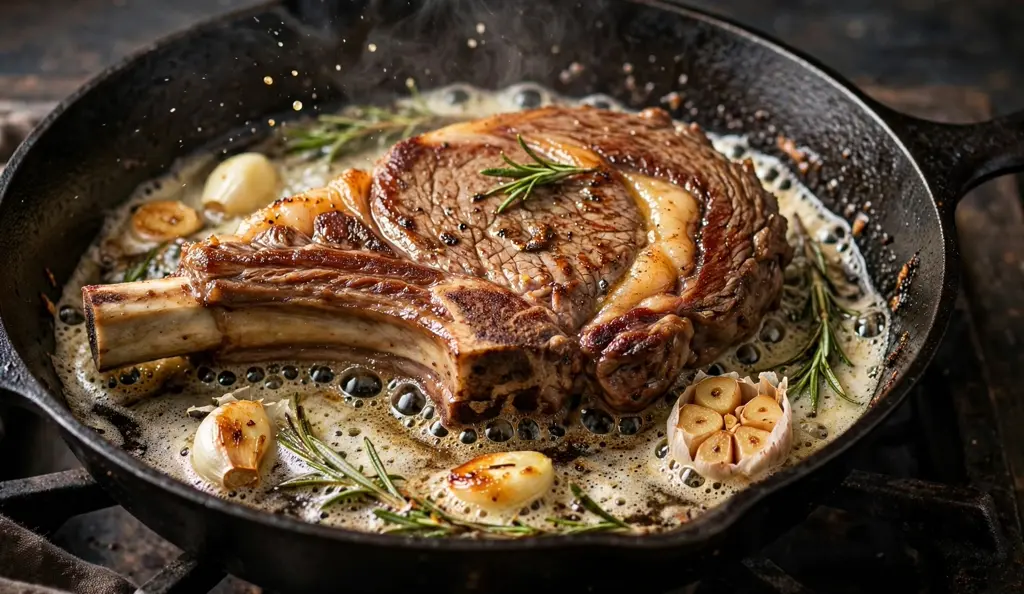
- Lay the steak in the pan away from you. Sear 2 to 3 minutes without moving it. Flip and sear 2 to 3 minutes more. Use tongs to hold the steak on its fat-cap edge for 1 minute so the edge crisps too. This browning comes from the Maillard reaction, the chemical change that turns meat brown and tasty in high heat.
- Move the whole skillet into the oven. Cook 4 to 8 minutes for medium-rare, checking with your thermometer. Pull the steak when it reads 5°F below your target.
- Rest the steak on a cutting board for 5 to 10 minutes. Then slice against the grain and serve.
What Temperature Should a Bone-In Ribeye Reach?
Pull your ribeye bone steak at 130°F to 135°F for medium-rare, which most steak lovers prefer, or cook to 145°F if you want the USDA safe minimum for whole cuts. The USDA Food Safety and Inspection Service recommends 145°F with a three-minute rest for steaks. Always measure the thickest part, away from the bone, with an instant-read thermometer.
Ribeye Bone Steak Doneness Chart
Save this chart on your phone. Pull temperatures run a few degrees under the final target because of carryover heat.
| Doneness | Pull Temp | Final Temp | Center Looks Like |
|---|---|---|---|
| Rare | 120°F | 125°F | Cool red center |
| Medium-rare | 130°F | 135°F | Warm red center |
| Medium | 140°F | 145°F | Warm pink center |
| Medium-well | 150°F | 155°F | Slightly pink center |
| Well done | 160°F | 165°F | Little or no pink |
How to Use a Thermometer the Right Way
Color lies. A steak can look done outside and still be cool inside. A simple instant-read thermometer beats every poke test ever invented.
Where to Put the Probe
Push the probe into the thickest part of the meat from the side. Keep the tip away from the bone and away from big fat pockets. Bone conducts heat faster than meat, so touching the bone gives a false high reading. A trusted instant-read brand many home cooks use is ThermoWorks, maker of the Thermapen.
Carryover Heat
Meat keeps cooking after it leaves the pan. The temperature climbs another 3 to 7°F while the steak rests. That is why you pull the steak a few degrees early. Resting also lets the juices settle back into the meat instead of running out onto the board.
Is a Ribeye Bone Steak Gluten Free?
Yes. A plain ribeye bone steak is naturally gluten free. Naturally gluten free means the food contains no gluten by nature, with nothing added. Beef is muscle meat. It has no wheat, barley, rye, or gluten ingredients.
Learn the three label terms because they matter for everything else you buy. Naturally gluten free describes plain foods like fresh beef, rice, and apples. Labeled gluten free means the maker follows FDA rules for the claim. Certified gluten free means an independent group tested the product and confirmed it.
The numbers back the label system. On August 2, 2013, the FDA issued a final rule: a food may be labeled gluten free only if it contains less than 20 parts per million of gluten, as the Celiac Disease Foundation explained in June 2025. Plain steak clears that bar with room to spare. A seasoning blend with wheat starch does not.
The risk is never the beef. The risk is what touches the beef. Seasoning blends, marinades, sauces, and shared cooking surfaces can all add gluten. This matters because celiac disease affects about 1 in 100 people worldwide, according to the Celiac Disease Foundation in March 2026, and most cases stay undiagnosed.
Always check the current label on every packaged seasoning or sauce, because recipes change without warning. If you have celiac disease or a wheat allergy, check with your doctor or a registered dietitian about which packaged seasonings are safe for you.
The Seasoning Shaker Problem: What Your Steak Rub Might Be Hiding
Every steak guide teaches the sear. Almost none talk about the shaker. Yet the fastest way to ruin a gluten-free steak is a careless shake of the wrong blend. This section fixes that blind spot.
Why “Steakhouse Seasoning” Blends Can Be Risky
Many store-bought steak rubs list wheat flour as an anti-caking agent. Others use maltodextrin made from wheat, caramel color, or vague “natural flavors.” Any of these can carry gluten. The front of the jar shouts bold flavor. The back tells the real story in tiny print.
Picture a home cook in Chicago who grabs a “steakhouse rub” before a dinner party. The label lists wheat flour halfway down the ingredients. She catches it in time and switches to plain salt. Her guest with celiac disease eats safely. That 30-second label check saved the whole evening.
In October 2026, most steak blends still carry no gluten-free label, which means nobody verified them. Your safest move is simple. Buy blends that are labeled gluten free, or mix your own: coarse salt, black pepper, garlic powder, and smoked paprika. Plain coarse salt works best on a great ribeye anyway, and our Himalayan pink salt guide covers seasoning basics.
Sauces and Marinades That Sneak Gluten In
Steak sauces are the biggest trap. Classic soy sauce lists wheat as a main ingredient. Swap it for tamari that is labeled gluten free. Our guide to which soy sauces are truly gluten free shows exactly what to look for on the label.
It depends on the brand. Many Worcestershire sauces use distilled vinegar and contain no gluten ingredients, but some brands use malt vinegar, which comes from barley, and recipes change. No major brand carries a gluten-free label on every bottle. Read the current label each time you buy, and skip bulk or restaurant bottles you cannot verify.
Teriyaki sauce, hoisin, and many bottled marinades are soy-based and unsafe. Beer-based marinades contain malt from barley. Even “natural” steak sauces can hide wheat thickeners. When in doubt, skip the bottle and finish the steak with butter, garlic, and herbs instead.
Cross-Contact: The Invisible Risk
Cross-contact means gluten touches a gluten-free food by accident. It happens in home kitchens more than people think. Do not shake seasoning over the steak straight from a jar that also seasons breaded foods. Pour what you need into your hand or a small bowl first.
Bulk spice bins at grocery stores are another risk. Shoppers scoop with shared spoons, and flour dust drifts through the air. Buy sealed jars instead. At steakhouses, the grill is the worry. Your steak may share the grate with breaded items or get brushed with the same mop used on marinated meats. Ask for a clean pan and plain salt and pepper, and you remove most of the risk.
Bone-In at Home vs Bone-In at a Restaurant
Cooking at home gives you full control. You pick the meat, the salt, the pan, and the oil. Nothing touches your steak unless you allow it. For anyone with celiac disease, home is the safest kitchen.
Restaurants can work if you ask the right questions. Call ahead or speak to the manager. Ask three things: Do you cook steaks on a shared grill? Is your seasoning blend gluten free? Can the kitchen cook mine in a clean pan with only salt and pepper? Big chains like Ruth’s Chris Steak House handle allergy requests every day, but policies differ by location, so ask at your specific restaurant.
Choose home when you want zero doubt. Choose the restaurant when you have asked the questions and trust the answers. Either way, a ribeye bone steak deserves better than guesswork.
Gluten-Free Sides Worth the Effort
A great steak needs simple sides. Slow caramelized onions melt over sliced ribeye and need no sauce at all. A baked potato with butter and salt stays naturally gluten free. Roasted vegetables with olive oil and herbs round out the plate.
Skip restaurant fries unless you know the fryer. Shared fryers coat everything in the same oil, including breaded items. While the steak rests, set out one of these gluten-free appetizers to keep guests happy.
Ribeye Bone Steak FAQs
What is a ribeye bone steak?
A ribeye bone steak is a ribeye with a short rib bone attached. It comes from the rib primal of the cow. The bone keeps the nearby meat juicy and adds flavor during cooking.
Is ribeye bone steak the same as cowboy steak?
Yes. Cowboy steak is just another name for a bone-in ribeye. A tomahawk steak is similar but has a much longer, cleaned bone. The meat itself is the same cut.
How long do you cook a bone-in ribeye in the oven?
After searing, a 1.5 to 2 inch steak needs about 4 to 8 minutes at 400°F for medium-rare. Thicker steaks need more time. Always trust your thermometer, not the clock.
What is the best temperature for ribeye bone steak?
Most steak lovers prefer medium-rare, which means pulling at 130°F to 135°F. The USDA safe minimum for whole cuts is 145°F with a three-minute rest. Pick the target that fits your comfort level.
Should you cook bone-in ribeye fast or slow?
Use both. A fast, hot sear builds the crust, and a gentler oven finish cooks the center evenly. For very thick steaks, try the reverse sear: slow oven first, then a quick sear at the end.
How do you keep a ribeye bone steak juicy?
Salt it at least 40 minutes before cooking so the seasoning sinks in. Do not press the steak with a spatula, since that squeezes out juice. Rest it 5 to 10 minutes before slicing.
Is steak seasoning gluten free?
Some blends are, but many are not. Wheat flour, wheat-based maltodextrin, and vague natural flavors show up in steak rubs often. Buy blends labeled gluten free, or mix your own salt, pepper, garlic powder, and paprika.
Is a ribeye bone steak gluten free at restaurants?
The plain steak is, but restaurant kitchens add risk. Shared grills, seasoning blends, and brushed-on marinades can all carry gluten. Ask for a clean pan and plain salt and pepper to stay safe.
Can you use a marinade on a ribeye bone steak?
You can, but most bottled marinades contain soy sauce or wheat thickeners. A great ribeye needs no marinade. If you want one, make it yourself with oil, garlic, herbs, and a gluten-free tamari.
How do you store leftover ribeye bone steak?
Cool it within two hours, then refrigerate in a sealed container for 3 to 4 days. Reheat slices gently in a low oven so they stay pink inside. See our guide on how long leftovers last in the fridge for full storage rules.
Can you freeze a cooked ribeye bone steak?
Yes. Wrap slices tightly in plastic wrap, then foil, and freeze up to 3 months. Thaw overnight in the fridge. Reheat low and slow to protect the texture.
What should you serve with a ribeye bone steak?
Keep sides simple and naturally gluten free. Baked potatoes, roasted vegetables, caramelized onions, and a green salad with oil and lemon all work. Skip anything fried in a shared fryer.
Is ribeye bone steak healthy?
Beef gives protein, iron, and vitamin B12. It is also high in saturated fat, so portion size matters. If you follow a medical diet, ask your doctor or a registered dietitian how steak fits your plan.
The Bottom Line on Ribeye Bone Steak
A ribeye bone steak rewards simple cooking. Buy it thick, salt it well, sear it hard, finish it in the oven, and trust your thermometer. The beef itself is naturally gluten free, so your only job is guarding what touches it: check every seasoning blend, swap risky sauces for safe ones, and ask questions at restaurants. Do those things and you get a steakhouse result in your own kitchen, with zero gluten worry and full confidence in every single bite.
That deep brown crust comes from the Maillard reaction, the same browning that makes toast and seared meat taste so good.