Can You Freeze Bread Dough? Yes, Here Is Exactly How
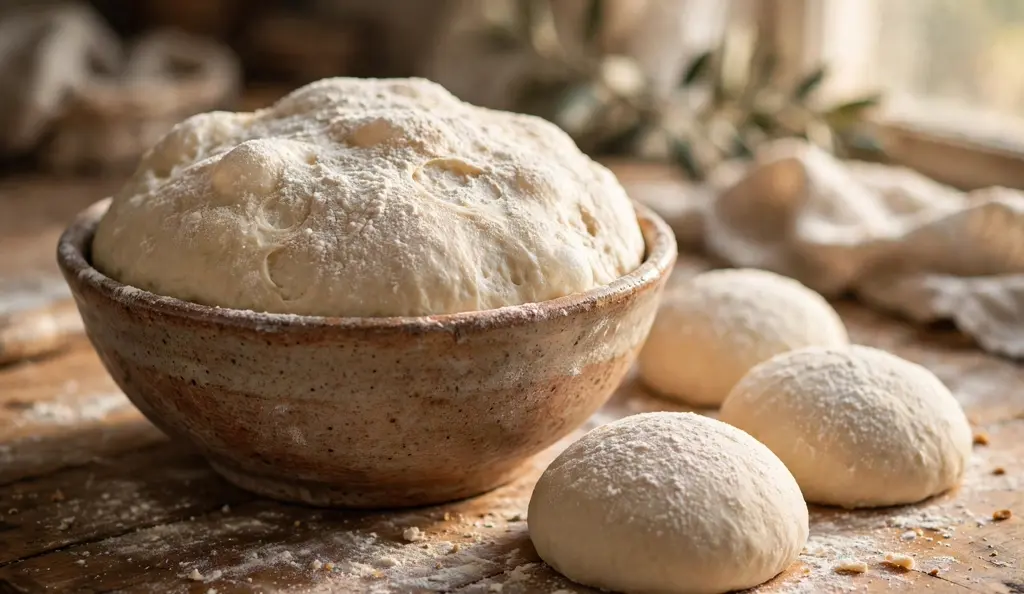
Yes, you can freeze bread dough, and it bakes up beautifully when you do it right. Shape the dough, wrap it airtight, and freeze it at 0°F. When you are ready to bake, thaw it overnight in the fridge, let it rise until puffy, and bake as usual. Most doughs stay at their best for about one month and still work fine for up to three. That is the full answer, and the guide below walks you through both freezing methods step by step.
Freezing dough is one of the smartest kitchen habits you can build, especially in a busy home. A single weekend batch can turn into two or three fresh loaves across the month, with zero early mornings spent kneading. In October 2026, home baking is still going strong, and make-ahead methods like this save real money and time. This guide covers the before-rise method, the after-rise method, exactly how thawing works, what freezing does to yeast, and a special section on gluten-free dough. You will finish knowing exactly what to do, with no more questions.
Can You Freeze Bread Dough Before It Rises?
Yes, and this is the easiest method for beginners. When you can freeze bread dough before the first rise, you do all the shaping in one calm session, then let the fridge and freezer do the rest. The dough does its first rise after thawing, right before baking. This means one rise total, which keeps the yeast strong and the schedule simple.
The 5-Step Before-Rise Method
- Mix and knead your dough until smooth and slightly springy. It should bounce back slowly when you poke it.
- Shape it right away. Form tight loaves, boules, or balls. Skip the bulk rise completely.
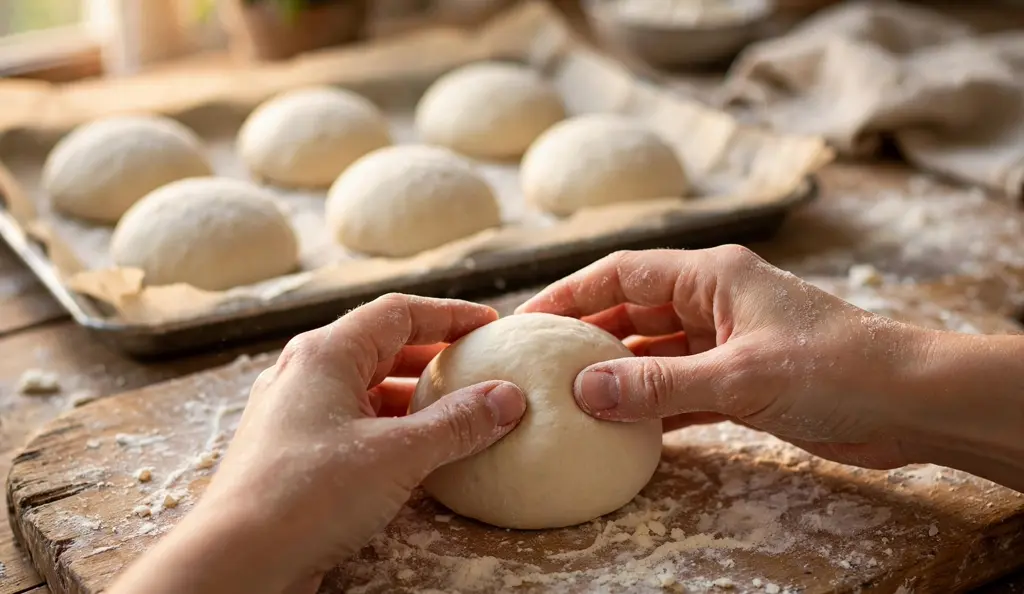
- Pre-freeze on a parchment-lined sheet for 60 to 90 minutes until firm at the surface. This keeps pieces from denting each other.
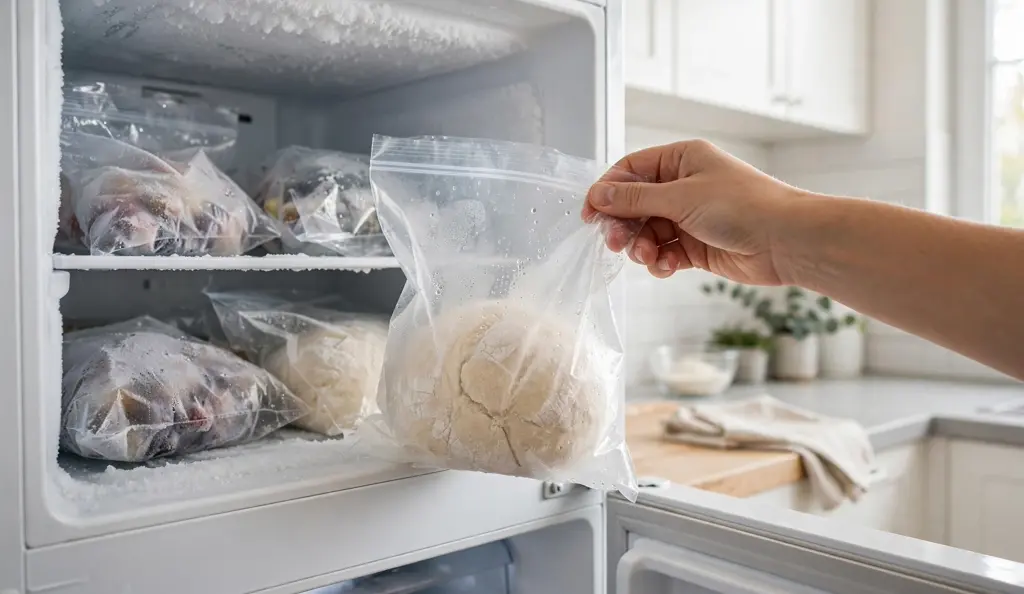
- Wrap each piece tightly in plastic wrap, then slide it into a heavy-duty freezer bag. Press out all the air and label it with the date and dough type.
- Freeze at 0°F (-18°C) in the back of the freezer, where the temperature stays steadiest.
Why Freeze Before the First Rise?
Yeast is a living thing, and every rise uses up some of its energy. Freezing before the first rise saves all that energy for bake day. You get a stronger lift and a lighter crumb. The tradeoff is patience: after thawing, the dough needs a full rise at room temperature, which takes 1 to 3 hours depending on size and kitchen warmth.
Can You Freeze Bread Dough After the First Rise?
Yes, and many experienced bakers say this is the sweet spot. When you can freeze bread dough after its first rise, the flavor is already deeper because the yeast has had time to work. The gluten network (the stretchy web that gives bread its structure) is organized and strong. Shaped, frozen, and thawed properly, these doughs proof faster on bake day and taste more complex.
Here is how to do it. Mix and knead as usual, then let the dough rise once until it grows by about 75 to 100 percent. It should look gently domed and airy. Punch it down, shape it tightly into your final loaf or rolls, and pre-freeze on a lined sheet for 60 to 90 minutes. Wrap airtight, label, and freeze at 0°F. On bake day, thaw overnight in the fridge, then let the shaped dough proof at room temperature for 45 to 120 minutes until puffy and light.
Before-Rise vs After-Rise: Which Should You Pick?
Both methods work, so pick the one that fits your week. Here is a quick comparison:
| Factor | Freeze Before Rise | Freeze After Rise |
|---|---|---|
| Best for | Beginners, busy weekdays | Bakers who want deeper flavor |
| Yeast strength | Highest (no rise used up) | Very good (one rise used) |
| Bake-day rise time | 1 to 3 hours | 45 to 120 minutes |
| Flavor depth | Good, simple | Richer, more developed |
| Best quality window | Up to 1 month | Up to 1 month |
How Long Does Frozen Bread Dough Stay Good?
Frozen bread dough keeps its best quality for about one month and stays usable for up to three months in a home freezer. After the first month, yeast slowly weakens, so rises take longer and the crumb grows denser. Always label the package with the date so you bake the oldest dough first.
What Does Freezing Do to Your Yeast?
Cold slows yeast down but does not kill it. That is the key fact. Freezing puts the yeast to sleep, and thawing wakes it back up. Very small ice crystals can damage a few yeast cells, which is why frozen dough often rises a little slower than fresh dough on bake day.
To protect your yeast, freeze quickly. A fast freeze makes smaller ice crystals, and smaller crystals cause less damage. That is the whole point of the pre-freeze step on a sheet. Keep the freezer at 0°F (-18°C) or colder. Thaw slowly in the fridge, never with hot water or a warm oven. King Arthur Baking Company bakers also suggest adding a small yeast boost, about one quarter to one half teaspoon extra per 3 cups of flour, for rich doughs heavy in sugar or butter, since those doughs stress the yeast more.
Instant yeast and rapid-rise yeast handle freezing better than active dry yeast because they are more vigorous from the start. Brands like Red Star Platinum and Fleischmann’s RapidRise are popular picks for freezer dough among home bakers.
Can You Freeze Gluten Free Bread Dough?
Yes, you can freeze bread dough made gluten free, but the rules change a little. Gluten-free dough has no gluten network, so it cannot stretch the way wheat dough does. It is wetter, softer, and more like a thick batter. It relies on binders like xanthan gum or psyllium husk for structure instead. That structure freezes fine, as long as you handle it gently.
As of October 2026, this matters to a lot of people. The Celiac Disease Foundation reported in March 2026 that celiac disease affects 1 in 100 people worldwide, and MarketsandMarkets reported in July 2026 that the global gluten-free products market reached USD 8.34 billion in 2025 and is forecast to hit USD 11.78 billion by 2030. More households than ever bake gluten free at home, and freezing dough makes that routine far easier.
Why Gluten-Free Dough Behaves Differently in the Freezer
Gluten-free dough is fragile after thawing. You cannot knead or re-shape it like wheat dough, because there is no gluten to re-tension. Thawed gluten-free dough should go straight from the fridge into the pan with as little handling as possible. It also absorbs liquid differently, so high-hydration blends may feel stickier when they thaw. That is normal. A light dusting of gluten-free flour on your hands is enough.
The Best Method for Gluten-Free Dough
- Mix your dough and let it rest 10 to 15 minutes so the flours fully hydrate.
- Transfer it directly into a greased, freezer-safe loaf pan or a parchment-lined pan. Do not pre-shape and freeze loose pieces.
- Wrap the whole pan tightly in two layers: plastic wrap first, then foil.
- Freeze at 0°F. Use within 1 month for best rise.
- Thaw overnight in the fridge, still wrapped, right in the pan.
- Bake straight from the pan once it has risen slightly and looks puffy. Do not punch it down or re-shape it.
A Quick Cross-Contact Note
If you bake for someone with celiac disease, keep their dough away from wheat flour dust, shared bags, and shared tools. Even a small amount of wheat flour in the air can land on an open dough. Use clean, dedicated pans and label everything clearly. If a health condition shapes your diet, it is smart to check with your doctor or a registered dietitian before making big changes to what you eat.
Should You Freeze the Dough or the Baked Bread?
Here is a question most freezing guides skip, and the honest answer depends on your week. Frozen raw dough gives you that fresh-from-the-oven taste and smell, the crackle of the crust, the warm center. It costs you a thaw plus a rise on bake day. Frozen baked bread gives you instant toast and sandwiches with zero planning, but it never tastes quite as fresh as bake-day bread.
My rule: freeze the dough when you want weekend-quality bread on a weekday, and freeze the baked loaf when you want grab-and-go slices. Many bakers do both from one batch. Shape half the batch into a loaf to freeze raw, and bake the other half to slice and freeze. You get the best of both worlds. If you already keep butter frozen for baking days (see our guide on freezing butter), pair a thawed dough with thawed butter for a bakery-style morning with almost no effort.
Can You Bake Frozen Bread Dough Without Thawing?
No, you should not bake raw bread dough straight from frozen. The outside would set and brown long before the inside thaws, leaving you with a raw, gummy center. Always thaw raw dough in the fridge first, then let it proof before baking. The only exception is par-baked rolls, which are baked about halfway, frozen, and finished straight from the freezer.
How Do You Thaw Frozen Bread Dough the Right Way?
Thawing is half the recipe. Rush it and the dough gets sticky and slack. Do it slowly and the dough comes back lively.
The Overnight Fridge Method (Best)
- Move the frozen, wrapped dough to the fridge 8 to 12 hours before bake day for rolls and pizza balls, or 12 to 24 hours for full loaves.
- Keep it wrapped so the surface does not dry out, and set it on a tray to catch any drips.
- The dough is ready when it feels cool but soft all the way through, with no icy core.
The Quicker Counter Method
- If you forgot the overnight thaw, place the wrapped dough on the counter for 1 to 2 hours.
- Watch it closely. Once it is pliable, move it to its pan, cover it, and let it finish proofing in a warm spot.
- Do not use hot water, the microwave, or a warm oven to speed things up. Fast, uneven heat damages the yeast and the texture.
Which Bread Doughs Do Not Freeze Well?
Not every dough belongs in the freezer. Knowing which ones to skip saves you from flat, sad loaves.
- Very lean sourdough with long bulk ferments: it freezes okay, but the tang can turn sharp and the crumb can tighten. Shorter-bulk sourdough does better.
- Doughs with raw fruit pieces: fruit weeps water as it thaws and makes the dough soggy. Add fruit after thawing instead.
- Doughs already fully proofed: freezing a dough that has already risen twice leaves the yeast too tired to lift it again.
- Old or weak dough: if the dough barely rose the first time, freezing will not fix it. It will be worse after the thaw.
- Dough with uncooked egg wash or dairy toppings: toppings get gummy or spotty in the freezer. Brush with egg or milk on bake day instead. If you need a swap, our guide to egg substitutes for baking covers every option, and our post on how long eggs last in the fridge helps you plan fresh eggs for bake day.
7 Mistakes That Ruin Frozen Bread Dough
- Skipping the label: unlabeled dough becomes a mystery. Write the dough type, shape, and date on every package.
- Wrapping loosely: air is the enemy. Loose wrap means freezer burn, which dries the dough and gives it off flavors. Wrap tight, then bag.
- Freezing too slowly: tossing a big warm mass straight into a crowded freezer makes large ice crystals that hurt the yeast. Pre-freeze pieces flat on a sheet.
- Thawing on the counter from solid: the outside over-proofs while the middle is still ice. Always thaw in the fridge first.
- Re-freezing thawed dough: once it thaws and proofs, bake it. Refreezing collapses the structure and exhausts the yeast.
- Baking before it proofs: a flat loaf after freezing almost always means it went into the oven under-proofed. Give it the full 45 to 120 minutes.
- Storing near strong smells: dough picks up odors from onions, fish, and spices. Keep it in the back of the freezer, double-wrapped.
Frequently Asked Questions
Can you freeze bread dough that uses active dry yeast?
Yes. Dissolve and proof the yeast first as your recipe says, then freeze after shaping. Instant and rapid-rise yeasts recover a little faster after thawing, but active dry yeast works fine too. Just give the thawed dough a bit more proofing time.
Can you freeze bread dough for pizza?
Yes. Divide the dough into balls after the first rise, coat each ball lightly with oil, and freeze them in individual bags. Thaw overnight in the fridge, then rest on the counter 30 to 60 minutes until stretchy. Press from the center out to keep air in the rim.
Can you freeze bread dough twice?
No. Refreezing thawed dough weakens the yeast and collapses the structure, so the second bake comes out dense and flat. Plan your portions before freezing so each package is exactly what you will bake in one go.
How long does frozen bread dough last in the freezer?
For best quality, use it within one month. It stays safe longer, but the rise gets weaker and the flavor dulls after about three months. Keep the freezer at 0°F and wrap the dough airtight to get the longest good window.
Do you need to let frozen dough rise after thawing?
Yes. Thawed dough always needs a final proof at room temperature before baking, usually 45 to 120 minutes. Bake only when it looks puffy and a gentle finger poke springs back slowly. Under-proofed dough bakes up dense.
Can you freeze bread dough in a bread pan?
Yes, and it is the best way for pan loaves. Grease the pan, shape the dough, set it in the pan, wrap the whole pan tightly, and freeze. Thaw in the fridge in the same pan, then proof and bake right there. No transfer means no deflating.
Can you freeze gluten free bread dough made with a bread mix?
Yes. Follow the same pan-freeze method above, since mixes like Bob’s Red Mill behave like other gluten-free doughs. Thaw in the pan and bake without re-shaping. Check the mix label for certified gluten free status if you are baking for someone with celiac disease.
Does freezing bread dough change the taste?
Slightly, and often for the better. The cold rest works like a slow ferment, so enzymes keep building flavor while the dough sits frozen. Very long storage (past three months) can add stale or freezer notes, which is why tight wrapping and a one-month target matter.
Can you freeze bread dough that has sugar and butter in it?
Yes. Enriched doughs freeze well but proof slower after thawing, so plan 60 to 120 minutes for the final rise. Add a small yeast boost (one quarter to one half teaspoon per 3 cups of flour) before freezing if you want extra lift.
What temperature should the freezer be for dough?
Keep it at 0°F (-18°C) or colder. Warmer freezers or frost-free models that cycle through mild defrosts are harder on dough. Store packages in the back of the freezer where the temperature is most stable.
Can you freeze bread dough after shaping rolls?
Yes. Shape the rolls, set them in the pan you will bake them in, pre-freeze until firm, then wrap the whole pan. Thaw overnight in the fridge in the same pan, let them puff until jiggly, and bake. They are one of the easiest freezer wins.
Is it better to freeze dough before or after the first rise?
Before the first rise is simpler and gives the strongest yeast action. After the first rise gives deeper flavor and a shorter bake-day proof. Pick before-rise if you are new to this, and after-rise if you want maximum flavor.
Can you freeze sourdough bread dough?
Yes, with a tweak. Freeze sourdough right after the bulk ferment or after final shaping, thaw it in the fridge for 12 to 18 hours, and proof it until it passes a gentle poke test. Natural leaven wakes up slower than commercial yeast, so give it extra time rather than extra heat.
Can you freeze bread dough made the night before baking?
Yes, but the fridge is often the better tool for an overnight hold. Shape the dough, cover it, and refrigerate for up to 24 hours for a slow cold proof. Use the freezer when you need to store dough for days or weeks, not hours. For other make-ahead wins, see our guide on freezing pancakes.
The Bottom Line
Can you freeze bread dough? Yes, and it is one of the most rewarding kitchen skills you can learn. Freeze before the first rise for the simplest path, or after the first rise for deeper flavor. Wrap airtight, keep the freezer at 0°F, and use the dough within a month for the best lift. Gluten-free dough freezes well too, just freeze it in the pan and skip the re-shaping. Once you try it, fresh bread stops being a weekend-only event. Freeze a batch this October 2026 and your future self will thank you. If you want a starting recipe, try our gluten free bread recipe and freeze half the batch on your first go. You will thank yourself next month.
Want more background on how bread itself is made and where it comes from? Read the bread article on Wikipedia for a solid overview of its history and baking science.