Is Honey Gluten Free? The Complete 2026 Guide
Is honey gluten free? Yes. Pure honey is naturally gluten free. Bees make it from flower nectar, not grains, so there is no gluten in pure honey. The catch is that not every jar on the shelf is pure honey. Flavored honeys, honey blends, and products packed in shared facilities can carry real gluten risks. As of October 2026, this guide walks you through exactly when honey is safe, the five traps to avoid, and a 30-second label check you can use in any store.
Is Honey Gluten Free? The Short Answer
Pure, single-ingredient honey is naturally gluten free and safe on a gluten-free diet. Gluten comes only from wheat, barley, rye, and their crossbred hybrids. Honey contains none of those grains.
Gluten is a protein composite made of gliadin and glutenin, found only in cereal grains. Bees do not collect grain. They collect flower nectar. The two worlds never touch.
That is why the U.S. Food and Drug Administration (FDA) treats pure honey as inherently gluten free. When the FDA published its final gluten-free labeling rule in August 2013, it set the standard: a food may carry a “gluten-free” label when it contains less than 20 parts per million (ppm) of gluten. Pure honey sits far below that line because it starts with zero gluten in the first place.
But “pure” does all the work in that sentence. Once companies add flavors or pack honey in shared plants, the risk picture changes. Keep reading before you grab the cheapest bear-shaped bottle on the shelf.
Why Pure Honey Is Naturally Gluten Free
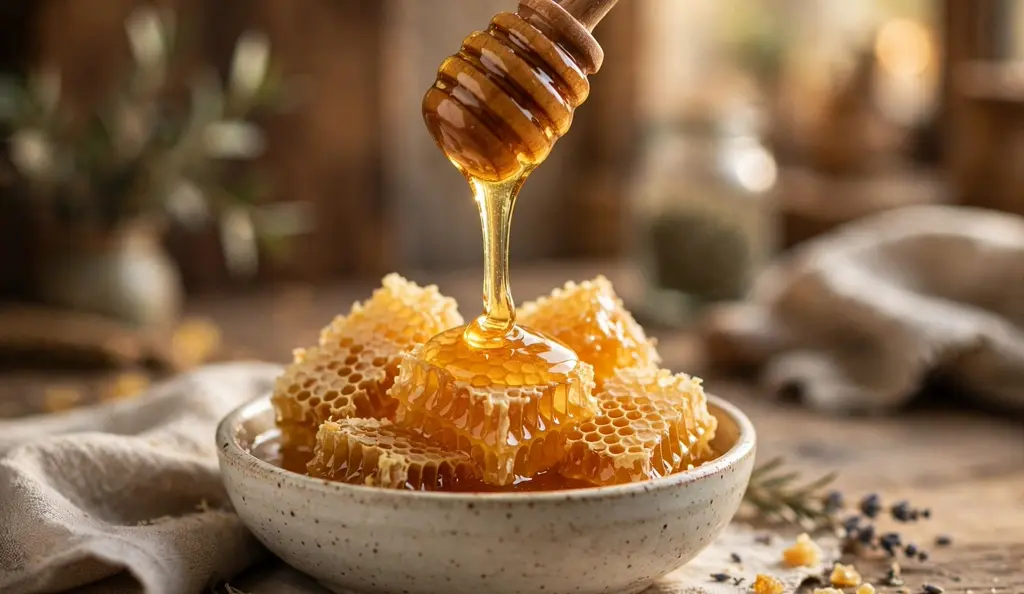
To see why the answer to “is honey gluten free” is yes, look at how bees make it. A worker bee drinks nectar from a flower and stores it in a special stomach. Back at the hive, house bees fan it and evaporate the water out. Bee enzymes turn complex sugars into simple ones. No wheat, barley, or rye is involved at any step.
According to the National Honey Board, which reported USDA data in July 2025, U.S. honey consumption reached an all-time high of 688.6 million pounds in 2024, roughly 2 pounds per person. With numbers like that, label mistakes matter at scale.
Many of those jars travel far before they reach you. USDA figures for 2025 show about 78 percent of the U.S. honey supply came from imports, mostly from India, Argentina, Brazil, and Vietnam. Imported honey passes through more hands and more packing plants, which is one reason label reading matters more than it used to.
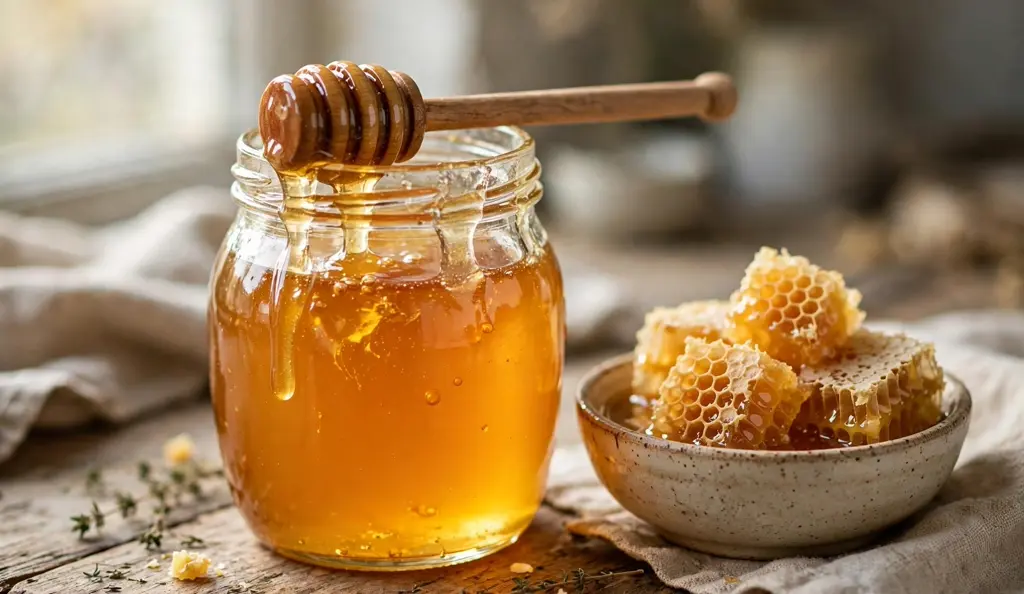
For the simplest safe choice, buy honey with one ingredient on the label: honey. Nature Nate’s, for example, describes its raw and unfiltered honey as gluten-free with one ingredient and no additives, according to its product listings.
When Is Honey Not Gluten Free? 5 Real Traps
Pure honey is the safe default. So the full answer to “is honey gluten free” has two parts: yes for pure honey, and check the label for everything else. Here are the five traps that catch people.
1. Flavored and Infused Honeys
This is the biggest trap. A plain wildflower honey is safe, but a jar of “cookie butter honey,” “chocolate honey,” or “cinnamon churro honey” is a different product. Added flavors can come from grain-based sources, and cookie or cake flavors may bring wheat ingredients with them.
Mike’s Hot Honey, a popular chili-infused brand, states its products are made in a facility that does not handle wheat and are gluten-free. But not every flavored brand is so careful. Flavored honey is the one category where “is honey gluten free” does not get an automatic yes. Always read the full ingredient list.
2. Honey Blends and “Honey-Flavored” Syrups
Some products called honey are mostly something else. Cheap “honey” can be cut with corn syrup or rice syrup. Corn syrup itself is gluten free, but the problem is what sometimes comes with the blend.
Watch for barley malt syrup in blended “honey”
Barley malt syrup definitely contains gluten because barley is a gluten grain. If you see “barley malt extract” or “malt syrup” in a honey blend or honey-flavored syrup, put it back on the shelf. This is also why “honey-flavored” almost always means “contains no real honey” and often contains other ingredients you would not expect.
3. Shared Facilities and Cross-Contact
Cross-contact means gluten touches a gluten-free food by accident, usually on shared equipment or in shared rooms. Honey can pick up traces if packed in a plant that also handles oats, flour, or grain products.
The risk is small for most people. If you have celiac disease and want certainty, buy honey packed in a gluten-free facility or carrying a gluten-free label. Under the FDA’s August 2013 rule, that label means under 20 ppm, legally backed.
4. Honey Powder and Dried Honey
Honey powder is dehydrated honey, but it is almost never just honey. Makers usually mix it with corn starch or maltodextrin so it flows. Corn starch is gluten free (see our is cornstarch gluten free guide), but maltodextrin can come from wheat in rare cases, and the extra processing adds cross-contact chances. Only buy honey powder that is labeled gluten free.
5. Honey Sauces, Glazes, and Dressings
The jar of honey is fine. The honey mustard sauce is the question mark. Restaurant glazes, dressings, and dipping sauces often mix honey with soy sauce (which usually has wheat), malt vinegar, or beer.
Honey-glazed chicken, honey mustard dressing, and honey BBQ sauce can all carry gluten from the other ingredients, not the honey. Check every ingredient in the sauce, not just the word honey.
| Honey type | Naturally gluten free? | Gluten risk level |
|---|---|---|
| Raw honey | Yes | Very low |
| Regular pure honey | Yes | Very low |
| Manuka honey | Yes | Very low |
| Flavored or infused honey | Depends | Medium: check ingredients |
| Honey blends and syrups | Often no | High: check for barley malt |
| Honey powder | Often no | Medium: check additives |
| Honey sauces and glazes | Depends | High: check the whole sauce |
Is Raw Honey Gluten Free?
Yes, raw honey is gluten free. Raw honey is simply honey that has not been heated or pasteurized, so it keeps more natural enzymes and pollen. It is filtered only lightly to remove wax and bits of comb. Since nothing is added, it contains no gluten as long as the packing facility is clean.
Raw vs Ultra-Filtered Honey: Does Processing Change Anything?
Ultra-filtered honey is pushed through very fine filters to remove nearly all pollen. Companies do this to keep it clear and liquid on the shelf. The process removes pollen, but it does not add gluten. A lightly strained raw honey from a trusted brand is usually the cleaner choice, though both are naturally gluten free.
Organic Honey Is Not Automatically Gluten Free
Here is a labeling twist that fools smart shoppers. “Organic” and “gluten free” are two completely different claims. Organic means the honey met farming and processing rules about pesticides and synthetic chemicals. It says nothing about gluten.
A honey can be certified organic and still be packed in a shared facility. Do not let an organic seal answer the gluten question for you. Check for a gluten-free label separately.
What Does “May Contain Wheat” Mean on a Honey Label?
“May contain wheat” is a voluntary warning, not an FDA-required one. It signals a small chance of cross-contact because wheat products run on nearby lines. You rarely see it on plain honey, but it appears on flavored honeys from mixed plants. If you have celiac disease, take it seriously and pick a different jar.
The Honey Jar Trap: Why Shared Jars and Squeeze Bottles Are the Real Kitchen Risk
Here is the danger no competitor talks about, and it lives in your own kitchen. The honey jar is gluten free. The knife you dipped into it is not.
Picture the classic scene. Someone butters wheat toast, then dips the same crumby knife into the family honey jar. Now crumbs float in the honey, and from that moment the jar is unsafe for anyone with celiac disease. Double-dipping is one of the most common cross-contact mistakes in a gluten-free home.
The fix is simple: use squeeze bottles, where the honey never touches a utensil. With jars, use a clean spoon every time and never dip twice. In shared kitchens, label your jar.
Restaurants bring a bigger version of the same problem. At brunch buffets and hotel breakfast bars, honey often sits in open jars next to the bread basket, and crumby hands make those communal stations risky. Ask for a sealed packet instead. When a 2026 menu lists honey in a glaze or dressing, ask the server what else is in the sauce, because the gluten usually hides in the mix, not in the honey.
How to Buy Honey Safely: The 30-Second Label Check
Use this quick check in the store aisle. It takes half a minute.
- Step 1: Flip the jar and read the ingredient list. You want one word: honey.
- Step 2: Scan for red-flag words: barley malt, malt extract, malt syrup, wheat starch, “natural flavors” you cannot identify, and any grain names.
- Step 3: Look for a gluten-free label or a “packed in a gluten-free facility” note if you have celiac disease.
- Step 4: Skip anything that says “honey-flavored.” That phrase usually means no real honey at all.
- Step 5: Check the allergen box for “may contain wheat.” Rare on pure honey, common on flavored honey products.
Recipes and facilities change without notice, so run this check each time you try a new brand. If you have celiac disease and are unsure about a product, check with your doctor or a registered dietitian first.
Using Honey Safely in Gluten-Free Baking
Honey is a wonderful sweetener for gluten-free baking. It adds moisture, which helps because gluten-free flours can bake up dry. Swap in three quarters of a cup of honey for each cup of sugar, and cut the other liquids by a quarter cup.
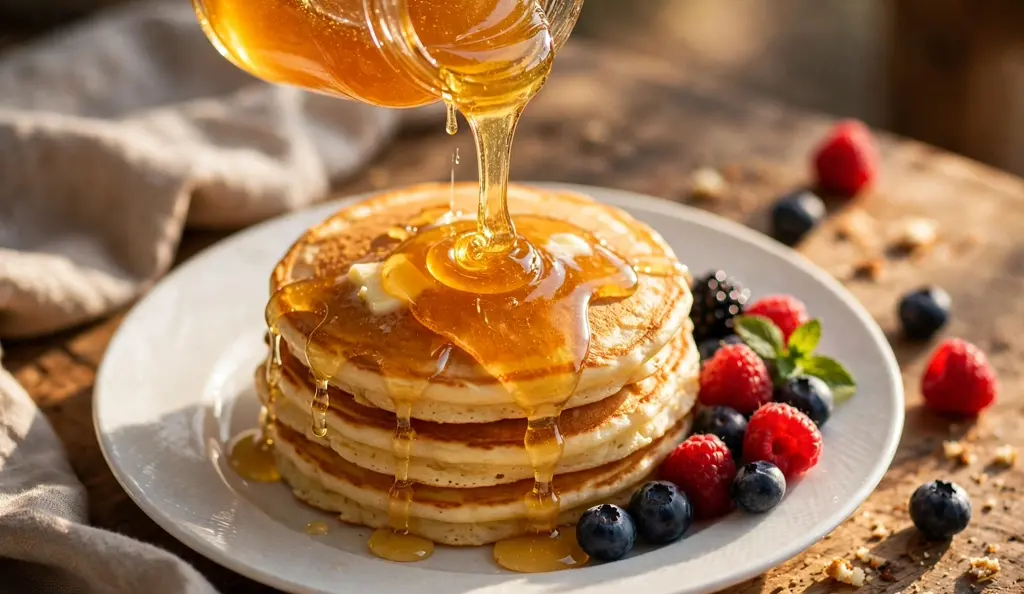
Honey browns faster than sugar, so lower your oven by about 25 degrees. This works beautifully in a gluten free banana loaf, where honey keeps the crumb moist for days.
Honey also shines in a fluffy gluten free pancake recipe, in the batter and on top. And a spoonful of honey in our classic hot toddy recipe adds warmth without any gluten worries.
So if your question is “is honey gluten free for baking,” the answer is a confident yes. Just measure with a clean, dry spoon. A wet or crumby spoon drags gluten into the jar and ruins the batch before the oven even heats.
FAQs: Is Honey Gluten Free?
Is honey gluten free for celiac disease?
Yes, pure honey is considered safe for people with celiac disease. It is naturally gluten free with no wheat, barley, or rye. Choose single-ingredient honey, and if you are highly sensitive, pick a jar with a gluten-free label or one packed in a gluten-free facility.
Is clover honey gluten free?
Yes, clover honey is gluten free. It comes from clover flower nectar, which contains no gluten. Like all pure honey, it is safe as long as nothing is added and the facility is clean.
Is manuka honey gluten free?
Yes, manuka honey is gluten free. It comes from the nectar of manuka bushes in New Zealand and Australia. The nectar contains no gluten grains. Always check the label anyway.
Is buckwheat honey gluten free?
Yes, buckwheat honey is gluten free, despite the confusing name. Buckwheat is not wheat at all. It is a flowering plant, not a grain, and it is naturally gluten free. Buckwheat honey is dark and bold.
Is organic honey gluten free?
Not automatically. Organic certification covers pesticides and farming practices, not gluten. An organic honey can still be packed in a shared facility. Look for a separate gluten-free claim on the jar.
Is flavored honey gluten free?
Sometimes, but this is where most problems hide. Flavorings can come from grain sources, and cookie or cake flavors may contain wheat. Read the full ingredient list on every flavored honey, and only buy brands that state gluten-free status clearly.
Are honey sticks (honey straws) gluten free?
Plain honey straws filled with pure honey are gluten free. Flavored straws are riskier because the flavoring adds ingredients and handling. Check the ingredient list, especially for fruit, spice, or candy flavors.
Is honey mustard gluten free?
The honey in it is fine, but honey mustard as a sauce often is not. Many honey mustards contain wheat-based thickeners, malt vinegar, or are made on shared lines. Check the label of the specific brand, and ask at restaurants before you dip.
Does honey contain wheat?
No. Pure honey contains no wheat. Wheat only enters through added ingredients in flavored honeys or blends, or cross-contact in shared packing facilities.
Is honey gluten free and dairy free?
Yes. Pure honey is both gluten free and dairy free. Bees make it from flower nectar, so it contains no milk products either.
Can I use honey instead of sugar in gluten-free recipes?
Yes, and it often works better than sugar in gluten-free baking because it adds moisture. Use about 3/4 cup of honey per cup of sugar, reduce other liquids by 1/4 cup, and lower the oven by 25 degrees since honey browns faster. Our how to melt chocolate guide pairs well here, since honey and chocolate are a classic gluten-free dessert combination.
Is honey vegan?
No, honey is not vegan because bees produce it. Vegans usually choose maple syrup or agave instead.
How should I store honey to avoid cross-contact?
Keep honey in a squeeze bottle when you can, since nothing touches the honey but air. For jars, use a clean spoon every time and never double-dip with a used knife. In a shared kitchen, mark your jar so family members know it is the gluten-free one.
Is honey gluten free in October 2026?
Yes. Nothing about honey’s gluten status has changed. Pure honey remains naturally gluten free in October 2026, and the FDA’s under-20-ppm rule for gluten-free labels still stands. The same buying rules apply: one ingredient, read the label, watch flavored products.
Conclusion
Pure honey is naturally gluten free, so “is honey gluten free” gets the simplest answer of any pantry staple. Bees make it from flower nectar, and no gluten grains are involved. That is the whole story for a jar that lists one ingredient: honey.
The risks come from what surrounds the honey: flavored varieties, blends cut with syrups (watch for barley malt), honey powder with added starches, and sauces where honey is one ingredient among many. Run the 30-second label check and keep a clean spoon in your jar.
Your safest jar is the simplest one. One ingredient, trusted brand, clean spoon, every time.
If you found this guide useful, you may also enjoy our growing gluten-free diet resources here on the blog.