Daikon Radish (Mooli): What It Is and How to Use It
You might walk past it in the grocery store. It looks like a giant white carrot, and its name sounds like a riddle. As of October 2026, daikon radish, known in South Asia as mooli, is one of the easiest vegetables a beginner can learn to cook with.
So what exactly is daikon radish? It is a mild, crunchy white root vegetable from the radish family, and it is naturally gluten free. In this guide you will learn what mooli tastes like, how to pick a fresh one, how to peel and cut it, five simple ways to eat it, how to store it, and one quick pickle recipe you can make today. Every method here is naturally gluten free, and you will also learn which sauces to watch out for so celiac readers stay safe.
What Is Daikon Radish? Mooli Explained in Plain Words
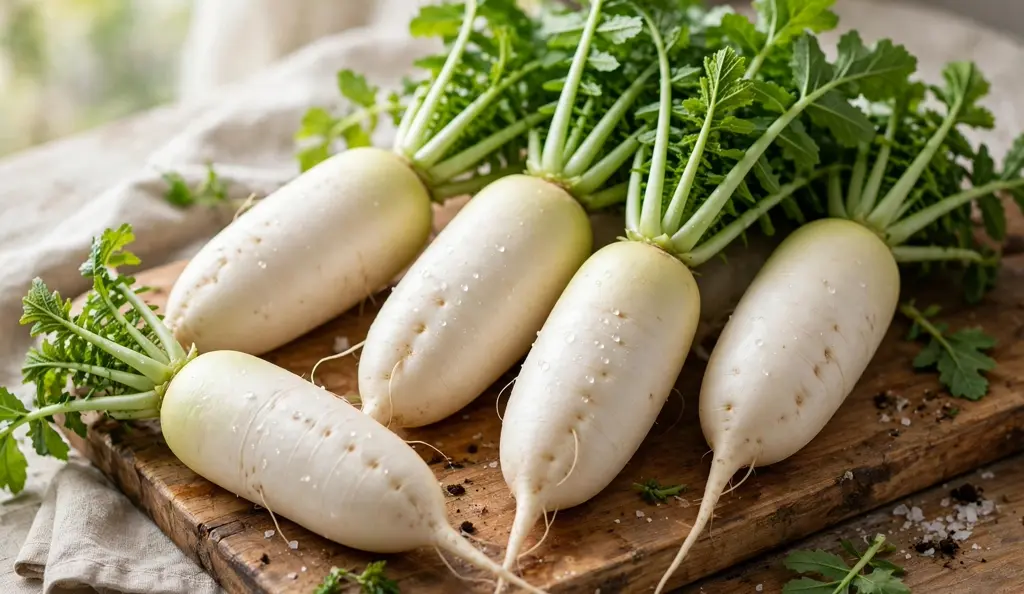
Daikon is a long, white root vegetable. It belongs to the species Raphanus sativus, which puts it in the mustard family. That makes it a cousin of broccoli, cabbage, and kale. Saveur magazine once described it as a gentle Japanese giant, and the name fits. A single daikon can grow longer than a ruler, and some varieties stretch past a foot in length.
The name “daikon” comes from Japanese. The character dai means “great” and kon means “root.” In India and Pakistan it goes by a different name: mooli. Same vegetable, different name. If you grew up eating mooli parathas or mooli salads at home, you already know daikon. You just never called it daikon.
The skin is thin and pearly white, slightly less white than the snowy inside. The flesh is crisp and juicy with a mild peppery bite. It tastes much gentler than the small red radishes you find in Western salads. When raw it is crunchy and refreshing. When cooked it turns soft, mild, and almost sweet.
Daikon is a staple across Asia, and each country uses it differently. In Japan it is the country’s fundamental vegetable, eaten raw, pickled, grated, and simmered. In China the thicker variety goes into stews and soups. In Korea the rounder variety is pickled for kimchi, the pungent side dish found on almost every Korean table. In South Asia, mooli shows up in pickles, salads, and stuffed flatbreads.
Is Daikon Radish Gluten Free?
The short answer is yes. A plain daikon is naturally gluten free. It contains no wheat, no barley, and no rye. It is just a vegetable that grows in the ground. You can add it to a naturally gluten-free foods list with total confidence, alongside plain fruits, vegetables, rice, and eggs. For a broader refresher on which whole foods are safe, see our guide on gluten-free foods and snacks.
The risk is never the daikon itself. The risk is what touches it. Daikon often shows up with soy sauce, miso, or dressings. Regular soy sauce is brewed with wheat, so it contains gluten. If you eat gluten free for celiac disease or any medical reason, swap regular soy sauce for a certified gluten-free tamari. Kikkoman makes a Gluten-Free Tamari Soy Sauce that is brewed for six months from soybeans, salt, water, and spirit vinegar, with no wheat at all. It is certified gluten free. Read our full breakdown in is soy sauce gluten free before you season anything.
Also watch pickled daikon from stores and restaurants. Some brands add soy sauce or wheat-based flavorings to the brine. Labels change, so always read the current label on jarred pickles and ready-made sauces. In the United States, the FDA’s final rule of August 2013 defines “gluten-free” on a food label as containing less than 20 parts per million of gluten, as the Celiac Disease Foundation explains in its June 2025 update on the law behind the label. That 20 ppm limit is the standard brands must meet to make the claim.
Is daikon radish gluten free?
Yes. Daikon radish, also called mooli, is naturally gluten free. It is a plain root vegetable with no wheat, barley, or rye inside. The risk comes from sauces and marinades it is served with, because regular soy sauce contains wheat. Use a certified gluten-free tamari, and always check labels on pickles and ready-made sauces.
How to Buy a Good Daikon Radish: Your Checklist
A great dish starts at the store. Daikon is forgiving, but a fresh root tastes much better than an old one. Old daikon turns spongy, bitter, and hollow inside. Run through this quick checklist before you buy.
The 30-second buying checklist
- Pick it up. It should feel heavy and firm for its size.
- Press the skin gently. It should be smooth with no cracks or soft spots.
- Look at the color. The skin should be creamy white, not yellowed.
- Check the top. If the leafy greens are still attached, they should look fresh and green, not wilted.
- Avoid any root that feels light, bends easily, or sounds hollow when tapped. That means the inside has dried out.
- Bigger is often better. One large, firm daikon gives you more usable root with less peeling per bite.
Where do you find it? Asian grocery stores almost always carry daikon year round. Many large supermarkets stock it in the produce section, sometimes labeled “white radish” or “mooli.” Farmers markets in autumn and winter are another good bet. As of October 2026, daikon is in peak season in most regions, so prices are at their best and quality is at its highest.
How Do You Prepare Daikon Radish?
Prepping daikon takes about five minutes. There is nothing tricky about it. Wash it, peel it, and cut it the way your recipe needs. Here is each step in detail.
Should you peel daikon radish?
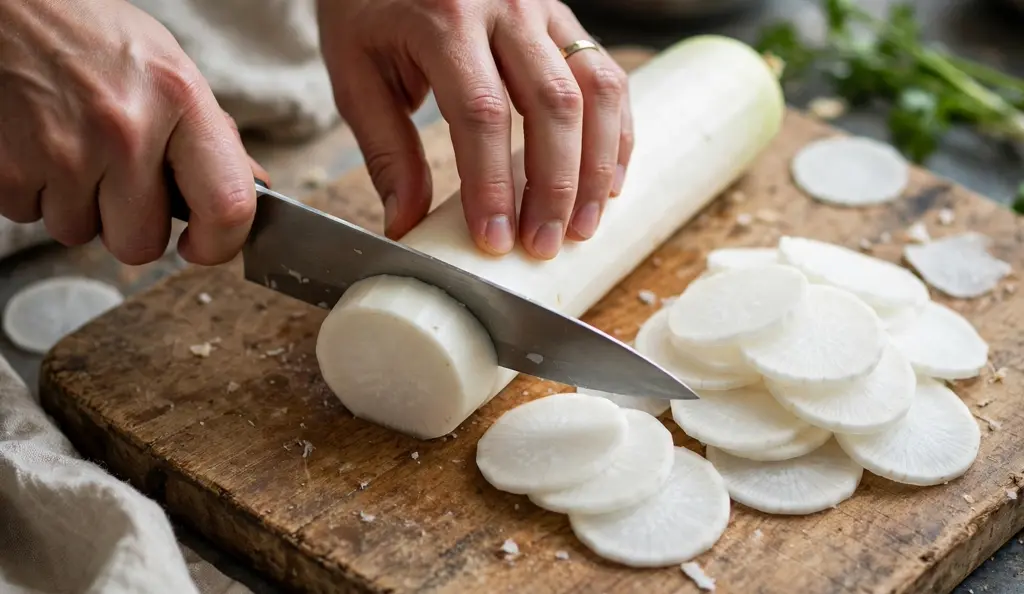
The skin is edible, but peeling gives you a cleaner taste and texture. Young, thin-skinned daikon can be scrubbed and eaten with the skin on. Older roots have tougher skin that tastes bitter, so peel those. Use a regular vegetable peeler and take off a thin layer. That is all you need.
How to cut daikon radish
The cut depends on the dish. Match the shape to the cooking method and you will get the best result every time.
- Thick rounds (1 to 2 inches): best for soups and simmered dishes. Thick pieces hold their shape during long cooking and turn silky inside.
- Thin half-moons or matchsticks: best for stir-fries. They cook fast and stay slightly crisp.
- Paper-thin slices: best for salads and pickles. A mandoline makes this easy, or use a sharp knife.
- Finely grated: best as a topping for rich or fried food. Grated daikon cuts through grease beautifully.
How to grate daikon radish
A standard box grater works fine. Grate on the medium holes for salads and on the fine holes for a soft, juicy topping. Japanese cooks use a special tool called a daikon-oroshiki, a grater designed to make daikon extra fine and fluffy. You do not need one to start, but it is a nice upgrade if you fall in love with grated daikon.
Grate right before serving
Grated daikon releases water fast and loses its crisp bite within minutes. Grate it last, right before the food hits the table. If it sits too long, squeeze out the extra liquid gently with your hands.
Is Daikon Radish Good for You? A Quick Nutrition Look
Daikon is very light. According to USDA FoodData Central, 100 grams of raw daikon has about 18 calories, around 1.6 grams of fiber, and roughly 227 milligrams of potassium. The same serving gives you about 22 milligrams of vitamin C. That is nearly a quarter of the 90-milligram daily value the FDA uses on US Nutrition Facts labels under the labeling rules that took effect in 2020.
It is also about 95 percent water, which is why it feels so refreshing. The fiber helps you feel full, and the vitamin C supports your immune system. One note: daikon is not medicine. It is simply a healthy vegetable. If you have celiac disease, a thyroid condition, or any medical condition, talk to your doctor or a registered dietitian before making big changes to your diet.
Five Simple Ways to Eat Daikon Radish
You can eat daikon raw or cooked. Both are good. The table below shows the five easiest methods, how long each takes, and what it is best for. Pick the one that matches your mood and your schedule.
| Method | Time | What it tastes like | Best for |
|---|---|---|---|
| Raw in salads | 5 minutes | Crisp, cool, mildly peppery | Hot days and quick lunches |
| Quick pickled | 10 minutes plus resting | Tangy, sweet, crunchy | Tacos, rice bowls, sandwiches |
| Stir-fried | 12 minutes | Tender-crisp, savory | Fast weeknight dinners |
| Simmered in soup | 30 to 45 minutes | Soft, mild, comforting | Cozy winter meals |
| Grated as a topping | 2 minutes | Juicy, fresh, palate-cleansing | Rich or fried dishes |
Eat it raw in salads
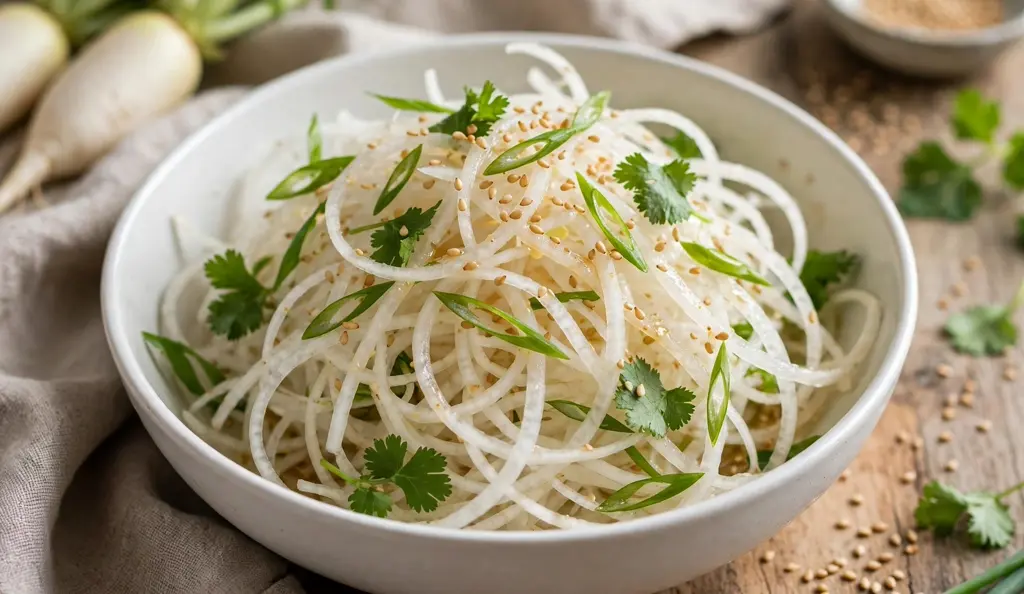
Thin slices of daikon add crunch to any salad. Pair it with cucumber, shredded carrot, and a light rice-vinegar dressing. It also works beautifully in a Japanese sunomono-style salad. If you like that style, try our Japanese cucumber salad and swap in daikon for half the cucumber.
Pickle it fast
Quick pickling tames daikon’s peppery bite and turns it sweet and tangy. Thin slices or matchsticks go into a jar with rice vinegar, a little sugar, and salt. They are ready in about 30 minutes and keep for weeks in the fridge. The full recipe is below.
Stir-fry it
Cut daikon into thin half-moons and stir-fry over high heat with garlic, ginger, and a splash of gluten-free tamari. It stays tender-crisp and soaks up flavor. Add it near the end with other quick-cooking vegetables so it does not go mushy.
Simmer it in soups and stews
This is daikon’s comfort-food mode. Thick rounds simmered in broth turn silky and sweet. In Japan, daikon is a star of oden, the classic winter stew, where chunks of it poach gently in dashi until fork-tender. At home, add daikon rounds to chicken soup, miso soup, or any vegetable stew during the last 30 minutes of cooking.
Grate it over rich food
Finely grated daikon is the classic partner for fried and fatty dishes in Japan. A small mound of it next to tempura or grilled fish cuts the richness and refreshes your mouth between bites. This is the easiest way to use daikon, and it takes two minutes.
Simple Recipe: 10-Minute Quick Daikon Pickle
This is the recipe to make first. It uses five ingredients, needs no special equipment, and gives you a jar of crunchy pickles that lift up rice bowls, sandwiches, and grilled meat. The whole process is naturally gluten free as long as your vinegar and seasonings are plain and labeled gluten free.
Ingredients
- 1 medium daikon radish (about 500 grams), peeled
- 1/2 cup rice vinegar (plain, unseasoned)
- 1/2 cup water
- 2 tablespoons sugar
- 1 tablespoon salt
- Optional: 1 small carrot, cut into matchsticks, for color
Steps
- Cut the daikon radish into thin matchsticks, about the size of thick shoestrings. A mandoline makes this fast.
- Pack the matchsticks tightly into a clean 500 ml glass jar. Add the carrot if using.
- Pour the rice vinegar and water into a small saucepan. Add the sugar and salt.
- Warm over medium heat, stirring, just until the sugar and salt dissolve. Do not boil it hard. Take it off the heat.
- Pour the warm brine over the daikon in the jar. Push the pieces down so everything stays under the liquid.
- Let the jar cool on the counter for 30 minutes. Then seal it and move it to the fridge.
- Wait at least 30 minutes before eating. The flavor gets better after a day and keeps improving for a week.
These pickles keep for up to three weeks in the fridge. Use a clean fork each time you take some out. If the brine ever looks cloudy or smells off, throw the batch away and make a fresh one.
Make it your own
Like it spicy? Add a few thin slices of fresh chili to the jar. Want a deeper flavor? Swap one tablespoon of the water for gluten-free tamari. Prefer it sweeter? Add an extra teaspoon of sugar. The base recipe stays the same, so experiment freely.
Why the Top and Bottom of One Daikon Taste Like Two Different Vegetables
Here is something most beginner guides never tell you. A single daikon does not taste the same from end to end. The flavor changes along the root, and smart cooks use this on purpose.
The top part, near the leafy greens, is the sweetest and mildest. It has the highest water content and the gentlest bite. Use the top third for raw salads and quick pickles, where you want clean, sweet crunch.
The middle section is balanced. It is mildly peppery and firm. This is your all-rounder. Use it for stir-fries and everyday cooking where you want daikon flavor without extremes.
The bottom tip is the sharpest and most peppery. It concentrates the radish’s pungent compounds. Do not waste it in a mild soup. Grate it and serve it with rich, fried, or grilled food, where its bite cuts through fat. Japanese cooks have done this for generations, pairing grated daikon with tempura and oily fish for exactly this reason.
So when you bring a daikon home, think before you chop. Plan which end goes where. Salads get the sweet top. The pan gets the middle. The grater gets the fiery tip. One vegetable, three personalities, zero waste.
How Should You Store Daikon Radish?
Daikon stores well if you handle it right. The biggest mistake is leaving the leafy tops on. The leaves keep pulling water out of the root after harvest, which makes the daikon go soft and spongy fast. Cut the tops off as soon as you get home. You can cook the fresh greens like any leafy green, or compost them.
Wrap the root loosely in a damp paper towel or a produce bag and keep it in the crisper drawer of your fridge. Do not seal it in airtight plastic while it is still wet, or it can turn slimy. For general produce-storage habits that work for all your fresh vegetables, our guide on how to store fresh herbs covers the same principles.
How long does daikon radish last in the fridge?
A whole daikon radish lasts about two weeks in the fridge when you wrap it loosely and keep it in the crisper drawer. Cut pieces stay fresh for about three to five days in a sealed container. Cut off the leafy tops before storing, because the leaves pull water out of the root and make it soft faster.
Can you freeze daikon? Technically yes, but the texture suffers. Frozen and thawed daikon turns soft and watery, so it only works in cooked dishes like soups and stews. For the best quality, buy fresh and use it within two weeks instead of freezing.
Mistakes to Avoid With Daikon
- Buying a soft root. If it bends or feels spongy, the inside is already drying out. Choose firm and heavy.
- Cutting simmer pieces too thin. Thin slices fall apart in soup. Use thick rounds for long cooking.
- Serving it with regular soy sauce on a gluten-free table. The daikon is safe. The sauce is not. Keep a bottle of certified gluten-free tamari for guests who need it.
- Storing it with the leaves attached. The tops drain moisture from the root. Cut them off on day one.
- Peeling too thick. The skin is thin. One light pass with a peeler is enough. Thick peeling wastes good flesh.
- Grating it too early. Grated daikon wilts fast. Grate it right before serving for the best texture.
Daikon Radish FAQs
Is daikon radish the same as mooli?
Yes. Daikon and mooli are the same vegetable. Daikon is the Japanese name, and mooli is the name used in India and Pakistan. You may also see it labeled as white radish, Japanese radish, or Chinese radish in stores.
What does daikon taste like?
Raw daikon tastes crisp, juicy, and mildly peppery, much gentler than small red radishes. Cooked daikon turns soft, mild, and slightly sweet. The top of the root tastes sweeter, while the bottom tip tastes sharper and more peppery.
Can you eat daikon raw?
Yes. Raw daikon is delicious in salads, slaws, and pickles. Peel it first, then slice it thin or grate it. Its crunch and mild bite work well with light vinegar-based dressings.
Do you have to peel daikon?
Peeling is recommended but not required. The skin is edible. Peel older or thick-skinned roots because the skin can taste bitter. Young, thin-skinned daikon can be scrubbed well and eaten with the skin on.
How do you cut daikon for soup?
Cut it into thick rounds, about 1 to 2 inches thick. Thick pieces hold their shape during simmering and turn silky inside. Thin slices break apart in soup, so save those for salads and pickles.
What is daikon used for in Japanese cooking?
In Japan, daikon is used raw in salads, pickled as a side dish, grated as a topping for tempura and grilled fish, and simmered in oden, the classic winter stew. It is one of the most widely used vegetables in Japanese home cooking.
How many calories are in daikon?
Raw daikon has about 18 calories per 100 grams, according to USDA FoodData Central. It is mostly water, with around 1.6 grams of fiber and about 227 milligrams of potassium per 100 grams.
Can I substitute red radish for daikon?
You can in a pinch, but the result will differ. Red radishes are smaller, sharper, and more peppery than daikon. For salads and garnishes the swap works. For simmered dishes and pickles, white turnip or jicama gives a closer texture match.
Where can I buy daikon?
Asian grocery stores carry it year round. Large supermarkets often stock it in the produce section, sometimes labeled white radish or mooli. Farmers markets sell it in autumn and winter. October is peak season, so quality and prices are at their best.
Is pickled daikon radish gluten free?
Homemade pickled daikon is gluten free when you use plain vinegar, salt, and sugar. Store-bought pickles need a label check, because some brands add soy sauce or wheat-based flavorings to the brine. When in doubt, make your own with the recipe above.
Why is my daikon bitter?
Bitterness usually means the daikon is old or was stored too long. The bottom tip is also naturally sharper than the top. Peeling deeply, salting the slices for 10 minutes, or cooking the daikon all reduce bitterness.
Can you freeze daikon?
You can, but the texture suffers. Thawed daikon turns soft and watery, so it only suits cooked dishes like soups and stews. For salads and pickles, always use fresh daikon instead.
How do you keep cut daikon from drying out?
Wrap cut pieces tightly in plastic wrap or store them in a sealed container in the fridge. Use them within three to five days. A light sprinkle of water on the cut surface before wrapping helps too.
Is daikon low carb?
Yes, it is naturally low in carbohydrates. One hundred grams of raw daikon has about 4 grams of total carbs and around 1.6 grams of fiber, per USDA FoodData Central. That makes it a friendly choice for low-carb and keto-style eating.
The Bottom Line on Daikon Radish
Daikon, or mooli, is a mild white root vegetable that is naturally gluten free and easy to cook. Pick a firm, heavy root with smooth skin. Peel it, cut it to match your dish, and use it raw, pickled, stir-fried, or simmered. Remember that the sweet top suits salads while the peppery tip belongs on the grater. Watch your sauces, check your pickle labels, and this humble root will earn a permanent spot in your kitchen. Since October 2026 is peak daikon season, now is the perfect time to buy your first one and try the quick pickle recipe above.
For a deeper look at the botany and history of this vegetable, read about the radish on Wikipedia.