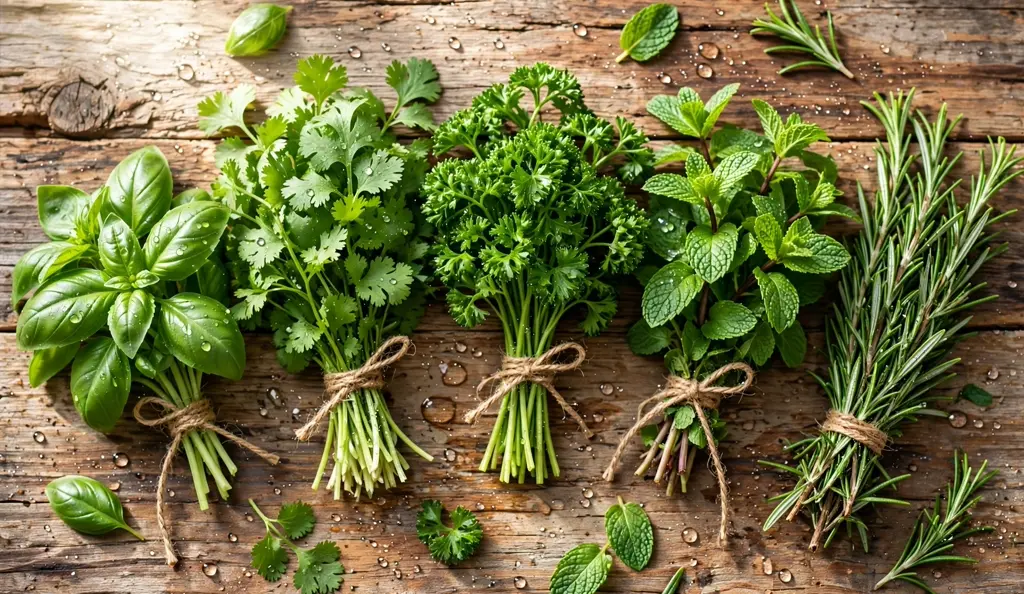
You buy a bunch of cilantro on Monday. By Thursday it is slimy mush. There is a fix, and it takes one minute. The best way to store fresh herbs is to trim the stems and stand tender herbs like cilantro, parsley, and mint in a jar of water in the fridge, while wrapping woody herbs like rosemary and thyme in a damp paper towel. Basil is the exception: it dies in the cold, so keep it in water on your counter. Stored right, fresh herbs last 1 to 3 weeks instead of 2 days. This guide gives you the complete method for every common herb, updated for October 2026.
Below you will find the exact steps for each method, a herb-by-herb storage table with real freshness timelines, how to freeze herbs for months, the science behind the one mistake that kills basil overnight, and answers to the questions people actually search for. By the end, you will know how to store fresh herbs for any recipe, any season, with zero waste.
Why Do Fresh Herbs Wilt So Fast?
A cut herb is still alive. Its leaves keep losing water through tiny pores, and once the stems stop pulling up water, the whole bunch wilts. Heat, dry air, and a damaged stem all speed this up. That is why herbs tossed loose in the crisper drawer look sad in two days, even though the fridge is cold.
Waste adds up fast. The USDA has reported that 30 to 40 percent of the food supply in the United States is wasted each year, based on its October 2018 food-loss announcement, and fresh herbs are among the first things thrown out. A soggy bunch of dill in the back of the fridge is a small version of a very big problem. Learning how to store fresh herbs properly is one of the easiest ways to cut your own food waste and save money at the store.
There is also a sneaky gas at work. Many fruits, like apples and bananas, release ethylene as they ripen. Ethylene (a natural plant gas that speeds up aging) makes tender herbs yellow and drop leaves faster. So your parsley stored next to a bunch of bananas is doomed twice over: it dries out and it ages faster.
The 60-Second Herb Prep Most People Skip
Almost everyone skips this step. They open the fridge, push the herb bunch inside, and hope for the best. Every expert guide on how to store fresh herbs starts with the same 60 seconds of prep, and it doubles the life of your herbs.
- Spread the bunch out and remove any slimy, dark, or broken leaves.
- Pull off rubber bands and twist ties. They trap moisture and bruise the stems.
- Trim about half an inch off the stem ends at a slight angle. Fresh cuts drink water better.
- If the herbs are gritty or dusty, rinse them gently and shake off the water.
- Dry the leaves lightly with a clean towel or a salad spinner. Wet leaves rot faster than damp ones.
One rotten leaf can spoil the bunch. Bacteria spread from decaying leaves to healthy ones, so removing the bad ones first is the single highest-impact minute you will spend. Do this the moment you get home from the store, before you even start cooking dinner.
Can You Bring Wilted Herbs Back to Life?
Sometimes, yes. If the herbs are just limp but not slimy or smelly, trim the stems and stand them in a glass of ice water for 30 to 60 minutes. Cold water rehydrates the cells. This works best for parsley, cilantro, and mint within a day or two of wilting.
But know when to give up. Slimy texture, dark brown spots, or a sour smell mean the herbs are past saving. Like any fresh produce, once spoilage bacteria move in, the batch is done. If you have a health condition that weakens your immune system, check with your doctor or a registered dietitian before eating herbs that look borderline.
How Do You Store Fresh Herbs? The 3 Methods That Work
Every working method comes from the same idea: keep stems drinking water while keeping leaves mostly dry. Which method you use depends on the herb type. Tender herbs love the jar. Woody herbs prefer the damp towel. Basil wants nothing to do with your fridge at all.
Method 1: The jar method (tender herbs)
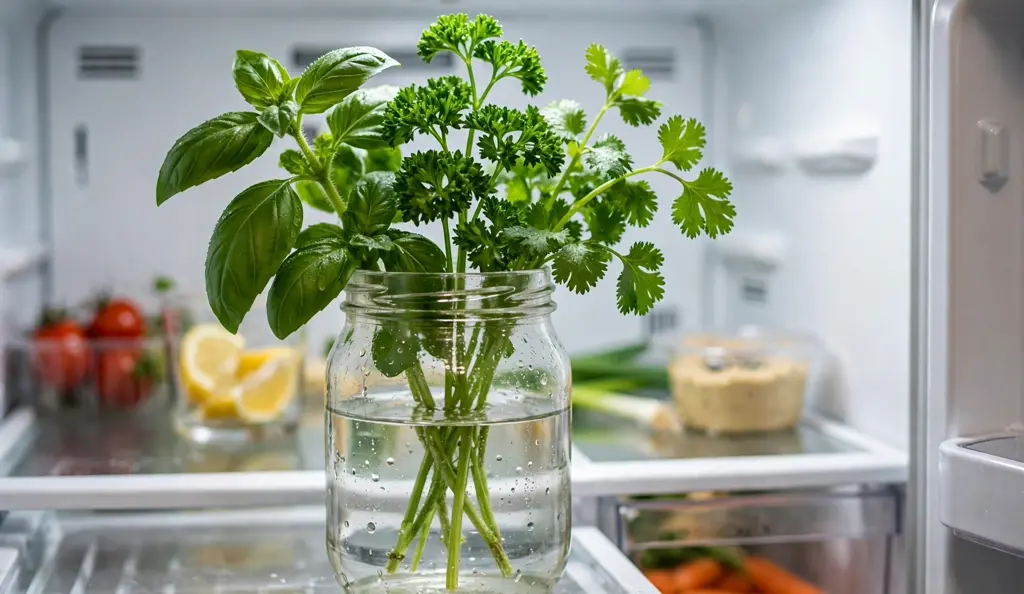
Treat cilantro, parsley, dill, mint, chives, and tarragon like a bouquet of flowers. Trim the stems, stand them upright in a jar with 1 to 2 inches of water, and cover loosely with a bag. Store the jar in the fridge. Change the water every 2 to 3 days. Tender herbs kept this way last 1 to 3 weeks. This is also the best method if you bought a big bunch of cilantro for homemade guacamole and only needed half.
Method 2: The damp towel method (woody herbs)
Wrap rosemary, thyme, sage, oregano, and marjoram in a slightly damp paper towel. Slide the bundle into a zip-top bag or a sealed container and refrigerate it. The towel keeps humidity high while the bag blocks dry fridge air. Kept this way, hardy herbs stay fresh for 2 to 3 weeks.
Method 3: The counter method (basil only)
Trim basil stems, stand them in a small glass of water, and keep the glass on your kitchen counter away from direct sun. Do not refrigerate basil. A home fridge is far colder than basil can handle, and cold damage turns the leaves black within a day. On the counter, basil stays fresh for about a week, and it may even grow roots you can plant later.
Should You Keep Fresh Herbs in Water?
Yes, standing fresh herbs in water works better than any dry method for tender herbs. Put cilantro, parsley, mint, dill, and chives upright in a jar with 1 to 2 inches of water, cover loosely with a bag, and refrigerate. The stems stay hydrated and the herbs last 1 to 3 weeks. Change the water every 2 to 3 days.
How Long Does Each Herb Stay Fresh? Herb-by-Herb Guide
The numbers below assume you use the right method from above and start with fresh herbs. A bunch that was already wilted at the store will not reach these numbers, so always buy the freshest bunches you can find.
| Herb | Best method | Lasts |
|---|---|---|
| Basil | Jar of water on the counter (never the fridge) | 7 to 10 days |
| Cilantro | Jar of water in the fridge | 2 to 3 weeks |
| Flat-leaf parsley | Jar of water in the fridge | 3 to 4 weeks |
| Curly parsley | Jar of water in the fridge | 2 to 3 weeks |
| Mint | Jar of water in the fridge | 2 to 3 weeks |
| Dill | Jar of water in the fridge | 1 to 2 weeks |
| Chives | Damp towel in a bag, in the fridge | 1 to 2 weeks |
| Tarragon | Jar of water in the fridge | 2 to 3 weeks |
| Rosemary | Damp towel in a bag, in the fridge | 2 to 3 weeks |
| Thyme | Damp towel in a bag, in the fridge | 2 to 3 weeks |
| Sage | Damp towel in a bag, in the fridge | 2 to 3 weeks |
| Oregano | Damp towel in a bag, in the fridge | 2 to 3 weeks |
| Marjoram | Damp towel in a bag, in the fridge | 2 weeks |
Parsley is the most forgiving herb to buy in bulk, since it holds for nearly a month with the jar method. It also makes a fresh, colorful garnish on silky homemade hummus. Dill is the most fragile, so buy it only when you have a recipe planned for the week. Chives sit between the two groups: the damp towel method beats the jar for them because their hollow stems soak up too much water and go slimy.
Why Your Basil Dies in Two Days: The Cold-Shock Trap
This is the number one herb storage mistake in home kitchens, and it comes from good intentions. You bring basil home, tuck it into the fridge with the other herbs, and by morning the leaves are black and limp. You did nothing wrong except trust the fridge. Basil is the victim of cold shock, and as of October 2026 this is still the least understood part of how to store fresh herbs at home.
Here is the science. Researchers Rodeo and Mitcham at the University of California, Davis, published a study in Frontiers in Plant Science in 2023 on basil storage. They stored basil leaves for 6 days at 5, 10, and 15 degrees Celsius. Leaves kept at 5 degrees suffered severe chilling injury and lost far more of their aroma compounds than leaves kept at 10 or 15 degrees. Chilling injury (cell damage caused by cold that is not freezing) breaks down basil leaf tissue, so the black spots you see are dead cells, not mold.
Now compare that to your fridge. The FDA advises keeping home refrigerators at or below 40 degrees Fahrenheit (4 degrees Celsius). That is colder than the coldest, most damaging temperature in the UC Davis study. Every hour your basil spends in the fridge is an hour of cold damage. This is why basil bought from a heated store display should never go into a cold fridge, while basil bought from a refrigerated section needs to stay cold: sudden temperature swings hurt it either way.
The UC Davis Postharvest Technology Center has long flagged basil as one of the most cold-sensitive crops, alongside tomatoes and bananas. In a home kitchen, the fix is simple. Keep basil on the counter in water, away from cold drafts and sunny windows. If your basil does grow roots in the glass, plant it in soil for a free endless supply. One $3 bunch can become a plant that feeds you for months.
Can You Freeze Fresh Herbs for Months?
Yes, and for long-term storage it beats every fridge method. Frozen herbs keep for 3 to 6 months at peak flavor, and up to a year safely. Freezing works best for herbs you plan to cook with, because thawed herbs lose their crisp texture. Think soups, stews, sauces, and marinades, not salads or garnishes.
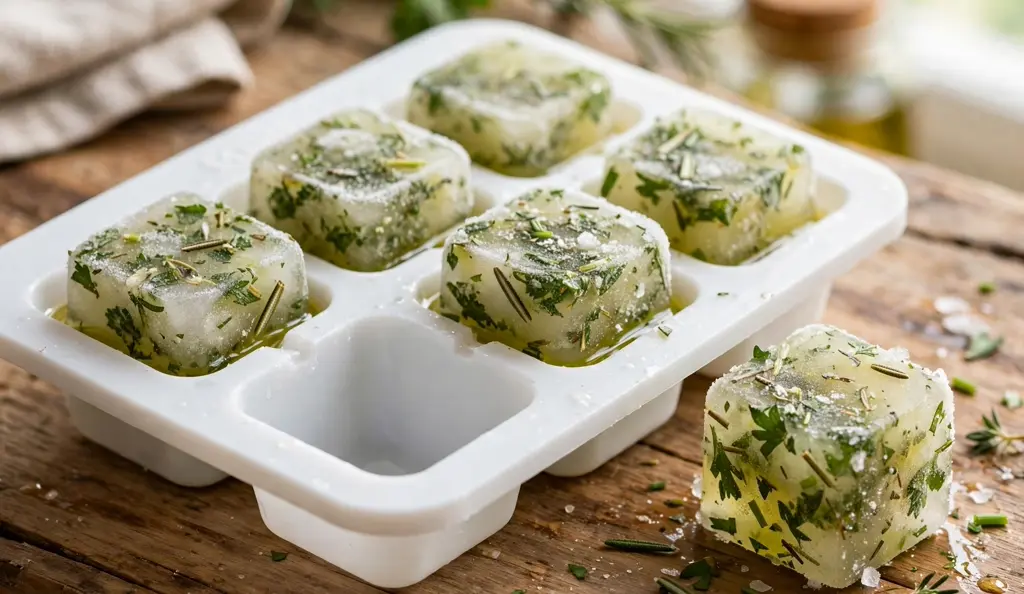
The easiest method is the ice cube tray. Chop the herbs, pack them into tray wells, and cover with water or olive oil. Freeze solid, pop the cubes out, and move them to a labeled freezer bag. Drop a cube straight into a hot pan: no thawing needed. Cilantro, parsley, basil, dill, and chives all freeze well this way. Frozen herb cubes are also perfect for boosting the flavor of dips and gluten free appetizers without extra chopping.
For woody herbs like rosemary and thyme, you can skip the tray. Spread whole sprigs on a baking sheet, freeze for an hour, then transfer to a bag. They go straight from freezer to pan. Whatever you freeze, press the air out of the bag and label it with the herb name and the date.
How Long Do Fresh Herbs Last in the Freezer?
Fresh herbs keep peak flavor for 3 to 6 months in the freezer and stay safe to eat for up to a year. Chop tender herbs like basil, cilantro, and parsley into ice cube trays with water or olive oil. Freeze solid, then store the cubes in labeled freezer bags.
Freezing mistakes to avoid
Do not freeze herbs with high water content whole and loose in a bag. They clump into a solid block you cannot separate. Do not refreeze thawed herbs, since each freeze-thaw cycle damages texture and flavor. And do not expect frozen basil to taste like fresh basil on a salad: frozen herbs belong in cooked dishes, where the difference disappears.
7 Mistakes That Ruin Fresh Herbs
Most people make at least two of these. Fixing them is free.
- Refrigerating basil. Cold shock blackens the leaves within a day.
- Skipping the stem trim. Old, sealed stem ends cannot absorb water.
- Leaving rubber bands on. They trap moisture and bruise stems.
- Storing herbs wet. A quick shake and pat-dry prevents rot.
- Keeping herbs next to apples or bananas. Ethylene gas ages them faster.
- Overpacking the fridge. Cold air needs to circulate, which is why a steady, cold fridge matters for everything inside, from herbs to dairy. If you ever wondered how long eggs last in the fridge under the same conditions, the answer depends on that same cold, steady air.
- Forgetting to change the jar water. Cloudy water breeds bacteria that rot the stems.
Buying tip for October 2026: herb saver containers from brands like OXO sell well in stores, and they do work, since they combine the jar and cover in one design. But a simple glass jar, like a Ball mason jar, and a plastic bag give you the same result for free. Save your money for more herbs. If you buy a live potted herb plant from the produce section, repot it into a bigger pot with fresh soil and keep it in a sunny window: it will outlast any cut bunch.
How to Store Fresh Herbs: Frequently Asked Questions
How long do fresh herbs last in the fridge?
It depends on the herb and the method. Tender herbs like cilantro and parsley last 2 to 4 weeks in a jar of water in the fridge. Woody herbs like rosemary and thyme last 2 to 3 weeks wrapped in a damp towel. Stored loose with no method, most herbs wilt in 1 to 2 days.
Should you wash fresh herbs before storing them?
Rinse only if the herbs are gritty or dusty, then dry them well. Storing herbs while they are still wet speeds up rotting. If they look clean, skip the wash and rinse them right before cooking instead.
Can you store all fresh herbs the same way?
No. Tender herbs with soft stems, like cilantro, parsley, and mint, do best standing in water in the fridge. Woody herbs with hard stems, like rosemary and thyme, do best wrapped in a damp towel. Basil breaks both rules and must stay on the counter at room temperature.
Why did my basil turn black in the fridge?
Cold damage, not rot. Basil suffers chilling injury below about 54 degrees Fahrenheit, and a fridge runs at 40 degrees or colder. The cold breaks down leaf cells, which then turn black. Keep basil in a glass of water on your counter instead, away from direct sun.
How do you store fresh cilantro so it lasts?
Trim the stems, stand the bunch in a jar with 1 to 2 inches of water, cover loosely with a bag, and refrigerate. Change the water every 2 to 3 days. Cilantro stored this way stays fresh for 2 to 3 weeks. Discard any yellow or slimy leaves as soon as you see them.
How do you store fresh parsley?
Use the jar method in the fridge, the same as cilantro. Parsley is one of the toughest herbs and holds for 3 to 4 weeks. Flat-leaf parsley usually outlasts curly parsley by a few days, so choose flat-leaf if you want maximum shelf life.
Can you store fresh herbs in the freezer?
Yes. Chop tender herbs into ice cube trays with water or olive oil, freeze solid, and move the cubes to labeled freezer bags. They keep peak flavor for 3 to 6 months and stay safe up to a year. Frozen herbs are best in cooked dishes, not as fresh garnish.
How do you store fresh dill?
Dill is fragile, so use the jar method and refrigerate it. Expect 1 to 2 weeks of freshness. Keep dill away from ethylene-producing fruits like apples and bananas, since the gas makes it yellow faster. Buy dill only when you plan to use it within the week.
How do you store fresh mint?
Stand mint in a jar of water in the fridge, covered loosely with a bag, and it lasts 2 to 3 weeks. Mint is sturdy and even regrows roots in water sometimes. Change the water every 2 to 3 days to keep it crisp.
Do herb saver containers really work?
They work, but they do not beat the jar method. Herb savers control humidity around the stems, which is the same job a jar and a loose bag do. If you already own one, use it. If not, a glass jar costs nothing and performs just as well.
How can you tell if fresh herbs have gone bad?
Look for slimy texture, dark brown or black spots (except basil, which blackens from cold, not rot), yellowing leaves, or a sour smell. If a whole bunch smells off, throw it out. When in doubt, throw it out: fresh herbs are cheap, and food safety is not worth the gamble.
Can you store fresh herbs without water?
Woody herbs like rosemary, thyme, and sage can be stored wrapped in a damp paper towel without a water jar. Tender herbs really need the jar. As a backup, freezing or drying works for every herb and needs no water at all.
Is it better to freeze or dry fresh herbs?
Freeze tender herbs like basil, cilantro, parsley, and dill. Their flavors survive freezing better. Dry woody herbs like rosemary, thyme, and oregano: hang small bunches upside down in a cool, dry spot, then strip the leaves into jars. Dried herbs are about three times stronger than fresh, so use less.
How do you keep fresh herbs fresh when you buy them loose at the market?
Buy firm, bright bunches with no yellow leaves and stems that look freshly cut. Take them home quickly and do the 60-second prep right away: sort, trim, and get them into water or a damp towel. Market herbs were often cut that morning, so good storage can stretch them even longer than store-bought.
The Bottom Line on Storing Fresh Herbs
How to store fresh herbs comes down to three habits: sort and trim your herbs the moment you get home, match the method to the herb type, and keep basil out of the fridge. Tender herbs go in a water jar in the fridge, woody herbs go in a damp towel in the fridge, and basil lives in water on your counter. That is the whole system, and it turns 2 days of freshness into 2 to 3 weeks.
Start with one method this week and watch how much longer your herbs last. Once the habit sticks, you will throw away fewer herbs, waste less money, and always have fresh flavor ready when a recipe calls for it. Fresh herbs, stored right, pay for themselves.
For the botany behind why cold damages basil and how plants respond to storage, read the guide to herbs on Wikipedia.