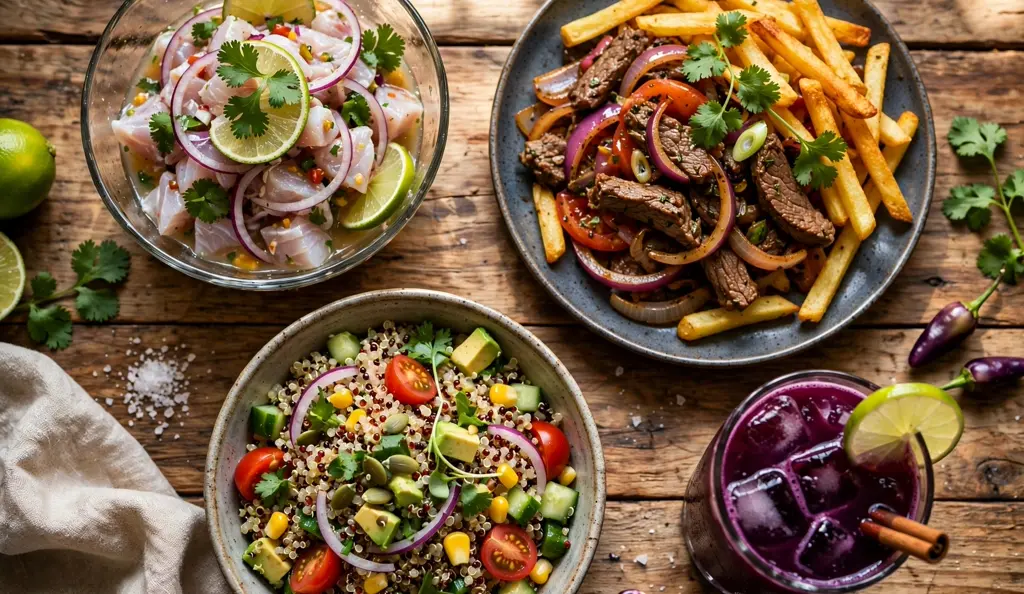
5 Easy Peruvian Recipes at Home (Gluten-Free)
Picture Lima on a warm October 2026 evening. Steam rises off a sizzling pan of lomo saltado. A street vendor squeezes fresh limes over just-caught fish. You do not need a plane ticket for any of this. You can cook it all in your own kitchen tonight.
Easy Peruvian recipes at home are beginner-friendly dishes you can cook in about 30 minutes with simple ingredients. Ceviche, lomo saltado with tamari, quinoa chaufa, papa a la huancaina, and suspiro de limena top the list. Most are naturally gluten free or need one easy swap. This guide gives you all five with full recipes.
This guide to easy Peruvian recipes at home is not a skim-through list with vague ideas. You get five complete recipes with ingredients, numbered steps, prep times, and cook times. Every dish comes with its gluten-free swap spelled out. Peruvian food is built on corn, potatoes, rice, and quinoa, so it suits gluten-free kitchens better than most cuisines. The world agrees: in June 2025, Maido in Lima was named The World’s Best Restaurant at the World’s 50 Best Restaurants awards in Turin, Italy, according to PR Newswire (June 20, 2025). Chef Mitsuharu “Micha” Tsumura blends Japanese technique with Peruvian ingredients, and his win shows how far this cuisine has come.
5 Easy Peruvian Recipes at Home You Can Cook Tonight
Start with whichever dish sounds best. Each recipe stands alone. They are ordered from no-cook to slow simmer, easiest first.
1. Ceviche Clasico (No Cook, Ready in 35 Minutes)
Prep time: 20 minutes | Marinating time: 15 minutes | Serves: 4
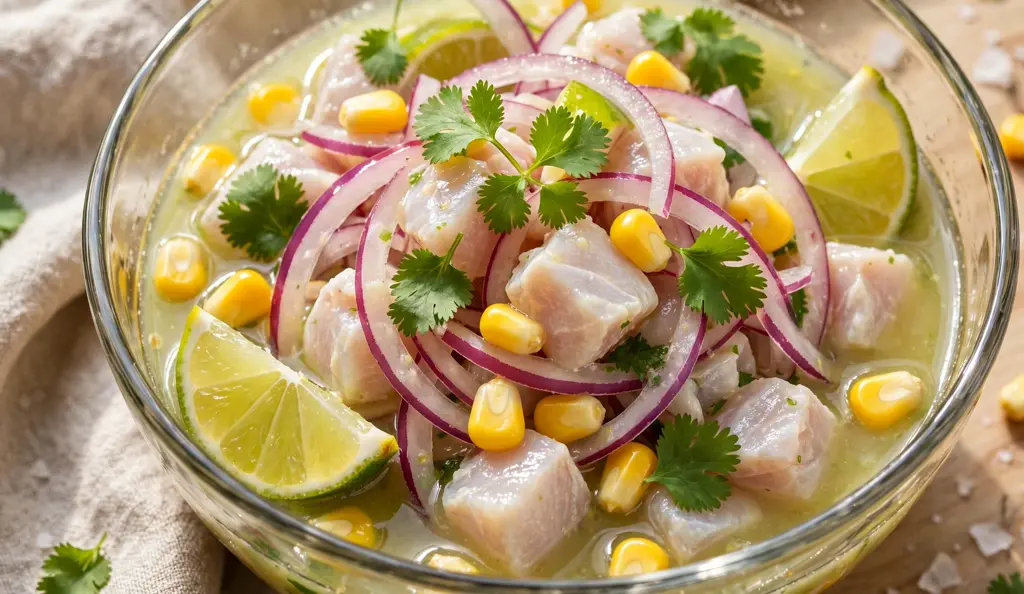
Ceviche is Peru’s national dish and the simplest one here. Raw fish firms up in lime juice in minutes. No stove needed. Buy the freshest fish you can find and keep it cold from shop to table.
Fish Safety First
Lime juice changes the texture of fish, but it does not kill germs. Ask your fishmonger for sushi-grade sea bass or halibut. The fish should smell like the sea, never like ammonia. If you are pregnant or have a weak immune system, check with your doctor before eating raw fish.
- 500 g (about 1 lb) sushi-grade sea bass or halibut, cut into 1 cm cubes
- 120 ml (1/2 cup) fresh lime juice, from about 5 limes
- 1 small red onion, thinly sliced
- 1 aji amarillo or jalapeno, seeded and finely chopped
- 1 tsp salt, plus more to taste
- 2 tbsp chopped fresh cilantro
- 1 boiled sweet potato, sliced, to serve
- 1/2 cup cooked corn kernels, to serve
- Put the fish cubes in a glass or ceramic bowl. Glass will not react with the acid.
- Sprinkle with the salt and pour in half the lime juice. Toss gently to coat.
- Rest for 5 minutes while you slice the onion and chop the chili.
- Add the onion and chili to the bowl. Pour in the rest of the lime juice.
- Cover and chill for exactly 15 minutes. Set a timer.
- Taste and add more salt if needed. Fold in the cilantro.
- Serve cold over sweet potato slices, with corn on the side.
Do not marinate longer than 20 minutes total. The fish turns chalky past that point. Ceviche is naturally gluten free, so nothing here needs a label check.
2. Lomo Saltado with Tamari (The Famous Stir Fry, Gluten-Free)
Prep time: 15 minutes | Cook time: 15 minutes | Serves: 4
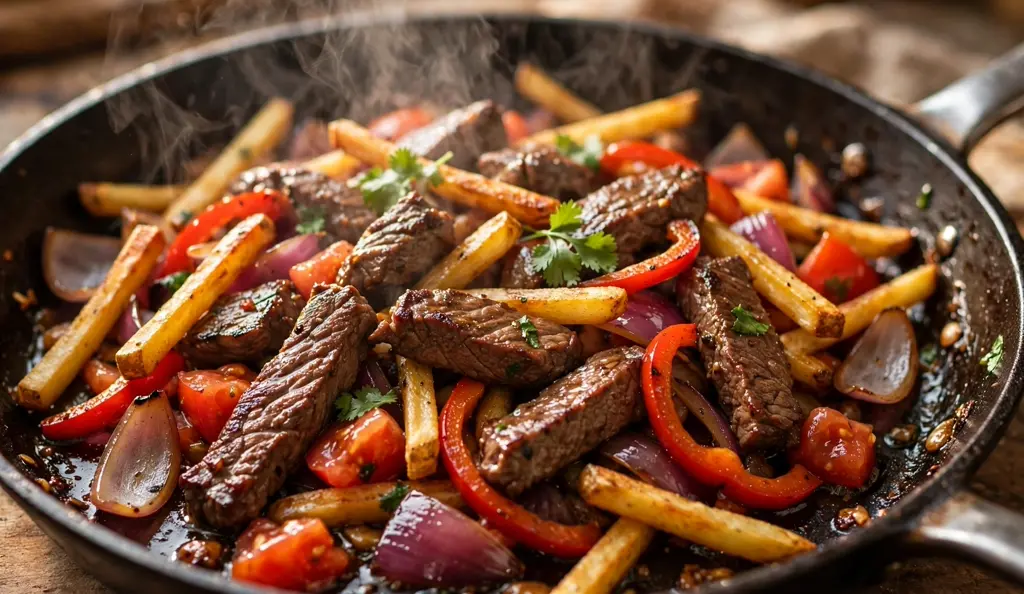
Lomo saltado is Peru’s most loved weeknight dinner. Chinese immigrants brought the stir-fry technique to Peru, and locals made it their own. Hot beef, sweet red onion, and juicy tomato land on rice with crispy fries tucked underneath.
The classic recipe calls for soy sauce, which is the number one trap. Most soy sauce is brewed with wheat, which is why most soy sauce is not gluten free. Tamari labeled gluten free gives the same deep savory flavor with none of the worry.
- 500 g sirloin steak, cut into thin strips
- 3 tbsp tamari labeled gluten free (never regular soy sauce)
- 1 tbsp red wine vinegar
- 2 tbsp vegetable oil
- 3 garlic cloves, minced
- 1 tsp ground cumin
- 1 large red onion, cut into thick wedges
- 2 tomatoes, cut into wedges
- 3 cups cooked white rice
- 2 cups homemade oven fries
- 2 tbsp chopped fresh cilantro
- Salt and black pepper to taste
- Pat the beef dry with paper towels. Dry beef sears; wet beef steams.
- Season the beef with salt, pepper, and half the cumin.
- Heat the oil in a large pan or wok over high heat until it shimmers.
- Sear the beef in two batches, 1 to 2 minutes per side. Do not crowd the pan.
- Move the seared beef to a plate and set aside.
- Add the onion wedges to the same hot pan. Cook for 2 minutes, stirring once.
- Add the garlic and tomato wedges. Cook for 1 minute more.
- Return the beef to the pan. Pour in the tamari, vinegar, and remaining cumin.
- Toss for 30 seconds until glossy. Serve over rice with fries and cilantro.
Some recipes dust the beef in flour before searing. Skip that step. The hot sear gives plenty of flavor on its own.
Are Easy Peruvian Recipes Gluten Free?
Mostly yes, but not automatically. Ceviche, papa a la huancaina, and quinoa chaufa are naturally gluten free. Lomo saltado turns gluten free with one swap: tamari labeled gluten free instead of soy sauce. Watch for flour coatings, shared fryers, beer marinades, and undeclared starch in aji pastes. Always check the current label on packaged ingredients.
3. Quinoa Chaufa (Peruvian Fried Rice with a Protein Boost)
Prep time: 10 minutes | Cook time: 15 minutes | Serves: 4
Chaufa is Peru’s fried rice, born in the chifa restaurants of Lima’s Chinese-Peruvian community. This version swaps rice for quinoa, an Andean grain that is naturally gluten free and rich in protein. Day-old quinoa works best because dry grains fry up crisp.
Buy quinoa in a sealed bag labeled gluten free. Bulk bins carry cross-contact risk from shared scoops. For how long cooked rice lasts in the fridge, the same 3 to 4 day rule applies to cooked quinoa, so cook a big batch ahead.
- 3 cups cooked quinoa, cooled (day-old is best)
- 2 eggs, beaten
- 2 tbsp tamari labeled gluten free
- 1 tbsp sesame oil
- 1 tbsp vegetable oil
- 3 garlic cloves, minced
- 1 tsp grated fresh ginger
- 1 red bell pepper, diced
- 4 green onions, sliced (whites and greens kept separate)
- Salt and black pepper to taste
- Heat the vegetable oil in a large pan or wok over high heat.
- Pour in the beaten eggs. Scramble until just set, about 1 minute.
- Move the eggs to a plate. They will finish cooking later.
- Add the garlic, ginger, and onion whites. Cook for 30 seconds.
- Add the bell pepper. Cook for 2 minutes until slightly soft.
- Add the quinoa. Press it flat into the pan with a spatula.
- Let it sit untouched for 3 minutes so the bottom turns crisp and golden.
- Stir in the tamari and sesame oil. Toss to coat every grain.
- Return the eggs to the pan and break them into bite-size pieces.
- Top with the onion greens and serve hot.
Resist the urge to stir constantly. Three quiet minutes on the hot pan builds the toasty flavor that makes this taste like takeout.
4. Papa a la Huancaina (Cold Potatoes in Spicy Cheese Sauce)
Prep time: 15 minutes | Cook time: 20 minutes | Serves: 6
This is Peru’s favorite starter. Cold boiled potatoes get dressed in a creamy golden sauce of cheese and aji amarillo. It is served chilled, which makes it perfect for making ahead. The sauce takes five minutes in a blender.
Potatoes are naturally gluten free, and you can read more about are potatoes gluten free for the full breakdown. Just check the queso fresco and aji amarillo paste, since some brands add starch as a filler.
- 1 kg yellow potatoes (Yukon Gold works well)
- 200 g queso fresco
- 1/2 cup evaporated milk
- 3 tbsp aji amarillo paste
- 1 garlic clove
- 3 tbsp vegetable oil
- 1/2 tsp salt, plus more to taste
- 3 hard-boiled eggs, halved
- 1/2 cup black olives
- Lettuce leaves, to serve
- Boil the potatoes whole in salted water until a knife slides in easily, about 20 minutes.
- Drain and cool until you can handle them. Cold potatoes slice cleaner.
- Peel the potatoes and cut them into thick rounds.
- Blend the queso fresco, evaporated milk, aji amarillo paste, garlic, oil, and salt.
- Blend until completely smooth. Taste and adjust the salt.
- Line a serving platter with lettuce leaves.
- Arrange the potato rounds in a single layer over the lettuce.
- Pour the golden sauce generously over the potatoes.
- Top with the halved eggs and scatter the olives around. Serve cold.
The sauce should coat a spoon but still pour. Too thick, add a spoonful of evaporated milk. Too thin, add more queso fresco. Aji pastes vary in heat, so taste as you go.
5. Suspiro de Limena (Caramel Custard with Cloud Meringue)
Prep time: 10 minutes | Cook time: 25 minutes, plus 2 hours chilling | Serves: 6
Suspiro de limena means “sigh of a woman from Lima.” It is a silky caramel custard topped with soft meringue and cinnamon. It sounds fancy, but it uses seven pantry ingredients and one pan.
- 1 can (397 g) condensed milk
- 1 can (354 ml) evaporated milk
- 4 egg yolks
- 1 tsp vanilla extract
- 2 tbsp port (optional; skip it for an alcohol-free version)
- 2 egg whites
- 1/2 cup sugar
- Ground cinnamon, to dust
- Pour both milks into a heavy pan over medium heat.
- Stir constantly for about 20 minutes until caramel-colored and thick.
- Whisk the yolks with one spoonful of the hot milk, then stir back into the pan.
- Cook 2 more minutes, stirring. Do not let it boil.
- Stir in the vanilla and the port, if using.
- Divide the custard among 6 small cups or ramekins.
- Beat the egg whites until foamy. Add the sugar slowly and beat to soft peaks.
- Spoon the meringue over each cup in a tall cloud.
- Dust with cinnamon. Chill for at least 2 hours before serving.
Condensed and evaporated milk are naturally gluten free, but always check the current label. The dessert keeps 3 days in the fridge. Add the meringue just before serving for maximum fluff.
What Is the Easiest Peruvian Dish to Cook at Home?
Ceviche clasico is the easiest. It needs no cooking, just fresh fish, lime juice, red onion, chili, and salt. You toss everything together and chill it for 15 minutes. Serve it over boiled sweet potato with corn. The whole dish takes about 35 minutes from start to table, and it is naturally gluten free.
Your Peruvian Pantry: Staples, Gluten Watches, and Easy Swaps
You only need a handful of special ingredients to cook easy Peruvian recipes at home all month. Here is what to buy, what to watch, and the swap that keeps every dish gluten free.
| Staple | Why You Need It | Gluten Watch | Safe Swap |
|---|---|---|---|
| Tamari | Salty base for saltado and chaufa | Regular soy sauce contains wheat | Tamari labeled gluten free |
| Aji amarillo paste | Fruity heat in sauces | Some brands add starch fillers | A paste with peppers only |
| Queso fresco | Body of the huancaina sauce | Rare starch fillers in cheap brands | A brand labeled gluten free |
| Quinoa | Base for chaufa | Cross-contact in bulk bins | Sealed bag, certified GF |
| Cornstarch | Optional sauce thickener | Some blends contain wheat starch | Cornstarch labeled gluten free |
| Chicha morada | Purple corn drink | Do not confuse with chicha de jora | Bottled morada, check label |
Find aji amarillo paste at Latin grocery stores or online. One jar lasts through many batches of sauce. In October 2026, most major online grocers stock at least one brand, and the label tells you exactly what is inside.
The Hidden Gluten Traps in Easy Peruvian Recipes at Home
Peruvian food looks safe at first glance. Then gluten sneaks in through the back door. This is the section no other easy Peruvian recipes at home guide bothers to write, and it is the one that matters most.
Beyond Celiac reports that 1 in 133 Americans has celiac disease, about 1 percent of the population, according to its August 2025 report. For those cooks, one hidden ingredient can mean days of feeling unwell. Here are the five traps to know.
Trap 1: Soy Sauce in Everything
Lomo saltado, chaufa, and pollo saltado all call for soy sauce. Regular soy sauce is brewed from wheat. The fix is simple: keep only tamari labeled gluten free in your kitchen. The U.S. Food and Drug Administration finalized its gluten-free labeling rule in August 2013. Under it, food labeled gluten free must contain less than 20 parts per million of gluten. Trust that label, and always check the current one.
Trap 2: Flour on the Beef
Some lomo saltado recipes dust the beef in flour for a crisp crust. It also loads the dish with gluten. Skip the flour, or toss the beef with a teaspoon of labeled gluten-free cornstarch instead.
Trap 3: The Fryer Problem
Restaurant fries often share a fryer with breaded items. That shared oil is a classic cross-contact risk in shared fryers. At home, make oven fries or use a dedicated batch of fresh oil.
Trap 4: Beer in Marinades
Some Peruvian chicken and skewer marinades use beer. Most beer is brewed from barley or wheat and is not gluten free. Swap in a certified gluten-free beer, or add a splash of lime juice instead. The acid tenderizes just as well.
Trap 5: Chicha Confusion
Chicha morada is a sweet purple corn drink and is naturally gluten free. Chicha de jora is a different drink: a fermented corn beverage that works like a beer. Commercial versions can contain added malt or barley. When in doubt, stick with chicha morada from a labeled bottle.
Look for the Gluten-Free Certification Organization (GFCO) mark on tamari, quinoa, and cornstarch. GFCO certification means an independent group tested the product, which adds one more layer of trust beyond the label itself.
Easy Peruvian Recipes at Home: Frequently Asked Questions
Is ceviche gluten free?
Yes. Classic ceviche contains only fish, lime juice, onion, chili, cilantro, and salt. None of these contain gluten. Serve it with sweet potato and corn as Peruvians do, and skip any crackers unless they are labeled gluten free.
Can I use regular soy sauce if I do not have celiac disease?
You can, but tamari tastes just as good and keeps the dish safe for every guest. Regular soy sauce contains wheat. Tamari labeled gluten free costs about the same, so there is no real reason to keep wheat-based soy sauce for Peruvian cooking.
Where can I buy aji amarillo paste?
Check Latin American grocery stores first, then the international aisle of large supermarkets. Many online grocers stock it too. Choose a paste made from peppers, oil, and salt, with no added starch or flour.
Is quinoa always gluten free?
Quinoa is naturally gluten free, but bulk bins carry cross-contact risk from shared scoops. Buy it in a sealed bag labeled gluten free, and rinse well before cooking to remove its bitter outer coating.
What is the difference between tamari and soy sauce?
Both are fermented soybean sauces, but regular soy sauce is brewed with wheat while tamari is brewed mostly from soybeans. Tamari tastes a little richer. When the label says gluten free, tamari is the safe pick.
Can I make these recipes dairy free as well?
Three of the five are already dairy free. Only papa a la huancaina and suspiro de limena use dairy. For the huancaina sauce, try blended cashews with a splash of oat milk. For the dessert, coconut condensed milk works, though the flavor shifts slightly tropical.
Is chicha morada gluten free?
Yes, when made from purple corn, fruit, and spices, which is the traditional recipe. Bottled versions are usually safe too, but always check the current label. Do not confuse it with chicha de jora, the fermented version, which can contain malt or barley.
How do I keep ceviche safe to eat?
Buy sushi-grade fish and keep it cold at every step. Marinate for 15 to 20 minutes, never hours. Serve immediately after marinating, and throw away leftovers rather than saving them.
What can I serve with lomo saltado besides fries?
White rice is the classic partner and is already in the recipe. You can also serve it with baked sweet potato wedges or a simple green salad. In Peru, the fries go right on top of the rice under the beef.
Can I meal prep these Peruvian dishes?
Papa a la huancaina and suspiro de limena are ideal for making ahead. Both are served cold and taste better after resting. Quinoa chaufa reheats well in a hot pan. Cook ceviche and lomo saltado fresh and eat them right away.
Is Peruvian food very spicy?
It is flavorful more than fiery. Aji amarillo brings a fruity warmth, not a harsh burn. You control the heat by adjusting the chili. Start with half, taste, and add more. Kids usually handle these dishes fine.
What does aji amarillo taste like?
It tastes fruity and bright, a little like a sweet bell pepper with a mild kick. It gives huancaina sauce its famous golden color. If you cannot find it, mix mild yellow bell pepper with a tiny bit of habanero, though the flavor will not match exactly.
Are Peruvian restaurants safe for people with celiac disease?
Some are, but ask the right questions. Ask whether they use tamari or wheat soy sauce, whether fries share a fryer with breaded foods, and whether meats are dusted with flour. If the staff cannot answer clearly, choose another restaurant. If you have celiac disease, check any dining-out plan with your doctor or a registered dietitian.
Cook Like Lima Tonight
You now have five complete, easy Peruvian recipes at home, each with a clear gluten-free path. Ceviche needs no cooking at all. Lomo saltado needs one tamari swap. Quinoa chaufa, papa a la huancaina, and suspiro de limena are nearly there already. The pantry table tells you what to buy, and the trap list tells you what to avoid.
Start with one dish this week. Taste what the world’s most celebrated food city is about, right from your own stove in October 2026. If you want more easy international cooking, try these easy Belgian recipes to try next. And when someone asks where you learned to cook like this, tell them Peruvian cuisine came home with you.