Is Cornstarch Gluten Free? The 2026 Safety Answer
Yes. Pure cornstarch is naturally gluten free, because it comes from corn, and corn contains no gluten. That is the short answer to is cornstarch gluten free, and for most home cooks it is the whole story.
But the box on your shelf is not always as simple as the corn it came from. Some brands pack cornstarch in facilities that also handle wheat, and bulk bins add another layer of risk. As of October 2026, most grocery brands carry a gluten-free label, yet a few still carry no label at all. This guide explains what cornstarch is, where gluten can sneak in, which brands are safest, a 30-second label check, and how to use it safely in your kitchen.
What is cornstarch made from?
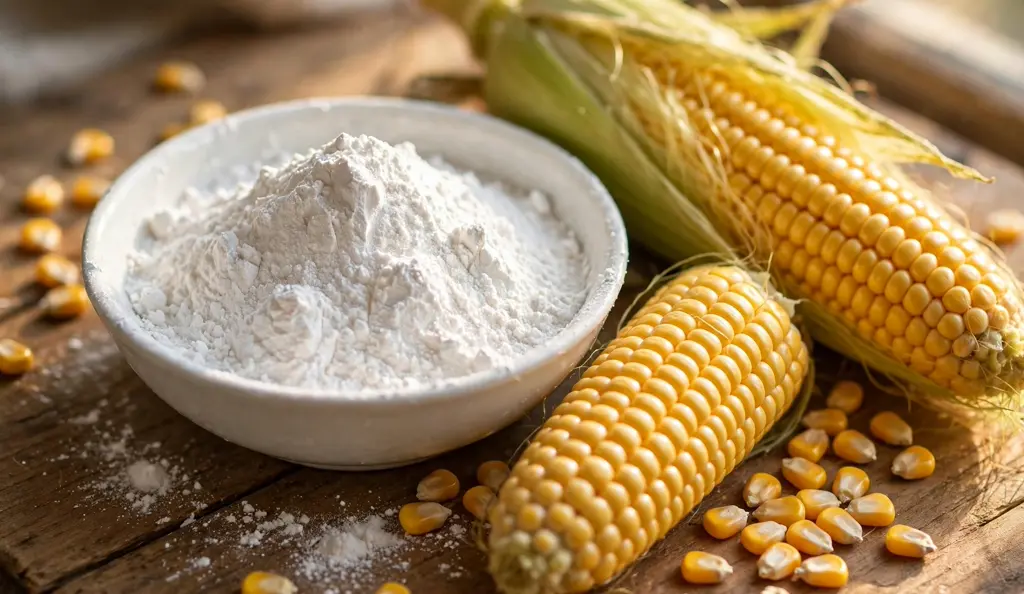
Cornstarch is a fine white powder made from the starchy center of a corn kernel. That center has a name: the endosperm. The endosperm is the part of the seed that stores food for the young plant.
The endosperm contains almost no protein. Gluten is a protein found in wheat, barley, and rye. Since cornstarch comes from the part of corn with no gluten protein, pure cornstarch starts out naturally gluten free.
Factories make it through a process called wet milling. Workers soak the kernels, grind them, and wash the starch away from the fiber and germ. The clean starch is then dried and milled into the powder you buy.
This matters when you compare thickeners. Wheat flour keeps its gluten-forming proteins, so it can never be gluten free. Cornstarch leaves them behind at the mill. That is the real reason the answer to is cornstarch gluten free starts with yes.
Where does the gluten risk actually come from?
The corn is never the problem. The factory can be. A plant that packs cornstarch on the same line as wheat flour can pass tiny traces into the batch. Shared storage silos and reused transport containers create the same risk. Gluten-containing dust in the air settles where it should not.
Bulk bins deserve extra caution. Scoops move from bin to bin, bins get refilled from different bags, and a flour bin often sits right next to the starch bin. Repackaged store brands can also hide risk, because the original source is hard to trace.
The stakes are real. The Celiac Disease Foundation reports that celiac disease affects about 1 in 100 people worldwide (CDF press release, March 2026). For those readers, even small traces of gluten cause damage, so the source of the powder matters as much as the powder itself.
Can cornstarch become contaminated with gluten?
Yes. Pure cornstarch contains no gluten, but contamination can happen in factories that also process wheat, barley, or rye. Shared silos, packaging lines, and transport containers can all transfer traces of gluten. Bulk bins add more risk through shared scoops and nearby flour. Choosing cornstarch with a gluten-free label cuts this risk sharply.
Labeled, certified, or bulk bin: what the words on the box mean
Not every box makes the same promise. Three tiers exist, and knowing them turns shelf confusion into a quick decision.
A box with no claim is simply silent. The cornstarch inside may be perfectly fine, but nobody tested it or promised anything. A box that says “gluten free” makes a legal promise. Under the FDA’s final rule from August 2013, any food labeled gluten free must contain less than 20 parts per million of gluten, which equals 20 milligrams of gluten per kilogram of food. That limit took effect in August 2014 and still stands in October 2026.
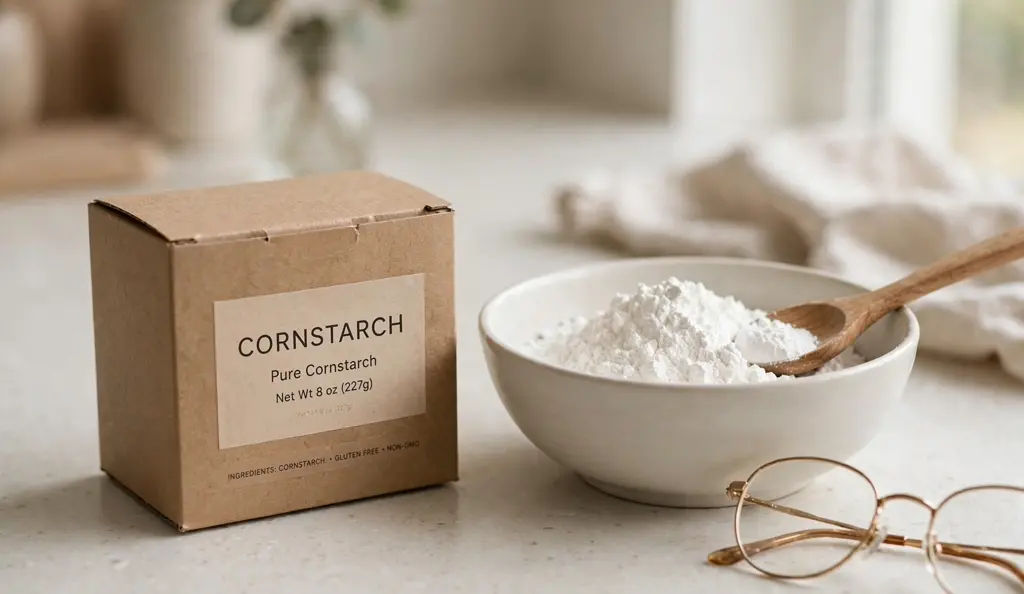
A certified box goes further. Third-party groups test the product themselves and audit the factory. NSF, an independent testing organization, certifies many foods as gluten free, and its standard is stricter than the FDA’s. The Gluten-Free Certification Organization (GFCO) runs a similar program.
The table below sums it up.
| What the box says | What it means | Safe for celiac? |
|---|---|---|
| Certified gluten free (seal from GFCO or NSF) | Third-party tested, factory audited, usually 10 ppm or less | Yes, the safest pick |
| Labeled gluten free | Legally under 20 ppm per the FDA rule | Yes, per FDA science |
| No label or claim | Nobody tested or promised anything | Risky for strict diets |
| “May contain wheat” or “made in a facility with wheat” | Voluntary warning, not a measured result | Skip it if you have celiac disease |
| Bulk bin, no packaging | Unknown source, shared scoops, flour dust nearby | Avoid for strict diets |
“May contain wheat” is a voluntary statement, not a test result. It does not tell you how much gluten is present, and its absence does not mean the food is safe. The only reliable signal is a clear gluten-free label or seal.
Is cornstarch gluten free for people with celiac disease?
Yes, with one condition: the label. The Celiac Disease Foundation points to the FDA’s under-20-ppm rule as the standard that protects celiac patients, and cornstarch that meets it is considered safe. In March 2026 the Foundation launched a $15 million Impact Fund to speed up celiac research.
Patient groups like Beyond Celiac add a practical reminder: naturally gluten-free ingredients can still pick up gluten in shared kitchens and factories. So is cornstarch gluten free for celiacs? Yes, when the box carries the claim.
If you have celiac disease or a wheat allergy, confirm your brand choice with your doctor or a registered dietitian. Recipes and factory practices change, so check the current label every time you restock.
Which brands of cornstarch are safe to buy in October 2026?
As of October 2026, several major brands print a gluten-free claim on their cornstarch boxes in the US. That claim means the product meets the FDA’s under-20-ppm standard. Brands change formulas, so always check your own box.
Argo
The most common box in American kitchens. Argo prints “gluten free” right on the front panel. It is a solid pick for everyday sauces and baking.
Clabber Girl
Budget-friendly and widely stocked. Clabber Girl labels its cornstarch gluten free. It performs the same as pricier boxes in gravies and puddings.
Bob’s Red Mill
The strict-diet favorite. Bob’s Red Mill makes its cornstarch in dedicated gluten-free facilities and labels it accordingly. If anyone in your home has celiac disease, this is the box many dietitians point to first.
Rumford
Another mainstream option that carries a gluten-free label. Bakers like it for cakes and pie fillings where a clean, neutral thickener matters.
Store brands
Many grocery chains now print gluten-free labels on their own cornstarch. Quality is fine, but the source can change between suppliers. Read the back panel on every new box, not just the first one.
The 30-second label check
Use this every time you buy, even for a brand you trust.
- Look for the words “gluten free” or a certification seal from GFCO or NSF.
- Read the ingredient list. It should list only cornstarch.
- Check the warnings. “May contain wheat” or “made in a facility with wheat” means higher risk.
- Skip bulk bins and unlabeled repackaged bags for strict diets.
- When in doubt, choose a brand that states its gluten-free status clearly.
The cornflour trap most shoppers never see coming
Here is the angle most articles skip. In the UK and many Commonwealth countries, “cornflour” means exactly what Americans call cornstarch. But in the US, “corn flour” written as two words is a different product: whole dried corn ground into a fine flour. It is coarser and behaves differently in recipes.
Shoppers run into trouble two ways. First, British recipes that call for “cornflour” get misread, and someone buys American corn flour instead. Second, imported boxes labeled “maize starch” or “cornflour” follow different labeling rules than US products. A gluten-free claim that means something in one country may follow a different standard in another.
The fix is simple. Match the product to the name your recipe uses. If a US recipe says cornstarch, buy the box that says cornstarch. If you are traveling or ordering from abroad, read the ingredient list, not just the front of the box.
Restaurants add a second twist. Cornstarch is the backbone of many restaurant sauces and crispy coatings, especially in Chinese cooking, where cooks use it to “velvet” meat. But a gluten-free labeled box at home says nothing about the fryer at a takeout counter. Shared fryers and pre-made sauces undo the safety fast. My guide to gluten free Chinese food near me shows how to ask the right questions before you order.
How to use cornstarch safely in a gluten-free kitchen
Cornstarch rewards good technique. Handle it right and it gives you glossy gravies, silky puddings, and shattering-crisp coatings with zero wheat involved.
The lump-free slurry method
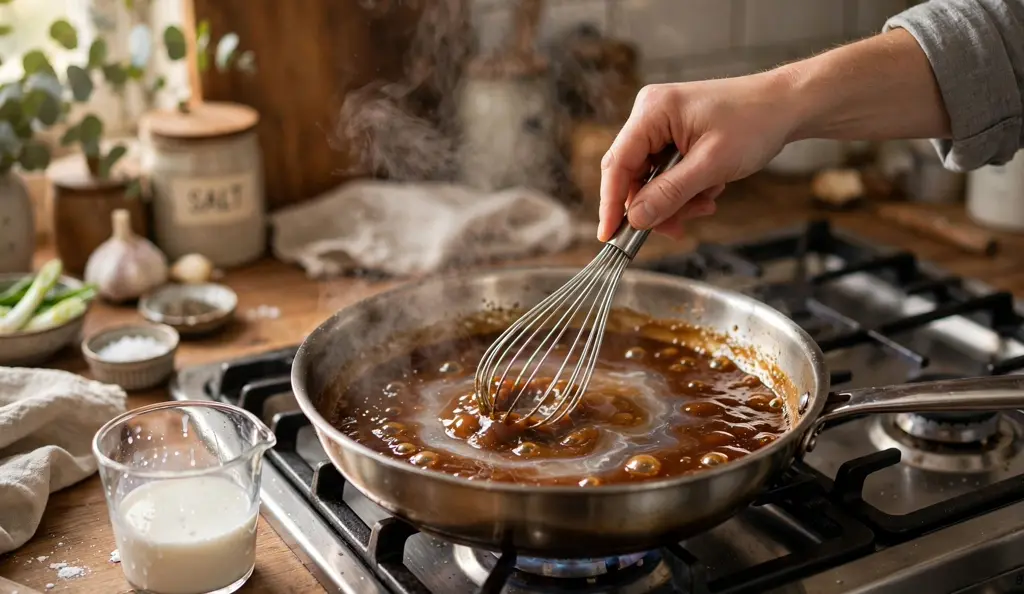
Never dump dry cornstarch into hot liquid. It clumps on contact and no amount of stirring fixes it. The slurry method takes one minute.
- Mix 1 tablespoon of cornstarch with 2 tablespoons of cold water until completely smooth.
- Stir the slurry into simmering liquid near the end of cooking, not at a hard boil.
- Bring the pot to a gentle boil for about 1 minute to reach full thickness.
- Start with about 1 tablespoon of slurry per 4 cups of liquid, then adjust to taste.
Crispy coatings without the wheat
A light dredge in cornstarch before frying gives chicken and vegetables a crisp, golden shell. It works because the starch fries up dry and brittle instead of bready. At home you control the oil and the coating, so the result stays gluten free.
Kitchen habits that keep it safe
Cross-contact does not stop at the factory door. Store cornstarch in a sealed container far from your wheat flour. Use a dedicated scoop or a clean, dry spoon every time. Never dip a spoon that touched wheat flour into the cornstarch jar. These small habits protect everything you cook with it.
Cornstarch also earns its place in baking. A spoonful in cake batter softens the crumb, which is why many gluten-free recipes rely on it. My gluten free cupcakes use this trick for a tender texture, and my gluten free bread guide explains how starches support structure in wheat-free loaves.
Safe swaps when you cannot find labeled cornstarch
If your store only stocks unlabeled cornstarch, reach for potato starch, tapioca starch, or arrowroot instead. All three are naturally gluten free and thicken just as well. Potato starch works at lower heat, tapioca gives pie fillings a glossy finish, and arrowroot keeps sauces clear and smooth. The same label rule applies: buy the box that says gluten free. For another cross-contact lesson from a tricky pantry staple, see my guide on is oatmeal gluten free.
Is cornstarch gluten free? Your questions answered
Is cornstarch safe for celiac disease?
Yes, when the box is labeled or certified gluten free. The FDA’s under-20-ppm standard was designed to protect celiac patients. Unlabeled cornstarch is a gamble, so stick with brands that make the claim.
Is Argo cornstarch gluten free?
Yes. Argo prints “gluten free” on the front of its cornstarch box in the US. As with any brand, check the current label when you buy, because packaging changes.
Is Clabber Girl cornstarch gluten free?
Yes. Clabber Girl labels its cornstarch gluten free. It is one of the most affordable labeled options in US supermarkets.
Is Bob’s Red Mill cornstarch gluten free?
Yes. Bob’s Red Mill produces its cornstarch in dedicated gluten-free facilities and labels it gluten free. It is a strong choice for strict diets.
Is organic cornstarch gluten free?
Not automatically. Organic describes how the corn was grown, not what happened in the factory. A box needs to say both organic and gluten free to be safe for celiac diets.
Is store-brand cornstarch gluten free?
Sometimes. Many grocery chains now label their store-brand cornstarch gluten free, but suppliers change. Read the back panel on each new box instead of assuming.
Is modified cornstarch gluten free?
Usually yes in the US, because it is made from corn. If wheat were the source, allergen rules require the label to say so. Look for a gluten-free label to be sure.
Is corn flour the same as cornstarch?
No. In the US, cornstarch is pure starch from the corn endosperm, while corn flour is whole dried corn ground fine. In the UK, “cornflour” means cornstarch, which confuses shoppers. Buy the product your recipe names.
Does cornstarch contain wheat?
Pure cornstarch contains no wheat. Wheat can only enter through cross-contact in shared factories or bulk bins. A gluten-free label means the product tested under 20 ppm.
Is cornstarch gluten free in gravy?
Pure cornstarch thickens gravy safely, but packaged gravy mixes often contain wheat flour. Make gravy from scratch with labeled cornstarch, or read the mix’s ingredient list carefully.
Can I use cornstarch instead of flour for frying?
Yes. A cornstarch coating fries up crisp and golden without any wheat. At restaurants, though, shared fryers can contaminate it, so ask before ordering.
Is cornstarch safe for gluten sensitivity?
Yes, labeled cornstarch is safe for most people with gluten sensitivity. The main risk is cross-contact in unlabeled products, not the corn itself. Choose a labeled box.
How do I store cornstarch to keep it gluten free?
Keep it in a sealed container away from wheat flour. Use a dedicated scoop or a clean, dry spoon. Never return a used spoon to the jar, and never scoop with utensils that touched flour.
The bottom line
Cornstarch is naturally gluten free, and that fact has not changed. What decides safety in October 2026 is the box, not the corn: shared factories, silent labels, and bulk bins are where gluten sneaks in. Buy cornstarch that says gluten free, run the 30-second label check, and keep your kitchen habits clean.
Do that, and cornstarch stays one of the most useful tools in gluten-free cooking, from glossy gravies to crisp coatings to tender cakes. Trust the label, not the rumor.
Read more about celiac disease on Wikipedia.