
Is Dark Chocolate Gluten Free? The Honest 2026 Answer
Yes, plain dark chocolate is gluten free. Real dark chocolate is made from just three things: cocoa mass (ground cacao beans), cocoa butter (the natural fat pressed from those beans), and sugar. None of these contain gluten. The trouble starts in the factory, where barley malt, cookie crumbs, and shared equipment sneak gluten into products that look safe. As of October 2026, the honest answer stands: plain dark chocolate is gluten free, but flavored and filled bars always need a label check. Here is which bars to grab, which to skip, and a 30-second label check for every shopping trip.
Why Plain Dark Chocolate Is Naturally Gluten Free
Cacao is the bean at the heart of all chocolate. Growers ferment, dry, and roast cacao beans, then grind them into cocoa mass and press out the cocoa butter. A good dark chocolate bar contains only cocoa mass, cocoa butter, and sugar, sometimes with a little vanilla or soy lecithin. Soy lecithin is an emulsifier made from soy, and it is naturally gluten free.
Gluten is a protein found in wheat, barley, rye, and triticale. None of those grains are part of chocolate making, so plain dark chocolate is naturally gluten free by recipe. The label still matters more than the name on the wrapper, because factories add flavors and fillings and run cookies and wafers on the same lines.
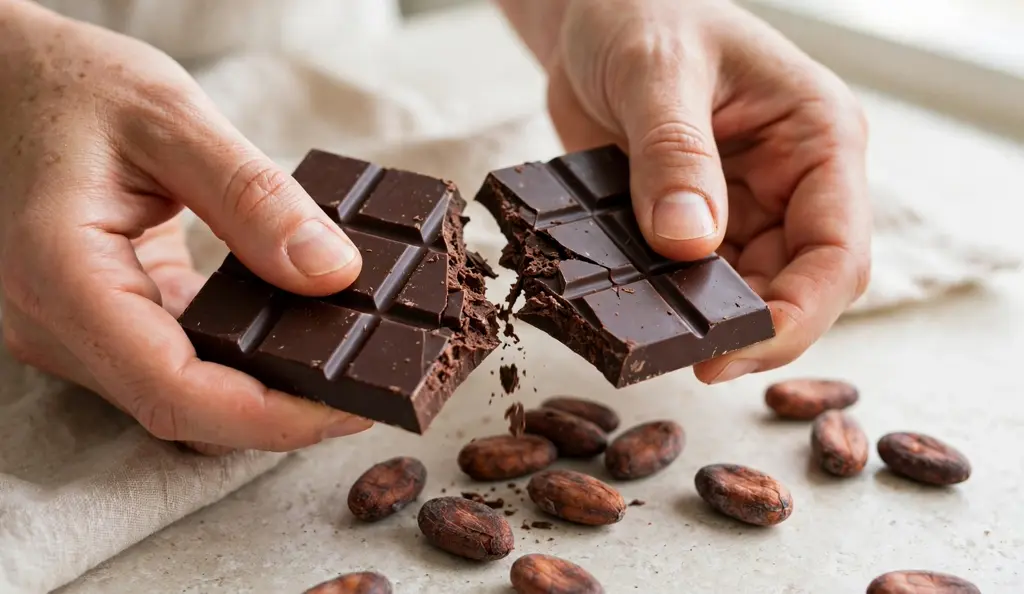
Where Gluten Sneaks Into Dark Chocolate
Gluten reaches dark chocolate through two doors: ingredients added on purpose and cross-contact from shared equipment. These five traps answer the is dark chocolate gluten free question for real bars on real shelves.
- Barley malt and malt flavoring. The number one trap. Brands add barley malt for a round, toasty sweetness, and barley contains gluten. Any bar listing barley malt, malt extract, or malt flavoring is not safe for celiacs.
- Cookie, wafer, and crisp pieces. Bars with cookie chunks, pretzel bits, wafer layers, or rice crisps are high risk, since many crisp centers use barley malt or wheat flour.
- Creamy or caramel fillings. Truffles, pralines, and caramel-filled bars often include malt flavoring or are made on lines that also handle wheat products.
- Shared lines and factories. A bar can list zero gluten ingredients and still pick up traces from equipment that also makes regular cookies or cakes.
- Bulk bins and shared scoops. Loose chocolate pieces share scoops and jars with wheat-covered candy, so cross-contact is common. Buy sealed bars instead.
Wheat-free does not mean gluten-free. A bar can be wheat-free and still contain barley malt. Always look for the word “gluten-free” rather than “wheat-free” on the package.
Is Dark Chocolate Gluten Free If the Ingredients Look Clean?
A clean ingredient list is a good sign, but it is not the full story. The list shows what the brand added on purpose, not what touched the chocolate in the factory. Cross-contact (when gluten touches a gluten-free food by accident) is the hidden risk, and “may contain wheat” warnings point to it. Celiacs should take these seriously, since even tiny amounts can cause harm. If a label is unclear, contact the brand before eating.
The Lindt Shelf Trap: Why the Fanciest Bar Is the Riskiest One
On the same shelf sit Lindt Excellence dark chocolate bars and Lindt Lindor truffles, both in gold foil and premium packaging. They look like siblings, but one hides barley malt.
Lindt Lindor truffles list barley malt powder in the ingredients, and barley and all its derivatives contain gluten. The dark, milk, and white Lindor truffles are all off limits for anyone avoiding gluten.
Lindt Excellence 70%, 85%, and 90% dark bars tell a different story. Their ingredients are short: cocoa mass, cocoa butter, sugar, and vanilla. No barley, no wheat, no malt. But Lindt does not label them gluten free and runs many products on shared equipment. Rule of thumb: Lindor truffles are a hard no, while plain Excellence dark bars are a judgment call, and celiacs should prefer certified bars.
How to read a Lindt label in seconds
Flip the bar and scan for the word “malt.” If you see barley malt, malt extract, or malt flavoring, put it back. Then check the allergen line. If it says “may contain wheat,” treat the bar as risky. This two-step scan works for almost any chocolate brand.
Which Dark Chocolate Brands Are Gluten Free?
Some brands make the choice easy with a certified gluten-free seal. Others keep clean recipes but skip the seal. Here is where the popular names stand, checked against brand statements and celiac sources in October 2026.
| Brand | Status | What to check |
|---|---|---|
| Enjoy Life | Certified GF (GFCO) | Nothing, made in a dedicated GF facility |
| Endangered Species | Certified GF (GFCO) | Stick to dark bars, check seasonal flavors |
| Hu Kitchen | Labeled GF | Flavored bars, recipes can change |
| Green & Black’s | Clean recipe, no seal | Dark 70 and 85 made in GF factory, check local label |
| Lindt Excellence 70-90% | Clean recipe, no seal | Shared lines, a judgment call for celiacs |
| Lindt Lindor truffles | Not GF | Contains barley malt powder, avoid |
| Hershey’s (plain bars) | Labeled GF | Avoid cookies-and-cream and seasonal shapes |
Enjoy Life is the safest pick here. The company states that every product is certified gluten free by the Gluten-Free Certification Organization (GFCO) and made in a dedicated nut-free and gluten-free facility, so shared-line risk is zero. Endangered Species carries the same GFCO certification across its full range.
Hu Kitchen builds its bars from simple ingredients without gluten, dairy, or refined sugar, and labels them gluten free. Green & Black’s is trickier: Coeliac Sanctuary, a UK celiac source updated in 2026, notes the brand says bars without a “may contain” warning come from an entirely gluten-free factory, and lists Dark 70% and Dark 85% as safe. With no certified seal, treat it as low risk but not certified.
Which Dark Chocolate Brands Are Safest for Celiac Disease?
Certified gluten-free bars are the safest choice for celiac disease. Certification means an independent body tested the product and the factory for gluten. Enjoy Life and Endangered Species both carry GFCO certification, so their dark chocolate is verified safe. Bars with clean recipes but no seal carry unmeasured factory risk. Choose the seal and skip the guessing.
Labeled vs Certified Gluten Free: What the Words Mean
Naturally gluten free means no gluten ingredients by recipe. Plain dark chocolate from cocoa mass, cocoa butter, and sugar qualifies. This says nothing about the factory, which is why is dark chocolate gluten free is a label question, not just an ingredient question.
Labeled gluten free means the brand put “gluten-free” on the package, a claim the FDA regulates. In August 2013, the FDA issued a final rule: a food labeled gluten-free must contain under 20 parts per million (ppm) of gluten, a level set to protect people with celiac disease (Celiac Disease Foundation, June 2025).
Certified gluten free adds a third-party check. Groups like the GFCO audit factories and test products, often to stricter limits than the FDA requires. For celiac disease, certified is the gold standard, labeled is strong, and naturally gluten free without a label is a gamble on the factory.
About 1% of people worldwide have celiac disease, an immune condition where gluten damages the small intestine, and the Celiac Disease Foundation puts the US number near 3 million Americans (National Geographic, August 2013). If you are newly diagnosed, ask your doctor or a registered dietitian which label level fits you.
The 30-Second Label Check for Any Dark Chocolate Bar
Use this every time, even for a bar you have bought before. Ask is dark chocolate gluten free on every trip, because brands change recipes without warning.
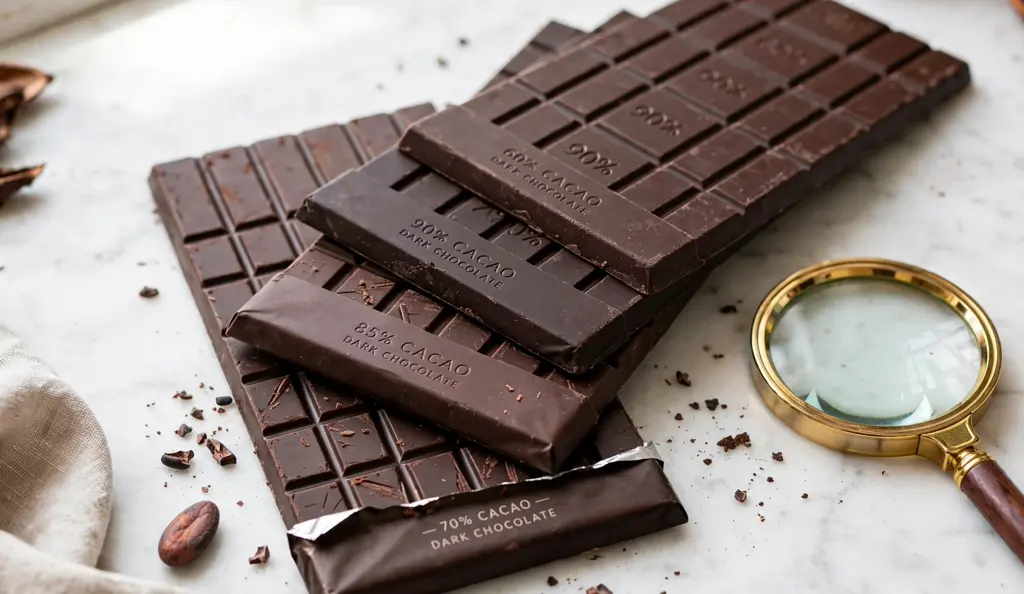
- Read the ingredients. Scan for wheat, barley, rye, malt, malt extract, malt flavoring, and brewer’s yeast. Any one of these means the bar is out.
- Check the allergen line. “Contains wheat” is a hard no. “May contain wheat” is a risk flag for celiacs.
- Look for the gluten-free claim or seal. “Gluten-free” on the label means the brand meets the FDA’s under-20-ppm standard. A GFCO seal means independent testing backs it up.
- Beware fancy add-ins. Cookie pieces, wafer, pretzel, crisp pearls, and creamy fillings are the top gluten carriers. Plain bars are almost always safer.
- When in doubt, check the brand’s site. A 60-second check or a quick email beats a week of symptoms.
The “may contain” warning is voluntary in the US, so its absence is not proof of safety, and its presence is honest information. Brands that warn you are doing you a favor.
Cross-Contact at Home: Your Kitchen Can Undo a Safe Bar
You buy a certified gluten-free dark chocolate bar, then melt it in a kitchen that also bakes wheat bread. Chocolate is sticky and often shared, so cross-contact happens at home too. Watch for a knife that just spread cookie filling, a flour-dusted cutting board, a spoon from regular cake batter, and party chocolate chips touched by cracker-covered hands.
Whenever you ask is dark chocolate gluten free, remember your own kitchen is part of the answer. When you melt dark chocolate, use clean tools and a clean bowl, and keep wheat flour far from the work area. Our guide to how to melt chocolate walks through the clean-bowl method. At parties, keep your own sealed bag and skip the communal bowl. If you love baking with dark chocolate, our gluten free cupcakes recipe uses it in a fully gluten-free setup.
Why Do Some Dark Chocolate Bars Contain Barley Malt?
Brands add barley malt or malt flavoring to give chocolate a round, toasty sweetness that balances bitter cocoa. It is cheap, effective, and invisible to anyone who skips the label. Since barley is a gluten-containing grain, malt made from it carries gluten into the finished bar. Always treat the word “malt” on a chocolate label as a gluten warning.
Dark Chocolate FAQs
Is dark chocolate gluten free? The short answer
Yes, if the bar is plain. Dark chocolate made from cocoa mass, cocoa butter, and sugar is gluten free by recipe. If the bar has malt, cookie pieces, or fillings, or carries a “may contain wheat” warning, skip it or check with the brand first.
Is dark chocolate gluten free if it is 70% cacao?
The cacao percentage shows how much cocoa is in the bar. A 70% bar from cocoa mass, cocoa butter, and sugar is naturally gluten free. But some 70% bars add barley malt or run on shared lines. Check the label at any percentage.
Is Lindt 85% dark chocolate gluten free?
Lindt Excellence 85% has a clean ingredient list with no gluten ingredients, and many chocolate guides list it as a safe pick. But Lindt does not label or certify it gluten free, and its factories handle gluten products. Celiacs should treat it as a judgment call and may prefer a certified bar.
Are Lindt Lindor truffles gluten free?
No. Lindt Lindor truffles contain barley malt powder, a direct source of gluten. This applies to the dark, milk, and white chocolate versions. Skip them if you are avoiding gluten.
Is Hershey’s dark chocolate gluten free?
Plain Hershey’s dark chocolate bars are labeled gluten free, which means they meet the FDA’s under-20-ppm standard. Avoid cookies-and-cream varieties and seasonal shapes, which can contain gluten or come from shared lines. Confirm the current label before buying.
Is dark chocolate from bulk bins gluten free?
Bulk bin chocolate is risky even when the product itself is gluten free. Shared scoops, open jars, and nearby wheat-covered candy create constant cross-contact. Buy factory-sealed bars instead, and skip loose chocolate if you have celiac disease.
Can people with celiac disease eat dark chocolate?
Yes, as long as the chocolate is certified or labeled gluten free. GFCO certification is the safest option because it includes factory audits and product testing. Plain bars with clean ingredients but no label are a personal judgment call. If you are newly diagnosed, ask your doctor or a registered dietitian which products fit your needs.
Is dark chocolate dairy free?
Often, but not always. Many dark bars are naturally dairy free, but some brands add milk fat or milk powder for creaminess, including Lindt Lindor dark truffles. Check the label if you also avoid dairy.
Is cocoa powder gluten free?
Pure cocoa powder is naturally gluten free because it is just ground cacao solids. Problems come from hot cocoa mixes and flavored cocoa powders, which often add malt, thickeners, or flavorings. Choose 100% cocoa powder and read mix labels carefully.
Are dark chocolate chips gluten free?
It depends on the brand. Enjoy Life dark chocolate morsels are certified gluten free by GFCO and made in a dedicated gluten-free facility. Other brands vary, so check each bag for a gluten-free claim and watch for “may contain wheat” warnings.
Is hot cocoa made with dark chocolate gluten free?
Homemade hot cocoa from pure dark chocolate and milk is gluten free, since both are naturally gluten free. Store-bought mixes are the risk, because many contain malt flavoring, barley, or thickeners. Read the mix label or make your own with plain dark chocolate.
What does “may contain wheat” mean on a chocolate label?
It means the chocolate was made in a facility or on equipment that also handles wheat, so traces of gluten could be present even though wheat is not an ingredient. The warning is voluntary in the US. Celiacs should treat “may contain” bars as risky.
Does dark chocolate have less gluten risk than milk chocolate?
Usually, yes. Dark chocolate has a simpler recipe and fewer add-ins, so fewer chances for gluten to enter. Still, a plain milk bar with a gluten-free label beats a fancy dark truffle with barley malt every time.
The Bottom Line on Dark Chocolate and Gluten
Plain dark chocolate is gluten free by recipe: cocoa mass, cocoa butter, and sugar contain no gluten. The real risks are barley malt, cookie and wafer add-ins, and shared factory lines. Lindt Lindor truffles are out, while plain Lindt Excellence bars stay a judgment call without certification. So is dark chocolate gluten free? For plain bars, yes. Pick certified brands like Enjoy Life or Endangered Species, run every new bar through the 30-second label check, and as of October 2026 the label remains your best friend.
Want more snack answers in the same style? Our is popcorn gluten free guide covers another movie-night favorite, and is ice cream gluten free untangles the freezer aisle. For the full picture of how gluten affects the gut, read about celiac disease on Wikipedia.